

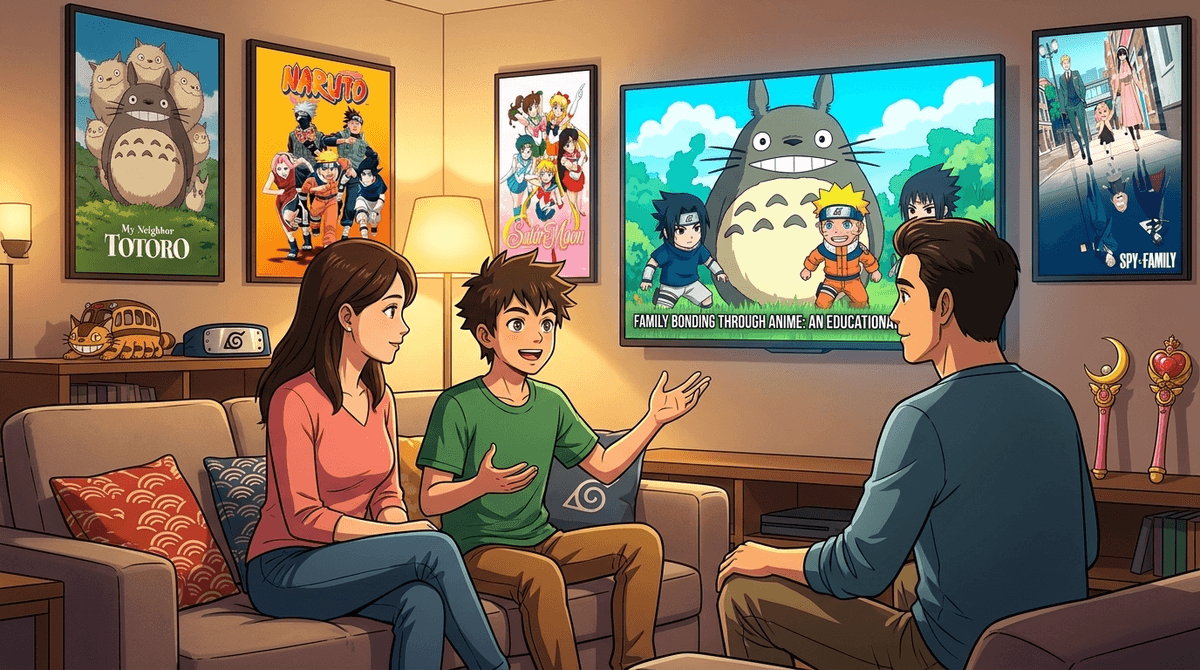
TL;DR
If your kid is obsessed with "cartoons" that look like they have big eyes and gravity-defying hair, they’re watching anime. Unlike Western animation, which has historically been "for kids" (think Bluey), anime is a medium that covers everything from toddler-friendly magic to R-rated psychological horror.
- The Big Difference: Western shows are often episodic (you can watch any episode of SpongeBob SquarePants and get it). Anime is usually a saga—one long story where characters actually age, die, or change forever.
- Top Picks for Starters: My Neighbor Totoro (All Ages), Spy x Family (Ages 10+), and Avatar: The Last Airbender (The perfect Western bridge).
Get an anime watchlist based on your kid's interests
To a lot of us, "anime" is just a word for Japanese cartoons. But if you call Attack on Titan a "cartoon" in front of a middle schooler, prepare for a lecture.
In the West, we’ve spent decades putting animation in a box. It’s either for preschoolers, or it’s a "grown-up" comedy like The Simpsons or Family Guy. There isn't much of a middle ground.
Anime doesn't have a box. In Japan, animation is just a way to tell a story, like a live-action movie or a novel. This means you have anime about high school romance, professional sports, intergalactic warfare, and even mundane things like baking bread or working in an office.
When your kid says they love anime, they aren't saying they love a specific genre; they’re saying they like the style and the way these stories are told. It’s the difference between saying "I like books" and "I like movies."
We hear a lot about "brain rot" these days—the Skibidi Toilet videos or the weird, nonsensical Roblox memes that make us feel like our kids' attention spans are dissolving.
Anime is actually the antidote to that.
1. The "Saga" Factor
Most Western cartoons are "status quo" shows. At the end of an episode of Teen Titans Go!, everything resets. In anime, if a character loses a hand or a best friend in episode 5, that stays gone for the next 200 episodes. This creates a deep emotional investment. Kids aren't just watching; they’re following a journey.
2. High Stakes
Anime isn't afraid to be serious. Even in shows for younger kids, like Pokémon, there’s a sense of ambition and hard work. In "Shonen" anime (aimed at tween/teen boys), the themes are almost always about perseverance, friendship, and overcoming impossible odds. It’s basically the "Hero’s Journey" on steroids.
3. The Aesthetic
Let’s be real: anime looks cool. The character designs are iconic, and the "Ohio" memes of the world haven't quite touched the prestige of a well-animated fight scene in Demon Slayer.
If you’re looking at a streaming service like Crunchyroll or Netflix, the labels can be confusing. Here’s the breakdown:
- Kodomomuke: Literally "for children." Think Hello Kitty or Ponyo. Safe, sweet, and usually teaching a lesson.
- Shonen: Aimed at young teen boys. This is the most popular category. It’s heavy on action and "powering up." Examples: Naruto, One Piece, and Dragon Ball Z.
- Shojo: Aimed at young teen girls. Focuses more on relationships, emotions, and drama (though often with magical elements). Examples: Sailor Moon or Fruits Basket.
- Seinen/Josei: These are for adults. They can be incredibly violent, sexually explicit, or just psychologically heavy. This is where you need to be careful. A show like Chainsaw Man looks like a "cool cartoon" to an 8-year-old, but it is absolutely not for them.
The "Starter Pack" (Ages 5-9)
At this age, you want the whimsy of Japan without the "holy crap, why is there so much blood" factor.
- My Neighbor Totoro: The gold standard. It’s a gentle, beautiful movie about two sisters and the forest spirits they meet. No villains, just vibes.
- Little Witch Academia: Think Harry Potter but with an optimistic, clumsy girl at a magic school.
- Pokémon: You already know this one. It’s safe, it’s a classic, and it’s a great entry point into the "collecting" culture of anime.
The "Adventure Phase" (Ages 10-13)
This is when they want action. They want to see characters struggle and win.
- Spy x Family: A spy, an assassin, and a telepathic child pretend to be a family. It’s hilarious, heartwarming, and has just enough "cool" action to keep them hooked.
- Haikyu!!: A sports anime about volleyball. It sounds boring, but it’s more intense than most action movies and teaches incredible lessons about teamwork.
- Avatar: The Last Airbender: Okay, technically this is a Western show inspired by anime, but it’s the perfect bridge. If they haven’t seen it, start here.
The "Deep Dives" (Ages 14+)
Teenagers usually want something with more grit or complex philosophy.
- Death Note: A high schooler finds a notebook that lets him kill anyone whose name he writes in it. It’s a brilliant "cat and mouse" thriller. Dark? Yes. Thought-provoking? Absolutely.
- Fullmetal Alchemist: Brotherhood: Widely considered one of the best stories ever told in animation. It deals with loss, science, and the cost of ambition.
This is the "No-BS" part of the guide. Because anime isn't just for kids, the ratings can be deceptive.
1. The "Fanservice" Problem
In many anime—even those rated for teens—there is a trope called "fanservice." This usually means unnecessary sexualized shots of female characters (lingerie shots, "accidental" falls, etc.). For some families, this is a dealbreaker; for others, it’s just an annoying cultural quirk to talk through.
2. Violence is Different
In a Western cartoon, if someone gets hit with a mallet, they get a bump on their head. In a Shonen anime like Jujutsu Kaisen, if someone gets hit, they bleed. Sometimes a lot. The emotional weight of violence is much higher in anime.
3. Cultural Nuance
Anime comes from Japan, so the social norms are different. Respect for elders, the intensity of school exams, and even the way characters express (or hide) emotion are culturally specific. It’s a great way to talk to your kids about how different parts of the world see the "right" way to live.
If your kid is deep into anime, don't just roll your eyes and call it "those weird cartoons." Ask them about the plot.
- "Who is your favorite character?"
- "What are they trying to achieve?"
- "Why was that fight scene so important?"
You’ll likely find that they aren't just watching "brain rot"—they’re following a complex narrative about growth, sacrifice, and identity.
Also, if they start using words like "baka" (idiot) or "kawaii" (cute), or talking about things being "mid" or "peak," just lean into it. They’re participating in a global subculture that’s honestly a lot more creative than just scrolling TikTok.
Anime is a massive, diverse world of storytelling. It’s not a single thing you can "approve" or "ban" as a whole.
Think of it like the library. There are picture books, and there are Stephen King novels. Both are "books," but you wouldn't give them to the same kid.
Take 15 minutes to look up a show on Screenwise before they start episode one. If the "WISE Score" looks good and the themes fit your family, sit down and watch an episode with them. You might find that these "cartoons" have more heart and depth than anything you’ll find on primetime TV.
Next Steps
- Check the rating: Don't assume "animated" means "TV-Y7."
- Start with Studio Ghibli: If you’re new to this, movies like Spirited Away are the best way to see the "art" in anime.
- Talk about the "Saga": Ask your kid to explain the "lore." They will love being the expert for once.
Check out our guide on how to set up parental controls on Crunchyroll