

TL;DR
If your kid refuses to touch a book without speech bubbles, don't panic. Graphic novels are the dominant literacy currency in 2026. They aren't "reading-lite"—they are high-speed training for visual literacy and emotional intelligence.
- The Gateway Drugs: Dog Man and InvestiGators
- The Emotional Heavy Hitters: Smile by Raina Telgemeier and New Kid
- The Epic Adventures: Amulet and Wings of Fire (Graphic Novel)
- The "Next Step" Prose: The Wild Robot or Percy Jackson
Get books for a kid who loves Roblox and Minecraft
Walking into a school library in 2026 feels a lot different than it did ten years ago. The "Prose" section is often quiet, while the Graphic Novel bins look like a Black Friday sale at a tech store. If you’ve felt that low-grade guilt because your third grader has read Dog Man twenty times but won't touch a "real" chapter book, it’s time to exhale.
The "Graphic Novel Boom" isn't a sign of declining attention spans; it's a shift in how this generation processes information. In a world of TikTok and YouTube, kids are wired for visual-first storytelling. The good news? The quality of these books has skyrocketed. We’ve moved way beyond the "Bam! Pow!" of old-school comics into sophisticated narratives that tackle anxiety, systemic racism, and complex fantasy world-building.
It’s easy to look at a page of Cat Kid Comic Club and think it’s just "brain rot" in paper form. But for a kid, graphic novels provide a "high floor, high ceiling" experience.
For struggling readers or neurodivergent kids (especially those with ADHD or dyslexia), the illustrations provide essential context clues. They can follow the plot through the art while their brain works on decoding the text. It removes the "wall of text" frustration that leads many kids to quit reading entirely.
For advanced readers, graphic novels offer a different challenge: multimodal processing. They have to read the text, interpret the character's facial expression, and understand the "cinematography" of the panel layout all at once. That’s a sophisticated cognitive load.
If you want to move beyond the basics, you need to know what’s actually worth the shelf space. Not every colorful book is a winner—some are just lazy cash-grabs capitalizing on the trend.
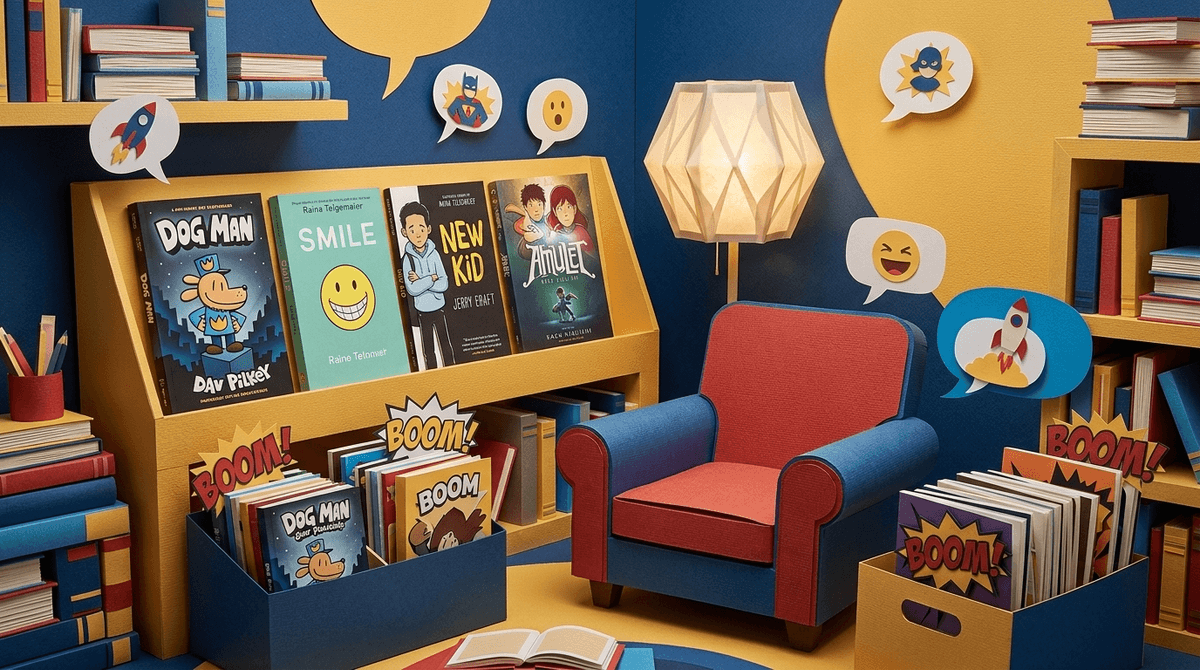
Ages 6-10 Let's be real: Dog Man is the reason this genre is a juggernaut. It’s silly, it’s got "toilet humor," and it’s intentionally drawn to look like a kid made it. While some parents find it annoying, Pilkey is a master of building reading confidence. If your kid is in the "Skibidi Toilet" phase of life, this is the book that meets them where they are without being total garbage.
Ages 8-12 Raina Telgemeier is essentially the Taylor Swift of middle-grade graphic novels. Smile, Sisters, and Guts deal with the actual, messy reality of growing up—braces, friendship drama, and panic attacks. These books build massive empathy because kids see their own internal "cringe" moments reflected on the page.
Ages 9-13 This was the first graphic novel to win the Newbery Medal, and it earned it. It follows Jordan Banks, a Black kid navigating a prestigious private school where he’s one of the few students of color. It’s funny, sharp, and handles microaggressions and class dynamics better than most adult novels. If you want to talk about diversity and inclusion without it feeling like a lecture, start here.
Ages 8-12 If your kid likes Minecraft or Zelda, they will lose their mind over Amulet. The art is cinematic and lush, and the stakes are high. It’s a "hero’s journey" that doesn't talk down to kids. Warning: it can get a little dark, so maybe skip it for the super-sensitive 6-year-old.
Just because it has pictures doesn't mean it's for kids. The "Graphic Novel" umbrella includes everything from The Baby-Sitters Club to mature Manga intended for adults.
- Manga vs. Western Graphic Novels: Manga (Japanese comics) like Naruto or Demon Slayer is huge right now. However, the age ratings can be tricky. A "Shonen" manga is for teen boys but often contains significant violence or "fan service" (sexualized drawings) that might not fly for an 8-year-old. Always check the rating on the back—"T for Teen" usually means 13+.
- The "Media Tie-In" Trap: You’ll see a lot of books based on Roblox or Fortnite. Most of these are low-effort marketing. They aren't necessarily "bad," but they don't offer the same literary value as original works. They're the "junk food" of the reading world.
- The YA Crossover: Books like Heartstopper are incredibly popular. While they are sweet and inclusive, they deal with high school romance and mental health. Screenwise data shows about 30% of 6th graders are reading these, but they are technically written for the 14+ crowd. Know your kid's maturity level.
You might be wondering: Wait, I thought Screenwise was about apps and AI? Why are we talking about paper books?
Because digital wellness isn't just about what you turn off; it's about what you turn on.
A kid who is deeply engaged in a graphic novel series is a kid who isn't scrolling YouTube Shorts. Reading graphic novels builds the "stamina" for long-form focus that digital platforms are actively trying to erode.
Moreover, the community aspect is huge. Kids trade these books like Pokemon cards. It creates a "third space" for social interaction that doesn't require a headset or a Discord server.
Let’s pull no punches: Some of the graphic novels being pushed in 2026 are, frankly, lazy. If a book looks like it was generated by an AI to hit "Gen Alpha" keywords like "Ohio" or "Rizz," it’s probably not worth the $14.99.
However, don't gatekeep "real" reading. If your kid is reading Big Nate for the tenth time, they are still practicing fluency. They are still learning how to track a narrative.
Pro-tip: Use their love of graphic novels as a bridge. If they love the Wings of Fire graphic novels, introduce the Wings of Fire prose series. If they love the visual humor of The Bad Guys, try Sideways Stories from Wayside School.
The graphic novel boom is the best thing to happen to literacy in decades. It has made reading accessible, cool, and visually stimulating for a generation that lives in a visual world.
Your goal as an intentional parent isn't to force them back to "Little House on the Prairie." It's to help them curate a "reading diet" that includes high-quality visual stories that build empathy, resilience, and a genuine love for turning the page.
Next Steps
- Audit the shelf: Look for a mix of "junk food" (silly comics) and "superfoods" (books like New Kid or Lightfall).
- Visit the library: Let them pick out five graphic novels without judging the covers.
- Read one yourself: Pick up Smile. It’ll take you 20 minutes, and you’ll finally understand why your kid is obsessed.
Find age-appropriate graphic novels for 10-year-olds
Learn more about the link between reading and reduced screen time