The "figure it out" factor
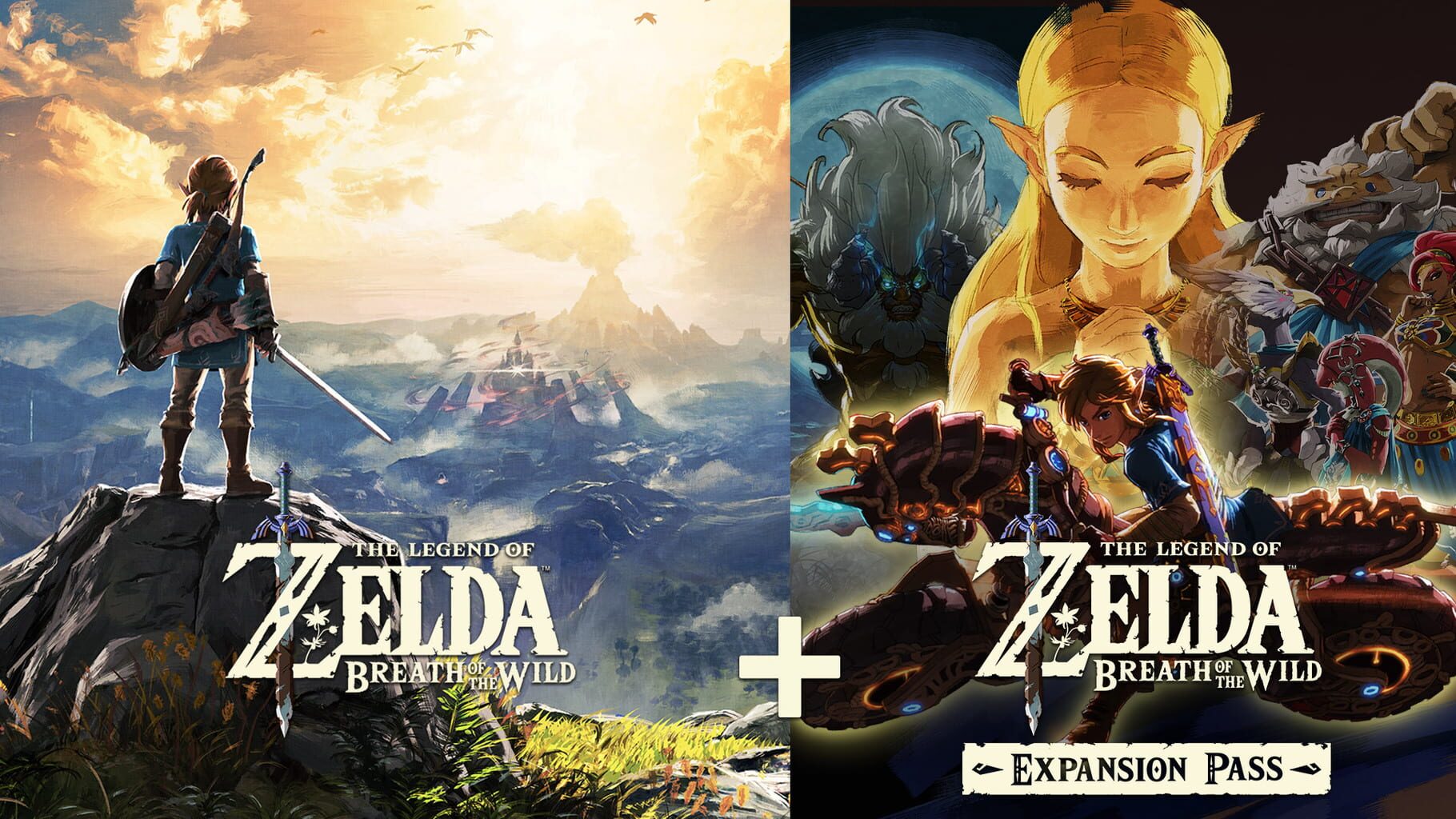
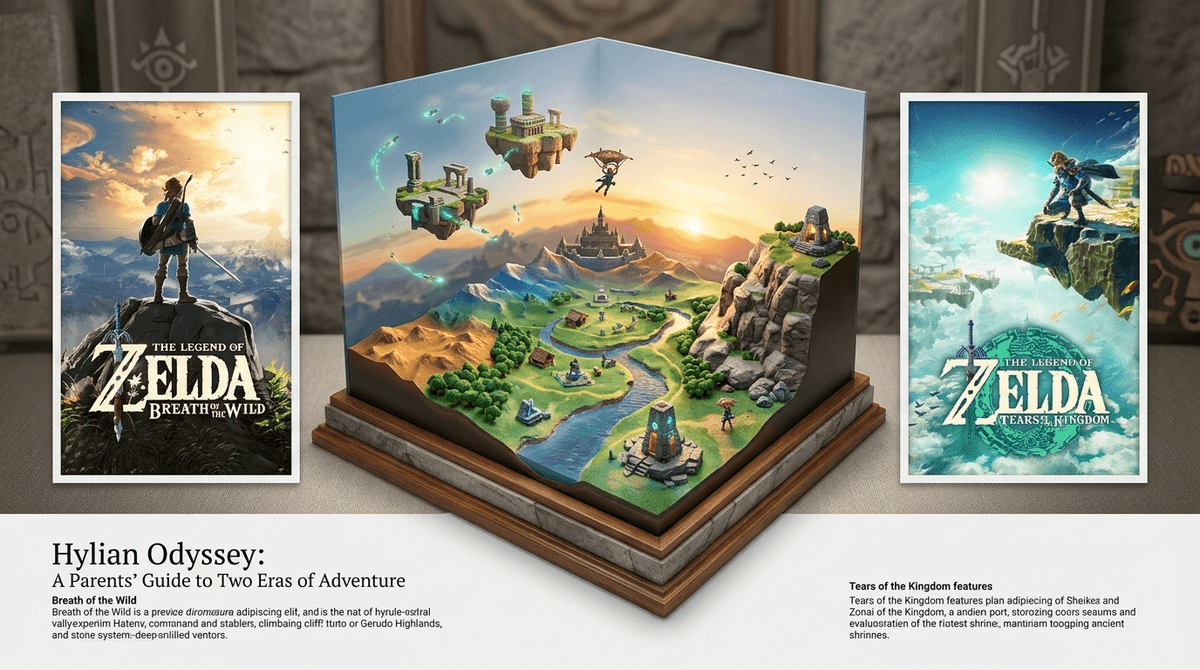
Most modern games treat players like they’re incapable of reading a map. They clutter the screen with glowing arrows, quest markers, and constant chatter telling you exactly which button to press. Breath of the Wild does the opposite. It drops you into a massive world, gives you a paraglider, and basically says, "Good luck."
For a kid used to the scripted hand-holding of many mobile titles, this can be a shock. They might actually get lost. That is the point. This is the groundbreaking video game that proved players actually want to explore, not just follow a GPS. If your kid is transitioning out of the elementary gaming era, this is the perfect bridge to more complex, independent play. It forces them to observe the environment—if a mountain looks too high to climb, they have to find a path around or cook a meal that boosts their stamina.
A playground for physics junkies
If you’re looking for games that teach problem-solving, this is the gold standard. The game doesn't just have puzzles; it has a "chemistry engine." If it's raining, rocks get slippery and Link can't climb. If there’s a thunderstorm, wearing metal armor will literally turn your kid into a lightning rod.
Critics and fans have spent years finding "wrong" ways to solve puzzles that actually work. You can use Octo Balloons to float platforms, or use Magnesis to turn a metal chest into a wrecking ball. It rewards the "what happens if I do this?" mindset. It’s essentially a stealth physics lesson disguised as a high-fantasy adventure.
The Guardian jump scare
While the game is generally peaceful and meditative, it has moments of high-intensity fantasy violence that can rattle younger players. The primary culprits are Guardians—giant, ancient mechanical spiders that lock onto Link with a red laser and fire high-damage beams. The music shifts to a frantic piano solo the moment they spot you. For a 7-year-old, this can be genuinely stressful.
If your kid is sensitive to tension, it’s worth discussing whether the world of Hyrule is too scary before they dive in. The "Blood Moon" mechanic, where the sky turns red and defeated enemies respawn, also has a spooky, ominous vibe that might lead to some "can you play this part for me?" requests.
The financial relief of a "complete" game
In an era of battle passes and "limited time offers," Breath of the Wild feels like a relic in the best way possible. It is one of the best games without microtransactions you can buy. You pay for the game, and you own the whole thing. There are no "Zelda-bucks" to buy and no loot boxes.
If your kid has been begging to play Genshin Impact but you aren't ready for the gambling-adjacent "gacha" mechanics, this is the perfect alternative. It offers the same sense of wonder and vast exploration without a digital storefront constantly hovering over the experience. It’s a massive, 100-hour investment that respects both your wallet and your kid’s attention span.
Part of The Legend of Zelda — our full guide to the series.