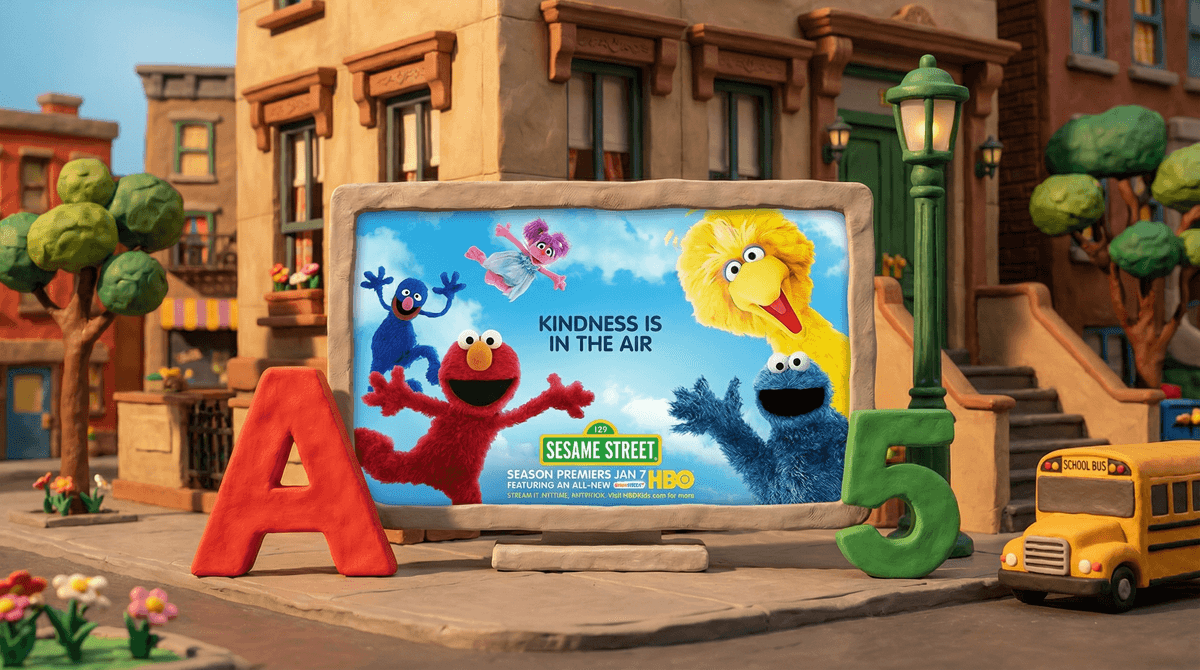
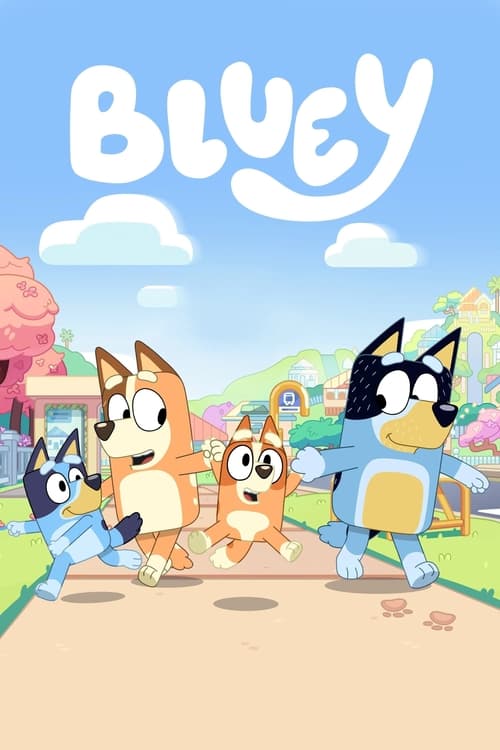
Sesame Street invented the genre. Before Bluey, before Peppa Pig, before any of the algorithmic content farms targeting toddlers, a group of researchers and TV writers in 1969 asked a genuinely radical question: what if television could actually teach poor kids to read? The answer was Big Bird, Oscar the Grouch, and a scrappy, multiracial block in Manhattan that has since shaped the early childhoods of roughly a billion people worldwide.
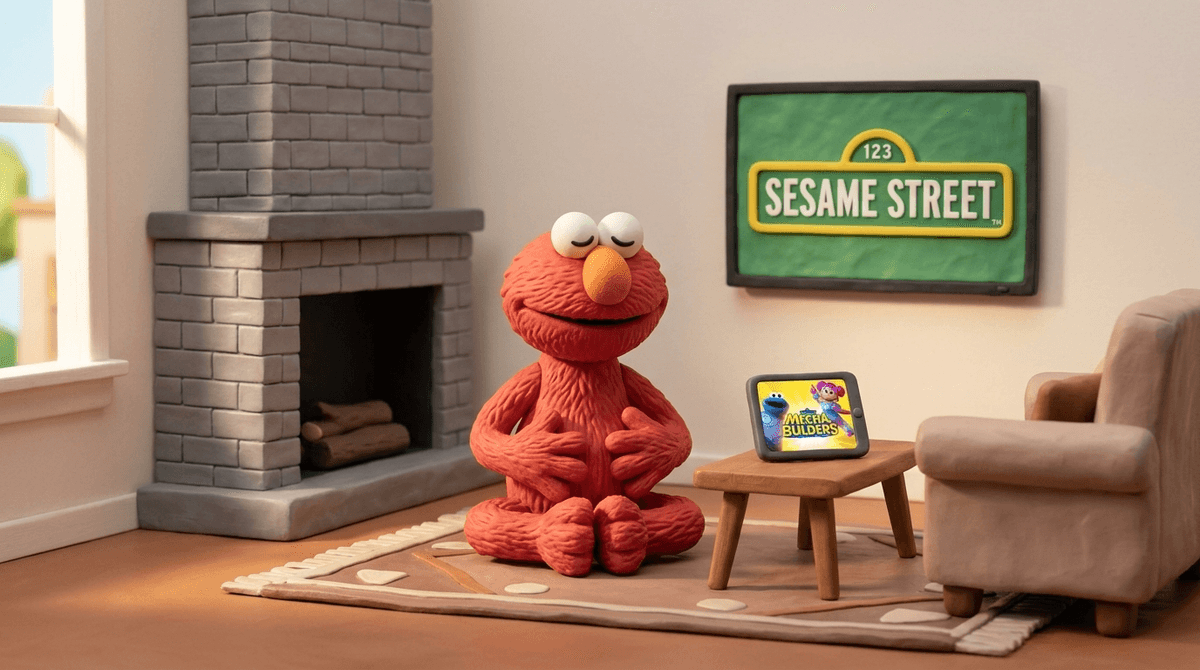
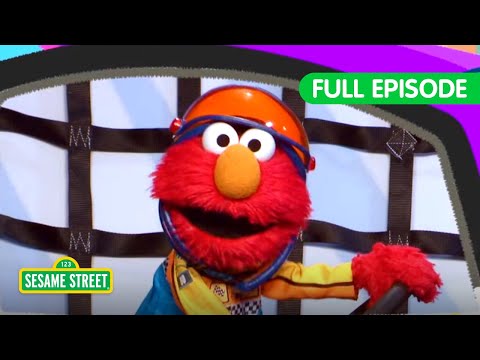
The "When Families Change" series is a specific arm of that mission — short-form videos produced by Sesame Workshop (the nonprofit behind the show) specifically for families navigating divorce, blended households, military relocations, grief, and other upheavals that children don't have language for yet. Elmo, Rosita, and familiar Muppets show up not to teach letters but to model feelings: what it sounds like to say "I miss Daddy" or "I'm scared about moving," and what it looks like when a trusted adult hears that and doesn't flinch.
We score children's media on four dimensions — Wholesome, Imaginative, Safe, and Enriching — and the core Sesame Street catalog sits in the high 90s across all four. The "When Families Change" videos inherit that pedigree: they're produced by the same developmental psychologists and writers, vetted for age-appropriateness, and freely available without a subscription. The numbers matter less here than the intent — these videos exist because Sesame Workshop has spent five decades studying what children actually need during stress, and the answer turns out to be: familiar faces, honest language, and a grown-up who watches with them.
The audience is squarely 2–6, with the sweet spot around 3–5 — old enough to be aware that something big is happening at home, young enough that they don't yet have the vocabulary to process it. For this age, Elmo narrating his own feelings isn't babyish; it's modeling. Research on narrative-based emotional learning consistently shows that children process difficult emotions more easily when they first see a character they trust go through the same thing. That's what these videos do, in two to five minutes, with a clear call to action at the end: talk about it, draw it, make an adventure album.
The honest parent reality is that you might sit down with your kid to watch a video about divorce and find yourself tearing up at a Muppet explaining that "both grown-ups still love you very much." That's not a flaw in the content. That's the content working exactly as intended — for both of you.





![Frog and Toad: A Complete Reading Collection: A Box Set of all 4 Books From the Classic Animal Friendship and Adventure Series, Great for Growing ... for Kids [ages 4-8] (I Can Read Level 2)](https://m.media-amazon.com/images/I/81T-CqByjJL._SL500_.jpg)