

TL;DR
If you’re looking for the short version because your kid is currently begging to watch "the one with the purple guy," here is the rapid-fire readiness breakdown:
- Ages 5-7: Stick to animation. Spider-Man: Into the Spider-Verse is a masterpiece, and Spidey and His Amazing Friends is the gold standard for the younger set.
- Ages 8-10: The "Gateway" era. Start with Iron Man or Ant-Man. Avoid Guardians of the Galaxy if you’re sensitive to language (lots of "A-holes" and "S-words").
- Ages 11-12: Most of the MCU is fair game now, but Avengers: Infinity War and Avengers: Endgame carry significant emotional weight and "on-screen death" trauma.
- The "Skip for Now" List: Doctor Strange in the Multiverse of Madness (straight-up horror vibes) and Guardians of the Galaxy Vol. 3 (extreme animal cruelty themes that will wreck your weekend).
Find an MCU watch order for your kid's maturity level
The Marvel Cinematic Universe (MCU) isn't just a series of movies anymore; it’s the modern-day mythology. On the playground, knowing who Thanos is or why "the snap" happened is social currency. If a kid doesn't know the difference between Captain America and Captain Marvel, they might as well be "Ohio"—which, for the uninitiated, is Gen Alpha speak for "weird" or "cringe."
But here’s the problem: Marvel movies are almost universally rated PG-13. In the eyes of the MPAA, Ant-Man (a fun heist movie with a giant ant playing drums) is the same maturity level as Moon Knight (a psychological thriller about dissociative identity disorder and ancient Egyptian blood baths).
As intentional parents, we can't rely on the PG-13 label. We have to decode the "intensity" levels ourselves.
It’s not just the explosions. Kids are drawn to the MCU because of the continuity. It’s the ultimate "binge" experience. They love the feeling that everything is connected—the "Easter eggs," the post-credit scenes, and the sense that they are part of a massive, unfolding story. It’s essentially Roblox for their eyeballs; a sprawling world where they can choose their favorite "skin" (hero) and follow their journey across twenty different titles.
Ages 5-7: The Animated On-Ramp
At this age, live-action violence—even the sanitized "superhero" kind—can be a bit much. The physics of a real human being getting punched through a wall hits differently than a cartoon doing the same.
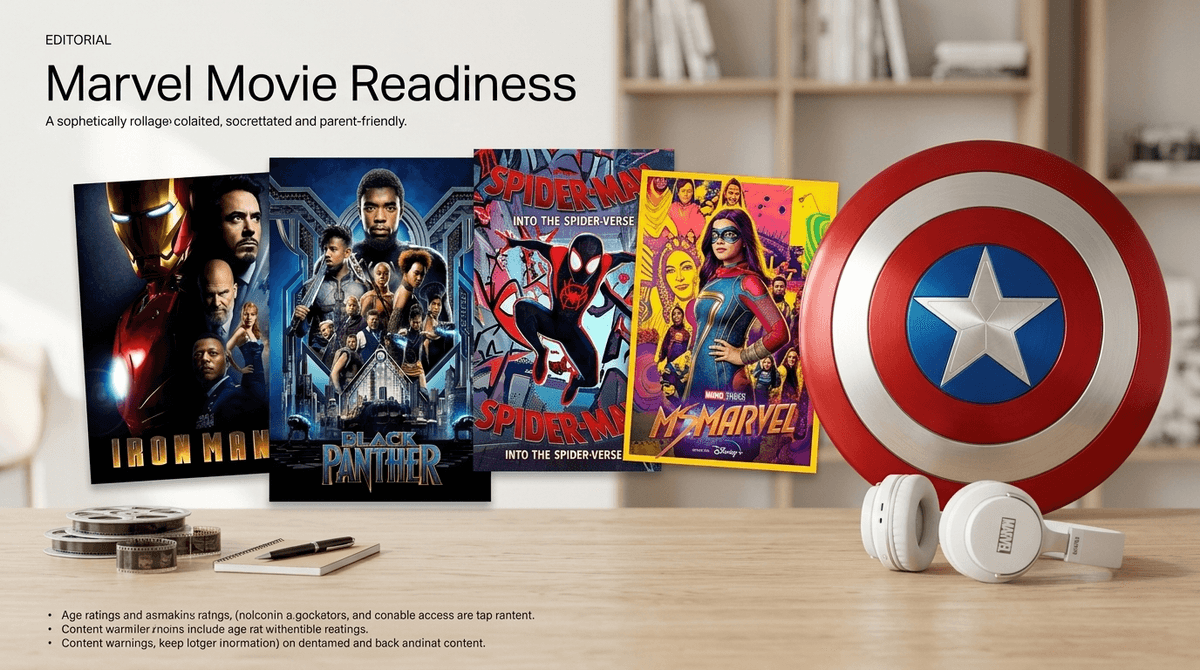
- Spider-Man: Into the Spider-Verse: This is arguably the best superhero movie ever made. It’s visually stunning, emotionally resonant, and focuses on Miles Morales, a kid navigating school and family. It’s the perfect alternative to brain rot YouTube.
- Spidey and His Amazing Friends: If you have a kindergartner, this is the spot. It teaches teamwork and problem-solving without the existential dread of half the universe disappearing.
Ages 8-10: The Gateway Movies
This is when most parents start dipping their toes into the live-action MCU.
- Ant-Man: Very low stakes, heavy on the humor, and features a great father-daughter relationship.
- Ms. Marvel: This Disney+ series is a gem for this age group. It feels like a high-school Scott Pilgrim-esque adventure. It’s colorful, creative, and deals with family history in a way that’s actually interesting.
- Captain America: The First Avenger: A classic "good vs. evil" story. It’s a period piece, which helps distance the violence from "real life" for younger viewers.
Ages 11-13: The Full Multiverse
By middle school, they’ve likely seen clips on TikTok or YouTube. They’re ready for the heavier themes of sacrifice and complicated morality.
- Black Panther: Essential viewing. It’s culturally significant, features a complex villain, and has some of the best world-building in the franchise.
- The Avengers: The 2012 original is still the gold standard for "team-up" movies. It’s fun, fast-paced, and relatively clean compared to the later installments.
Marvel movies are generally "safe," but "safe" is subjective. Here is what actually trips kids up:
1. The Language "Creep"
Early MCU movies (the Disney-era ones) are fairly careful. However, once you get into Guardians of the Galaxy, the dialogue gets "edgy." Expect plenty of "sh*t," "dick," and "asshole." If you’re a "no-swearing" household, the Guardians are going to be a problem.
2. The Horror Pivot
Marvel has recently started experimenting with genres. Doctor Strange in the Multiverse of Madness was directed by Sam Raimi (who did Evil Dead). There are jumpscares, decaying corpses, and a scene where a character’s head is essentially popped. It is not a standard superhero movie. It’s a gateway horror movie.
3. Emotional Trauma
Avengers: Infinity War ends with the "bad guy" winning and several beloved characters "dying" (turning to dust). For an 8-year-old who is deeply attached to Spider-Man, watching him cry "I don't want to go" as he disintegrates can be genuinely upsetting.
4. Animal Cruelty
I cannot emphasize this enough: Guardians of the Galaxy Vol. 3 is brutal. The backstory involves graphic animal experimentation and CGI animals in extreme distress. Even for adults, it’s a hard watch. If your kid is an animal lover, skip this or pre-watch the "Rocket Raccoon" scenes.
Is Marvel just a way to get you to buy LEGO Marvel Super Heroes and $30 plastic shields? Yes, partially. But there’s also a weirdly educational side to it.
Kids who get deep into Marvel often start researching Norse mythology (because of Thor), world history (because of Captain America), or even basic physics. They learn about "canon," "retcons," and "character arcs." It’s a high-level literacy in storytelling.
If your kid is obsessed, lean into it. Use it as a bridge to other media. If they love Black Panther, maybe they’ll like The Wild Robot by Peter Brown for its themes of technology and nature.
Learn more about how superhero fandom can lead to creative hobbies
When you’re watching these together, keep the conversation light but intentional. You don't need to give a lecture on the military-industrial complex after Iron Man, but you can ask:
- "Do you think Tony Stark is a hero because of his suit or because of his choices?"
- "Why do you think the villain feels like they are doing the right thing?" (Marvel is great at "sympathetic villains").
- "If you had a superpower, would you tell people or keep it a secret?"
Don't feel pressured to rush into the MCU just because "everyone else is watching it." Once you open the door to PG-13 action, it’s hard to go back to Bluey (though let’s be honest, Bluey is better written than half the Marvel movies anyway).
If your kid is under 8, stick to the animated stuff. If they’re 9 or 10, start with the "fun" ones like Ant-Man. And if they’re 11+, buckle up—you’re about to spend a lot of money on theater popcorn and explaining why the multiverse makes absolutely no sense if you think about it for more than five seconds.
- Audit your Disney+: Check the parental control settings. You can set individual profiles to "PG-13" or "TV-MA" (which you’ll need if you want to watch Daredevil, but definitely keep the kids away from that one).
- The "Vibe Check": Before showing a new Marvel movie, check the Screenwise guide for that specific title to see the "Intensity Score."
- Start a "Family Movie Night" tradition: Start at the beginning with Iron Man and see how far you get before someone gets bored. (Hint: Thor: The Dark World is where most people tap out. It’s okay to skip the boring ones).