

Using Media to Build Communication Skills: From Conversation Starters to Digital Dialogue
Look, I know the irony isn't lost on anyone: using screens to help kids communicate better feels like using a lawnmower to grow grass. But here's the thing—media isn't just passive consumption anymore. When used intentionally, it can actually be a surprisingly effective tool for building empathy, practicing articulation, and learning how to have meaningful conversations.
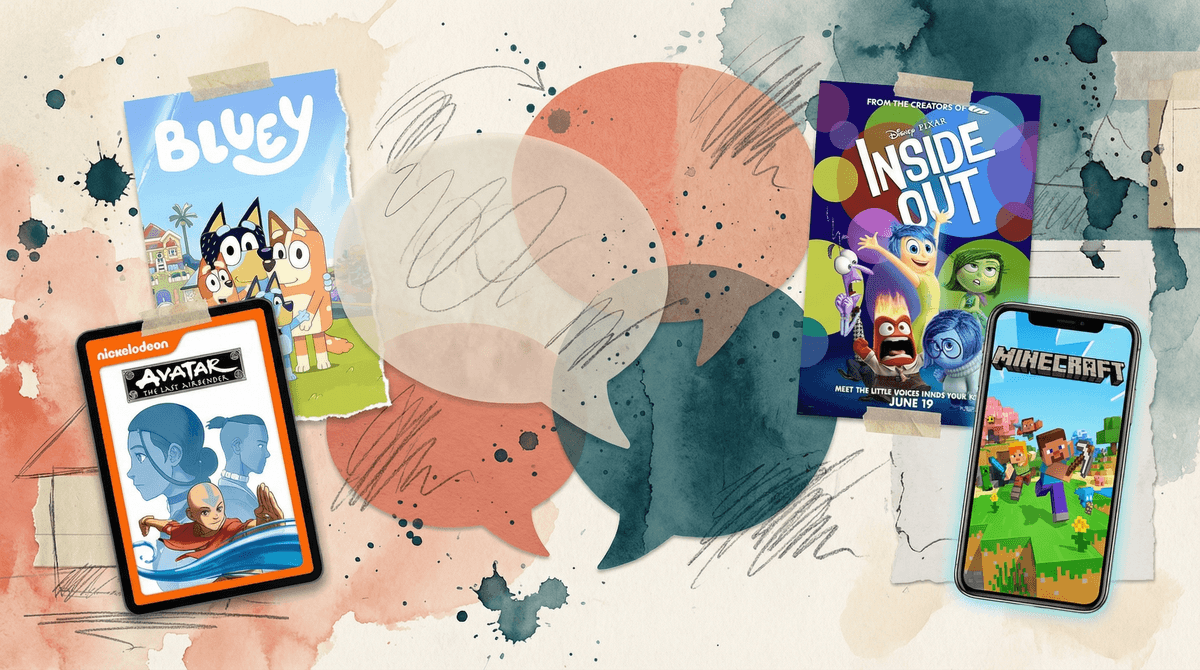
The key word here? Intentionally. Because yes, there's a massive difference between your kid watching 47 consecutive episodes of Bluey while you make dinner, and actually using that show as a springboard for talking about feelings, conflict resolution, or why Bandit is the patron saint of exhausted parents everywhere.
It means treating media as a shared experience rather than a babysitter. It means asking questions, making connections, and using what's on screen as a jumping-off point for real conversations. Think of it as the modern equivalent of reading a book together and talking about it—except now the "book" might be a Minecraft build, a YouTube video about space, or a scene from a show where characters navigate a tough friendship moment.
When kids engage with media and then talk about it, they're practicing:
- Articulation: Explaining why they liked something, what confused them, or what they'd do differently
- Empathy: Understanding character motivations, discussing different perspectives
- Critical thinking: Analyzing plots, questioning decisions, spotting patterns
- Emotional vocabulary: Naming feelings they see on screen and connecting them to their own experiences
Kids need practice communicating, and media gives them low-stakes material to work with. It's often easier for a child to talk about why a character in Avatar: The Last Airbender made a bad choice than to immediately dive into why they're upset with their best friend. The distance creates safety.
Plus, shared media creates common ground. When you watch something together, you're building a shared vocabulary and reference point. "Remember when Aang had to choose between his friends and his destiny?" becomes shorthand for talking about tough choices in real life.
And let's be honest: kids are way more likely to open up when they're not making direct eye contact. Side-by-side screen time, followed by casual conversation, can work wonders for the kids who clam up during formal "let's talk about feelings" moments.
Ages 3-7: This is all about co-viewing and narrating. Watch Daniel Tiger's Neighborhood together and pause to ask simple questions: "How do you think Daniel feels right now?" or "What would you do if that happened to you?" The goal is building emotional vocabulary and making connections between screen and life.
Ages 8-12: Kids this age can handle more complex narratives and moral ambiguity. Shows like The Owl House or games like Stardew Valley offer rich material for discussing friendship dynamics, identity, and choices. Ask open-ended questions: "Why do you think that character reacted that way?" or "What would you have done differently?"
Ages 13+: Teens can engage with media critically and use it as a lens for understanding the world. Watching The Bear together (if age-appropriate for your teen) can spark conversations about stress, family dynamics, and communication under pressure. The key is treating them as fellow viewers, not lecturing—ask their opinions and actually listen.
1. The Post-Show Debrief
Don't just turn off the screen and move on. Spend 5-10 minutes talking about what you watched. Not in a quiz-like way, but genuinely: "That was intense! What did you think about how they handled that?"
2. Watch/Play Together
Yes, even if you find Roblox utterly baffling. Ask your kid to teach you, explain their strategy, show you what they're building. The role reversal (them teaching you) builds confidence and communication skills.
3. Use Media to Open Tough Conversations
Struggling to talk about bullying? Watch Wonder together. Want to discuss anxiety? Inside Out is basically a therapy session in animated form. Media can be the icebreaker for topics that feel too big to tackle head-on.
4. Create Media-Based Traditions
Weekly movie nights with discussion time, podcast listening during car rides (Brains On! is fantastic for this), or gaming sessions where everyone takes turns explaining their choices. Consistency makes communication feel natural, not forced.
5. Model Good Digital Communication
If your kid is old enough for messaging apps, teach them how to communicate clearly and kindly through text. Practice tone (which is SO hard in writing), discuss when voice or video is better than text, and talk about how to handle miscommunication online .
.
Don't interrogate. Nothing shuts down a kid faster than feeling like every show is followed by a pop quiz. Keep it conversational.
Don't force it. Some media is just for fun, and that's okay. Not every episode needs a deep debrief.
Don't use it as a replacement for real conversation. Media should enhance communication, not substitute for it. If your only meaningful interactions are happening through screens, that's a red flag.
Screens aren't the enemy of communication—mindless consumption is. When you use media intentionally, it becomes a tool for building emotional intelligence, practicing articulation, and creating shared experiences that strengthen your connection with your kids.
The magic happens in the margins: the conversations during commercials, the debates about character choices, the laughter over absurd plot twists, the questions that lead to deeper discussions. That's where communication skills are built—not from the screen itself, but from what you do with it together.
Start small: Pick one show or game this week to engage with together. Watch an episode of Bluey or play a round of Animal Crossing, then spend just five minutes talking about it. See what happens.
Build a question bank: Keep a mental list of conversation starters: "What was your favorite part?" "If you were that character, what would you have done?" "What surprised you?" "How do you think they felt?"
Make it routine: Add a "media debrief" to your bedtime routine or dinner table conversation. It doesn't have to be formal—just a natural check-in about what they're watching, playing, or listening to.
And remember: you don't need to love everything your kid loves. You just need to be curious about it. That curiosity—that willingness to enter their world and talk about it—is the real communication skill you're modeling.