

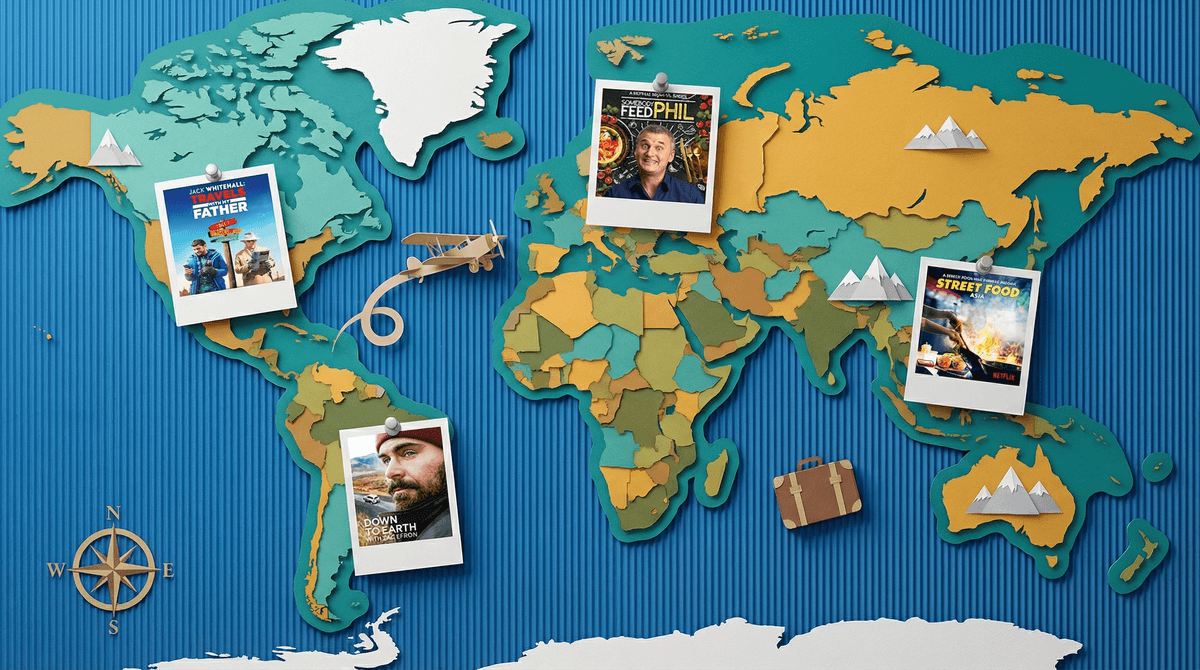
Travel TV shows for families are exactly what they sound like—programs that take viewers around the world, exploring different cultures, cuisines, landscapes, and ways of life. Think Somebody Feed Phil, Jack Whitehall: Travels with My Father, or Down to Earth with Zac Efron. But unlike the old-school travel shows your parents watched on PBS, today's options range from genuinely educational to basically food porn with a passport.
The good ones? They're like having a curious, respectful tour guide who makes kids actually want to learn about geography. The bad ones are just celebrity vanity projects with pretty backgrounds.
Let's be real: most kids aren't going to choose a travel documentary over Bluey or whatever's trending on YouTube. But here's what can hook them:
Food is a universal language. Shows that focus on eating weird stuff or trying local cuisine tap into that "would you rather" energy kids love. "Would you eat fried tarantulas?" suddenly becomes a dinner table debate.
Adventure and exploration. Kids who are into nature, animals, or just doing cool stuff respond to shows with physical challenges, outdoor adventures, or wildlife encounters. Our Planet isn't technically a travel show, but it scratches that same itch.
Relatability. Shows featuring families or kids traveling together work better than solo hosts. When kids see other kids trying new foods or being nervous about experiences, it normalizes the discomfort of new things.
It beats a geography textbook. If you've got a visual learner, watching someone actually navigate Tokyo's subway system or explain why Venice is sinking is going to stick better than reading about it.
Here's where we need to be honest: not all travel content is created equal, and some of it is actively teaching your kids terrible lessons about the world.
The Good:
- Shows that respect local cultures and don't treat them as exotic curiosities
- Content that includes historical and cultural context, not just "look at this weird thing"
- Programs that show the realities of places (including challenges), not just Instagram-worthy shots
- Hosts who admit when they're uncomfortable or don't know something
The Bad:
- "White person discovers the world" energy where everything is framed through a Western lens
- Shows that only visit luxury resorts and never interact with actual local life
- Content that treats food or customs as "gross" or "weird" rather than different
- Programs that skip over any social, political, or environmental issues
Somebody Feed Phil is genuinely lovely—Phil Rosenthal is enthusiastic without being condescending, and he clearly respects the people and places he visits. Jack Whitehall: Travels with My Father is funny but can veer into "aren't other cultures silly?" territory depending on the episode.
Ages 5-8: Honestly, most traditional travel shows are going to bore this age group. Better to go with Bluey's episode "Camping" or shows specifically designed for little kids that incorporate world cultures, like certain episodes of Sesame Street.
Ages 8-12: This is the sweet spot. They're old enough to appreciate different places and curious enough to ask questions. Look for:
- Shows with clear narratives or challenges
- Content that's visually engaging (not just talking heads)
- Episodes under 45 minutes (their attention span threshold)
- Programs that include kids or families
Ages 13+: Teens can handle more complex content, including shows that address social issues, environmental challenges, or political realities. They're also old enough to critically analyze what they're watching and discuss bias or representation.
This isn't passive entertainment. The real value of travel shows comes from the conversations they spark. Watching silently isn't going to teach your kid much—you need to pause and talk about what you're seeing.
Questions to ask while watching:
- "Why do you think they do it that way there?"
- "How is this different from how we do things?"
- "What would you want to try if we visited?"
- "Do you think this show is showing the whole picture?"
Use it as a jumping-off point. After watching an episode about Japan, pull up a map, find Japanese restaurants nearby, or check out library books about Japanese culture. The show is the appetizer, not the full meal.
Be aware of what values are being transmitted. Some travel shows subtly (or not so subtly) reinforce ideas about "developed" vs. "developing" countries, or frame certain cultures as backward. Watch with a critical eye and be ready to provide context.
It's not a substitute for actual travel. If you can afford to travel with your kids, do it. If you can't, that's okay—there are other ways to expose kids to different cultures that don't require a passport.
For families with younger kids (8-12):
- Somebody Feed Phil - Warm, funny, genuinely respectful
- Street Food - Shorter episodes, focuses on real people and their food stories
- 72 Cutest Animals - Not technically travel, but explores animals in their natural habitats worldwide
For families with teens:
- Dark Tourist - Explores "dark tourism" spots; mature themes but fascinating
- Down to Earth with Zac Efron - Focuses on sustainability and environmental issues
- Anthony Bourdain: Parts Unknown - The gold standard, but definitely for older teens (language, mature themes)
Travel shows can be genuinely valuable screen time—if you choose thoughtfully and watch actively. They're not going to magically make your kid a global citizen, but they can plant seeds of curiosity, empathy, and understanding that might grow into something real.
The key is treating them as conversation starters, not babysitters. And being honest about what they show and what they don't. Most travel TV is still created by and for Western audiences, which means it comes with blind spots and biases.
But on a rainy afternoon when you're trying to avoid another Roblox session? A well-chosen travel show, a bowl of popcorn, and a family conversation about what you're seeing? That's not terrible parenting. That's actually pretty solid.
Want to explore more options for educational entertainment that doesn't feel like homework? Check out our guides on educational podcasts for kids or documentaries worth watching as a family.
And if your kid gets inspired and wants to learn more about a specific place or culture, here are ways to dig deeper beyond just watching TV.