

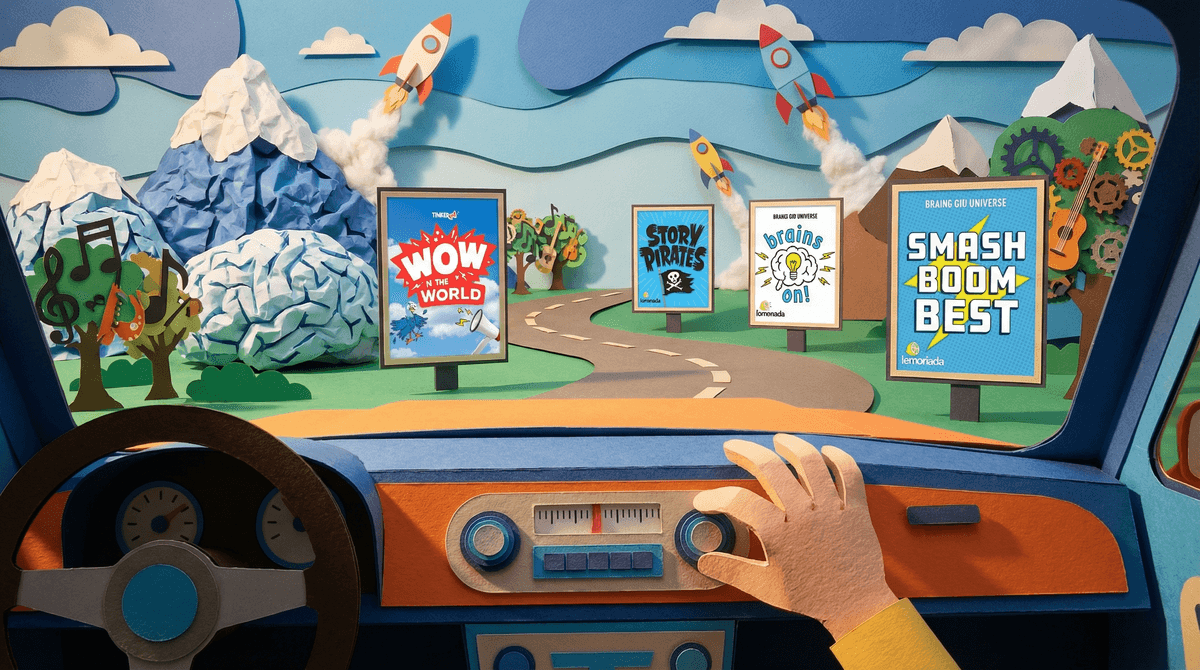
Educational podcasts for kids are audio shows designed to teach, inspire curiosity, and entertain young listeners—all without a screen. Think of them as the modern version of radio shows, but infinitely more targeted and available on-demand. They cover everything from science and history to storytelling and social-emotional learning, usually in 20-40 minute episodes that fit perfectly into car rides, quiet time, or while kids are drawing or building Lego.
Unlike YouTube or Netflix, podcasts require kids to use their imagination to visualize what's happening. There's no autoplay algorithm trying to keep them hooked for hours. Just pure audio content that ends when the episode ends. Revolutionary, right?
The quality range is huge—from NPR-level production with sound effects and expert interviews to someone's dad reading facts about dinosaurs in their basement. But the good ones? They're genuinely engaging enough that kids will ask to listen, and educational enough that you feel great about it.
Here's the thing: podcasts work because they tap into something kids naturally love—stories and conversations. The best educational podcasts don't feel like school. They feel like hanging out with a really interesting adult who's excited to share cool stuff.
Podcasts also solve a specific modern parenting problem: you want your kid to learn and be entertained, but you're exhausted by the screen time negotiations. Podcasts give kids autonomy (they can listen independently) while giving you peace of mind (it's audio-only, so no worrying about inappropriate videos or ads).
For kids who are auditory learners or have ADHD, podcasts can be particularly effective. They can listen while moving, fidgeting, or doing something with their hands. And for reluctant readers, podcasts can build background knowledge and vocabulary that actually helps with reading comprehension later.
Ages 3-6:
- Wow in the World - Science and curiosity with high energy hosts
- Circle Round - Folktales from around the world, beautifully produced
- Story Pirates - Stories written by kids, performed by comedians
Ages 7-10:
- Brains On! - Science questions answered with humor and depth (this one is gold)
- But Why: A Podcast for Curious Kids - Kids ask questions, experts answer
- The Past and The Curious - History adventures that don't feel like textbooks
Ages 11+:
- Short & Curly - Ethics and philosophy for tweens
- Smash Boom Best - Debate-style show (Pizza vs. Tacos, Cats vs. Dogs)
- Six Minutes - Serialized mystery adventure (like an audio book but episodic)
These age ranges are loose—some 8-year-olds will love Wow in the World, others will find it babyish. Preview episodes yourself or start with one together.
The listening curve is real. If your kid is used to fast-paced YouTube content, they might struggle with podcasts at first. Their brains need to adjust to creating their own mental images instead of having everything shown to them. Start with shorter, more energetic podcasts and work up to longer, slower-paced ones.
Not all "educational" podcasts are created equal. Some are basically ads for toys or just adults talking at kids in a condescending way. Look for podcasts that:
- Include kids' voices and questions
- Have good sound design (music, effects, editing)
- Cite sources or bring in actual experts
- Don't talk down to children
The subscription economy has hit podcasts. Many shows have free episodes but lock premium content behind apps like Gobb or individual Patreon subscriptions. This can get expensive fast if your kid loves multiple shows. The free content is usually plenty, but be aware of the upsell.
Podcasts can be social. Some families do "podcast club" where everyone listens to the same episode and discusses it over dinner. Others use long car rides as family listening time. This turns solo screen-free time into actual conversation starters.
Start with the car. Seriously, this is where podcasts shine. Download episodes before trips (most podcast apps let you do this), and make it the default instead of "can we watch something on the iPad?"
Let them have some control. Create a pre-approved playlist of podcasts and let your kid choose which one to listen to. Autonomy matters, even in audio form.
Use it as wind-down time. Podcasts can replace screens before bed. A 20-minute episode while they're in bed with the lights dim can be a great way to transition to sleep without the blue light stimulation.
Don't force it. If your kid genuinely hates podcasts, that's okay. Some kids are visual learners and will never prefer audio content. But most kids who "don't like podcasts" just haven't found the right one yet—it's worth trying a few different styles.
Educational podcasts are one of the easiest wins in digital wellness. They're screen-free, they're educational, they're portable, and most of them are free. They turn dead time (car rides, quiet time, chores) into learning time without feeling like work.
The key is finding the right match for your kid's interests and attention span. A 6-year-old obsessed with animals will devour different content than an 11-year-old who loves mysteries.
Start with Brains On! or Wow in the World—they're consistently great across age ranges. Download a few episodes, queue them up for your next car ride, and see what sticks.
And honestly? Even if your kid only tolerates them, you're still winning. Because 30 minutes of a podcast about volcanoes is infinitely better than 30 minutes of YouTube algorithm chaos.
Next Steps:
- Pick 2-3 podcasts from the age-appropriate list above and download a few episodes
- Set up a podcast app
 on a device your kid can access independently
 - Try "podcast Fridays" in the car or during dinner prep as a low-pressure way to introduce them