

TL;DR
The Umbrella Academy is a stylized, high-energy superhero drama that focuses more on "family trauma" than "saving the world." It’s perfect for older teens who have outgrown Disney+ but aren't quite ready for the hyper-violence of The Boys.
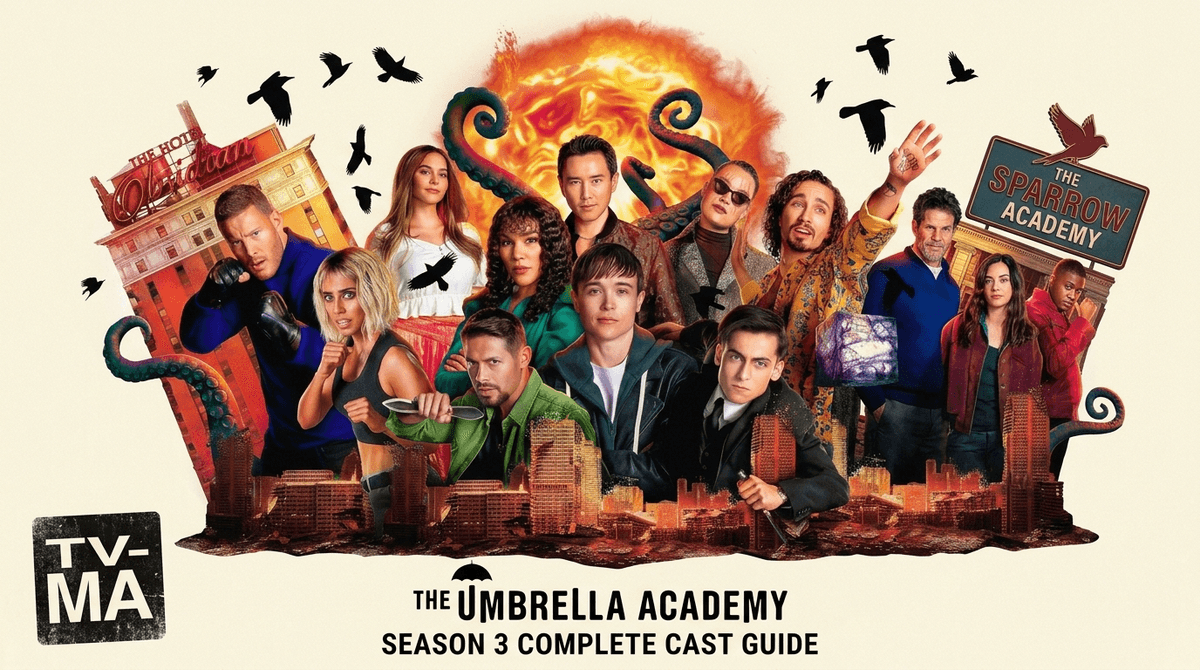
The big catch: The show spent three seasons as TV-14 before jumping to TV-MA for its final season. If your kid is sensitive to profanity or stylized gore, you’ll want to pay attention to that shift.
Quick Links for Fans:
- If they love the "found family" vibe: Stranger Things
- If they want more quirky superpowers: Doom Patrol
- If they like the graphic novel roots: Locke & Key
- For the younger sibling who wants in: Percy Jackson and the Olympians
Based on the comic books by Gerard Way (lead singer of My Chemical Romance), the show follows seven estranged siblings who were born under mysterious circumstances and "adopted" by a cold, eccentric billionaire. He trained them to be a superhero team called the Umbrella Academy, but in the process, he effectively broke them as human beings.
The series kicks off when they reunite for their father's funeral, only to realize an apocalypse is coming in eight days. It’s a mix of time travel, talking chimpanzees, 1960s nostalgia, and some of the best needle-drops on television.
Unlike the Marvel Cinematic Universe, where the heroes are generally aspirational, the characters in The Umbrella Academy are deeply flawed, struggling with addiction, identity, and the crushing weight of their childhoods.
There’s a specific brand of "weird" that resonates with Gen Z and Alpha right now. It’s the same energy that makes Skibidi Toilet or Roblox memes take off—a blend of absurdity and sincerity.
- The Music: The show uses pop and rock hits for massive, choreographed fight scenes or dance-offs. It makes the show feel like a long music video.
- Five: One of the main characters, Number Five, is a 58-year-old man trapped in a 13-year-old’s body. He’s cynical, brilliant, and lethal. Every teenager who feels like they are "surrounded by idiots" relates to him on a spiritual level.
- The Aesthetic: It’s "Dark Academia" meets "Superhero Chic." It looks cool, and the fashion is top-tier.
- The "Loud" Personalities: From Klaus’s chaotic energy to Diego’s "hero complex," the characters feel like real people (who just happen to have powers).
Check out our guide on why teens are drawn to dark superhero stories
For the first three seasons, The Umbrella Academy sat comfortably in the TV-14 category. It had some "shits" and "hells," plenty of blood, and heavy themes, but it stayed within the bounds of what most parents expect from a teen-targeted show.
Season 4 changed the game to TV-MA.
This wasn't a mistake or a glitch in the Netflix algorithm. The creators decided to lean harder into "adult" language (expect plenty of F-bombs) and more visceral violence. While it’s not reaching the "human-exploding-into-pink-mist" levels of Gen V, it is a noticeable step up.
If you’ve been watching this as a family, you might want to pre-screen the final season or at least have the remote ready. The tone becomes darker, and the stakes feel more nihilistic.
This isn't a show about "good vs. evil." It’s a show about people trying to be okay. Because of that, it touches on some heavy topics that might require a conversation.
Klaus (Number Four) can see ghosts. To cope with the literal spirits following him around, he spends much of the series in a state of drug or alcohol-induced haze. The show doesn't necessarily "glamorize" it—it shows how much he suffers—but he is also the comic relief. It’s a nuanced portrayal of substance abuse that might be a bit much for younger viewers.
In Season 3, the character of Vanya transitions to Viktor, mirroring actor Elliot Page’s real-life transition. The show handles this with incredible grace. The siblings' reaction is basically, "Cool, Viktor, can we get back to stopping the apocalypse now?" It’s a great example of unconditional family support, but if your family hasn't discussed gender identity, this will likely spark those questions.
Sibling Trauma
The "villain" of the show is arguably the father, Reginald Hargreeves. He was abusive and manipulative. For kids who struggle with high expectations or family pressure, the show can feel very cathartic—but it can also be triggering for those sensitive to emotional abuse themes.
Ages 14-15: This is the sweet spot. They’ve likely seen Stranger Things and can handle the "fictional" violence. They’ll appreciate the complex character arcs and the humor.
Ages 11-13: Proceed with caution. The violence is "comic book style," but there are some genuinely creepy moments (especially involving ghosts and body horror). If they are mature and you watch with them, it’s probably fine, but maybe skip the TV-MA final season for now.
Ages 10 and Under: Hard no. Between the drug use, the language, and the complexity of the plot (time travel is confusing even for adults), this isn't for the elementary school crowd. If they want superheroes, stick to X-Men '97 or Spider-Man: Across the Spider-Verse.
Get an age-appropriateness breakdown for The Umbrella Academy
If your family has finished the series and you’re looking for something with a similar "vibe" (quirky, slightly dark, or superhero-adjacent), here are some solid picks:
This is a British show about a group of young offenders doing community service who get superpowers during a storm. It’s much raunchier than The Umbrella Academy (it’s definitely TV-MA), but it shares that "unlikely heroes with messy lives" DNA. Robert Sheehan (who plays Klaus) is also a lead here.
If your teen liked the "dark side of superheroes" aspect, this animated series is fantastic. Warning: It is extremely violent. Like, "don't eat while watching this" violent. But the storytelling is top-tier.
For the kid who loves the "outcast" aesthetic and the mystery elements of The Umbrella Academy, Wednesday is a perfect, slightly lighter follow-up.
Another high-budget Netflix adaptation of a legendary graphic novel. It’s more philosophical and "goth" than The Umbrella Academy, but it hits that same "prestige genre" itch.
If you’re watching this with your teen, use the show as a springboard for some real-world conversations:
- On Family Roles: "Which sibling do you think you’re most like? Do you ever feel like you have to be the 'responsible one' like Luther or the 'rebel' like Diego?"
- On Coping Mechanisms: "Klaus uses drugs to block out the ghosts. What are some healthy ways people deal with things that scare them or make them anxious?"
- On the Rating Shift: "Did you notice the show got darker in the last season? Do you think the extra swearing/violence made the story better, or was it just for shock value?"
The Umbrella Academy is a rare show that manages to be weird, funny, and heartbreaking all at once. It’s a great pick for families with older teens who enjoy deconstructing the "superhero" mythos.
Just be aware that by the time you hit Season 4, the "teen" rating is out the window. It’s a full-blown adult drama by the end. If you’re okay with your kids hearing some creative profanity and seeing some messy family dynamics play out on screen, it’s one of the most creative things on Netflix.
Next Steps:
- Check your Netflix maturity ratings to ensure Season 4 isn't blocked if you want your teen to see it.
- Watch the first episode of Season 1 together—the "I Think We're Alone Now" dance scene will tell you immediately if your family is going to vibe with the show.
- Explore our guide on navigating TV-MA content with teens