

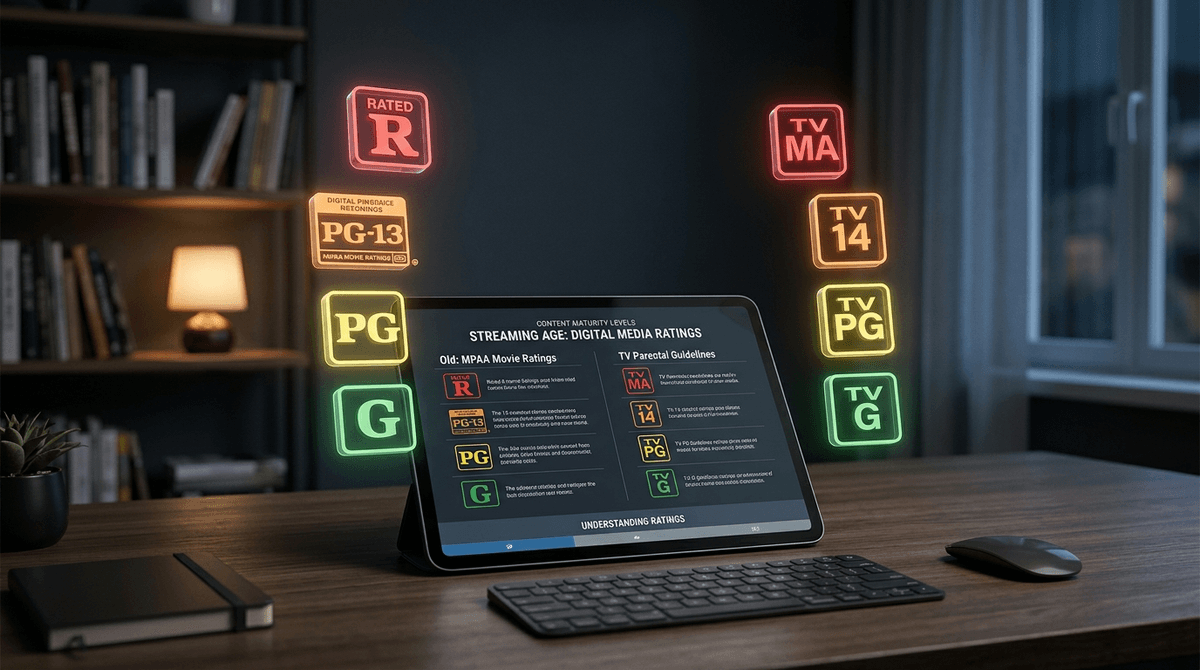
TL;DR: The old MPAA movie ratings (G, PG, PG-13, R) are being replaced by a confusing, platform-specific TV rating system. TV-MA is the new "Rated R," but its intensity varies wildly between Netflix and Disney+. To keep your sanity, ignore the icons and look at the "Content Descriptors" (L, V, S, D).
Quick Links to Navigate the Chaos:
Remember when "Rated R" meant you weren't getting into the theater without a cool aunt or a very convincing trench coat? In the streaming era, those clear boundaries have dissolved. We’ve moved from the MPAA (which rates movies) to the TV Parental Guidelines (which rate shows), and honestly, it’s a bit of a mess.
The biggest shift we’re seeing in 2026 is the "TV-MA" explosion. It’s the new "Rated R," but because streaming services often rate their own content, one platform's TV-MA might be "a few f-bombs and some blood," while another's is "total psychological trauma."
If you feel like you’re constantly Googling "Is Stranger Things okay for a 10-year-old?" you aren't alone. The system is designed for broad buckets, not for the nuance of your specific kid who might handle fantasy violence fine but has nightmares about Coraline.
Here is the "No-BS" breakdown of what these letters actually signify in the current streaming landscape:
TV-Y & TV-Y7
These are for the littles. TV-Y is "all children," and TV-Y7 is for "older children" (usually age 7+).
TV-G & TV-PG
TV-G is rare now—mostly cooking shows or nature docs. TV-PG is the catch-all for "family" content.
- The Reality: TV-PG in 2026 is a massive bucket. It includes everything from The Great British Baking Show to shows with mild swearing and "thematic elements" (code for: someone’s parents died).
TV-14
This is the "Parental Guidance Strongly Cautioned" tier.
- The Reality: This is the sweet spot for most middle schoolers. It’s where you’ll find Wednesday and The Umbrella Academy. Expect some "hells" and "damns," stylized violence, and maybe some suggestive situations that will make you want to look at your phone until the scene ends.
TV-MA
The "Mature Audience" label.
- The Reality: This is where things get dicey. On Disney+, TV-MA might just mean Deadpool & Wolverine levels of snark and gore. On Max, it usually means "full-frontal nudity and soul-crushing realism."

In the old days, TV-MA was reserved for late-night cable. Now, it’s the default for "prestige" streaming. Shows like Squid Game or The Boys aren't just violent; they are designed to push boundaries.
The problem is that kids are seeing these icons everywhere. When a 12-year-old sees that Stranger Things is TV-14, they assume TV-MA is just "the next level up." They don't realize that the jump from TV-14 to TV-MA is often a cliff, not a step.
Netflix is notorious for "rating up." They are very cautious, often giving a TV-14 rating to something that might have been a PG movie in the 90s. However, their TV-MA content is heavy. If you see TV-MA on Netflix, believe it.
- Pro Tip: Use their "Profile Maturity Levels" to hard-cap what your kid can even see in the search results.
For a long time, Disney+ was the "safe" zone. Then they added the Marvel Defenders saga and Logan. Now, the "Adult" side of Disney+ is very much present.
- Pro Tip: If you haven't checked your settings lately, Disney+ might have defaulted your kids into a lower maturity tier that blocks them from seeing even "PG-13" Marvel movies.
YouTube is the outlier because it doesn't use the standard TV Parental Guidelines. It uses "Made for Kids" or... nothing. This is how kids end up watching Skibidi Toilet, which isn't "rated" but definitely has "weird fever dream" energy that some parents find more objectionable than a PG-13 movie.
Below the main rating, you’ll usually see a string of letters. These are actually more helpful than the rating itself:
- V (Violence): From cartoon bonks to "oh god, why."
- L (Language): Usually counts the f-bombs.
- S (Sexual Content): Ranging from "heavy making out" to "HBO-style."
- D (Suggestive Dialogue): Innuendo and "adult" jokes.
If you see TV-14-LV, you know it’s mostly swearing and fighting. If you see TV-MA-S, you’re in "talk to your kids about biology" territory.
We’re big fans of "intentional exposure" rather than "accidental discovery."
- For Ages 5-8: Stick to TV-Y and TV-Y7. At this age, the distinction between "fantasy" and "reality" is still forming. Even a "mild" TV-PG show with a scary monster can cause weeks of bedtime drama.
- For Ages 9-12: This is the TV-PG and "light" TV-14 era. This is a great time to watch shows together. If they want to watch The Mandalorian, watch the first episode with them to see how they handle the "disintegrations."
- For Ages 13-15: They are going to see TV-MA content at a friend's house. It’s better to talk about why a show is rated MA. Is it just "edgy" for the sake of it, or is it telling a story that requires those themes?
Ratings don't account for "Brain Rot." A show can be rated TV-G and still be absolutely mind-numbing, repetitive garbage that makes your kid irritable. Conversely, a TV-14 documentary about climate change might be "intense" but incredibly valuable.
Don't just look at the rating; look at the WISE Score on Screenwise. We look at the educational value, the "positive role models" factor, and whether the show is actually good. Some high-rated shows are just poorly written "content" designed to keep eyes glued to the screen.
When your kid asks, "Why can't I watch Deadpool?" don't just say "Because the rating says so." Try:
"Ratings are like a heads-up from other parents. That movie is rated R/TV-MA because it uses a lot of graphic violence as a joke. I don't think you're 'bad' for wanting to see it, but I don't think your brain needs those images stuck in there quite yet. Let's find something with that same humor that isn't quite so gory."
The streaming rating system is a tool, but it's a blunt one. TV-MA is the new Rated R, but it's also a spectrum. Your best bet is to:
- Set PINs on your adult profiles so your 8-year-old doesn't "accidentally" click on your Shogun binge.
- Read the descriptors (L, V, S, D) instead of just looking at the age number.
- Trust your gut. If a "TV-Y7" show feels weirdly aggressive or "off," turn it off. You're the expert on your kid, not the Netflix algorithm.
- Take the Screenwise Survey to see how your family's streaming habits compare to your community.
- Check out our guide on setting up "Kid Profiles" on every major app.
- Learn about the best "co-watching" shows for families in 2026.