

Anime vs. Western Animation: What Parents Actually Need to Know
TL;DR: Anime isn't just "cartoons from Japan" — it's a medium with wildly different storytelling conventions, maturity levels, and cultural contexts than Western animation. The good news? Both offer incredible options for kids. The catch? You can't judge an anime by its animation style the way you might with Western cartoons. Here's how to navigate both worlds without accidentally letting your 8-year-old watch something with existential dread and graphic violence.
Quick recommendations to get you started:
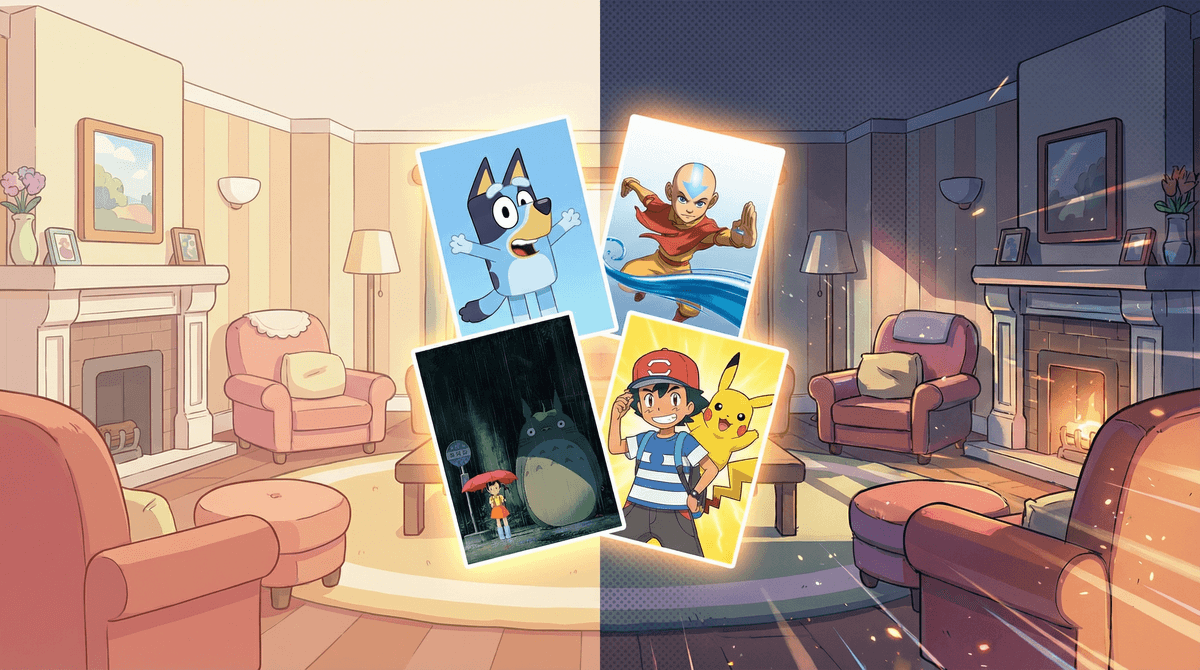
- Western Animation: Bluey, Avatar: The Last Airbender, Hilda
- Anime: My Neighbor Totoro, Pokémon, Kiki's Delivery Service
In Western animation, we have a pretty reliable visual shorthand: if it looks like a kids' show (bright colors, simplified character designs, Saturday morning vibe), it probably is a kids' show. If it looks more realistic or stylized in certain ways, it's probably for adults (Rick and Morty, BoJack Horseman).
Anime throws this entire system out the window.
A show with adorable characters and pastel colors might deal with death, war, or psychological trauma. Meanwhile, something that looks edgy and intense might be a wholesome sports story about friendship. The animation style in anime doesn't correlate with content maturity the way it does in Western animation — at all.
This is the single most important thing to understand when your kid says "can I watch this anime?" You cannot eyeball it.
Anime has absolutely exploded in popularity with kids and teens over the past few years. A few reasons why:
Serialized storytelling: Unlike many Western cartoons that reset to status quo each episode, anime typically tells ongoing stories with real character development and consequences. Kids are into this.
Emotional depth: Anime doesn't talk down to younger audiences. Characters experience real loss, complex relationships, and moral ambiguity. Even "kids' anime" often has more emotional weight than comparable Western shows.
Representation of interests: There's literally an anime for every possible interest. Cooking? Food Wars (note: NOT for kids despite the premise). Board games? Hikaru no Go. Volleyball? Haikyuu!!. This specificity is appealing.
Cultural cachet: Watching anime signals you're part of a global youth culture. It's cool in a way that feels authentic and not parent-approved.
The games they already play: If your kid plays Genshin Impact, Pokémon, or watches Naruto YouTubers, they're already immersed in anime-adjacent culture.
Elementary School (Ages 6-10)
My Neighbor Totoro and most Studio Ghibli films are your safe entry point. Kiki's Delivery Service, Ponyo, and The Cat Returns are magical, beautifully animated, and genuinely appropriate for young kids.
Pokémon remains a solid choice — yes, there's cartoon violence (creatures battling), but it's been designed for kids from day one. The themes are friendship, perseverance, and collecting cute monsters.
Little Witch Academia on Netflix is like a Japanese Harry Potter at magic school, with great female characters and zero fanservice (more on that term in a minute).
Middle School (Ages 11-13)
Haikyuu!! — A volleyball anime that's genuinely excellent television. It's about teamwork, failure, and growth. Very little problematic content.
My Hero Academia (with caveats) — Superhero school anime that's hugely popular. Generally appropriate for this age, though it has some fanservice with female characters and increasing violence in later seasons. Worth watching a few episodes yourself first.
Demon Slayer — This is where it gets tricky. Visually stunning, emotionally compelling, and your kid's friends are definitely watching it. But it has genuine horror elements and graphic violence. I'd say 13+ and depends on your kid.
High School (Ages 14+)
Attack on Titan — Your teen is probably already watching this or wants to. It's dark, violent, and deals with war, fascism, and genocide. It's also brilliantly written. This is a "watch together and discuss" situation, not a "sure, whatever" situation.
Death Note — Psychological thriller about a teen who finds a notebook that kills people. No gore, but intensely dark themes about morality and power. Great for discussions about ethics.
Fullmetal Alchemist: Brotherhood — Often cited as one of the best anime series period. Deals with heavy themes (war, loss, human experimentation) but with genuine moral complexity. 14+ for sure.
Elementary School (Ages 6-10)
Bluey — If you're not watching this with your kids, you're missing out on some of the best children's television ever made. It's Australian, it's brilliant, and it makes parents cry.
Hilda on Netflix — A girl and her deer-fox explore a world of Scandinavian folklore. Gorgeous animation, great female protagonist, genuinely adventurous without being scary.
The Dragon Prince — From one of the creators of Avatar: The Last Airbender. Fantasy adventure with excellent representation and storytelling that respects kids' intelligence.
Middle School (Ages 11-13)
Avatar: The Last Airbender — If your kid hasn't watched this yet, this is your homework. It's a masterclass in serialized storytelling, character development, and dealing with war, loss, and responsibility. It's also frequently compared to anime in its storytelling approach.
Gravity Falls — Mystery, humor, and genuine emotional stakes. Ended after two seasons by creator choice, so it has a complete story arc.
Amphibia — Girl gets transported to frog world. Sounds silly, becomes surprisingly deep about friendship, family, and growing up.
High School (Ages 14+)
The Owl House — Fantasy series with Disney's first bisexual protagonist. Great LGBTQ+ representation, creative world-building, and genuine stakes.
Arcane — Based on League of Legends, but you don't need to know anything about the game. Stunning animation and mature storytelling about class, family, and violence. Definitely 15+.
We need to talk about this because it's going to come up. "Fanservice" in anime refers to sexualized content (usually of female characters) that's inserted to appeal to certain audiences. This can range from camera angles that linger on bodies to characters in improbably revealing outfits to outright inappropriate situations played for comedy.
Here's the frustrating part: fanservice can show up in otherwise excellent anime that's marketed toward teens or even kids. A show about cooking or sports might randomly have a beach episode with questionable camera work. An adventure series might have a female character whose armor defies physics.
What to do about it:
- Check reviews on Common Sense Media or MyAnimeList specifically for "fanservice" mentions
- Watch the first few episodes of anything before giving your kid the green light
- Have a conversation about the male gaze and objectification if your teen is watching shows with this content
- Know that it's more prevalent in certain genres (action, comedy) and virtually absent in others (sports anime, many shoujo/girls' anime)
Here's another headache: anime ratings are inconsistent across platforms. A show rated TV-14 in Japan might be TV-PG in the US, or vice versa. The Japanese rating system has different cultural standards (more comfortable with some violence, less comfortable with certain language).
Netflix, Crunchyroll, and Hulu all rate the same shows differently sometimes.
Your best bet:
- Don't rely solely on the platform rating
- Check Common Sense Media for parent and kid reviews
- Watch the first episode or two yourself
- Search "[show name] parent guide" to find detailed content breakdowns
Your kid will have opinions about this. Here's the deal:
Subtitles (original Japanese audio):
- Preserves original voice acting and cultural nuances
- Requires reading speed and attention (good for literacy, challenging for younger kids)
- Generally preferred by serious anime fans
Dubbed (English voice acting):
- More accessible for younger kids or casual viewing
- Quality varies wildly (some dubs are excellent, others are rough)
- Sometimes changes cultural references or jokes
For younger kids (under 10), dubbed is usually more practical. For tweens and teens, let them choose. The subtitle-reading practice is actually pretty valuable.
Anime comes from a different cultural context, and some things that are normal in Japanese media might need context for American kids:
Bathhouse scenes: Public bathing is normal in Japan; these scenes aren't inherently sexual but might feel weird without cultural context
School dynamics: Japanese schools have different structures (class stays together all day, cleaning duties, cultural festivals) that feature prominently in anime
Gender roles: Some anime has more traditional gender dynamics than American kids are used to; worth discussing
Food culture: Bento boxes, eating etiquette, and food presentation are big deals in anime
These differences are actually great conversation starters about cultural diversity and different ways of life.
It's worth noting that Western animation has been learning from anime's serialized storytelling success. Shows like Avatar: The Last Airbender, The Dragon Prince, and Arcane blend Western and anime storytelling approaches.
The line is blurring, which is honestly great for everyone. We're getting more sophisticated animated storytelling across the board.
Some anime genres/tropes to be cautious about:
"Isekai" (transported to another world): Hugely popular genre, but many are aimed at adult audiences despite fantasy settings. Sword Art Online is popular with teens but has sexual assault themes.
"Ecchi": This is literally a genre category meaning "sexy/perverted." If you see this tag, it's not for kids.
"Harem" anime: One character surrounded by romantic interests. Often has fanservice and uncomfortable dynamics.
Anything with "mature" or "R+" ratings: These exist for a reason. Berserk, Elfen Lied, and others have extreme violence and sexual content.
Anime and Western animation both offer incredible storytelling opportunities for kids. The key differences:
Western animation: More reliable visual indicators of age-appropriateness, generally more consistent content ratings, familiar cultural context
Anime: Wider range of genres and storytelling sophistication, less reliable visual indicators of content, requires more parental vetting, offers window into different culture
Neither is inherently better or worse for kids. Both require parental awareness, but anime requires a bit more homework upfront because the visual shorthand we're used to doesn't apply.
-
Start with the safe bets: Studio Ghibli films or Avatar: The Last Airbender are great entry points to see if your kid vibes with anime-style storytelling
-
Create a "watch together first" rule: First few episodes of any new anime get watched together, then you decide if they can continue solo
-
Use the Screenwise chat: Find out if specific anime shows your kid is requesting are appropriate
 — we can give you detailed breakdowns
 -
Check out our anime-specific guides: We have detailed guides on Studio Ghibli movies, anime for beginners, and alternatives to popular but questionable anime
-
Have the conversation: Talk with your kid about why you're being careful, what your concerns are, and what your boundaries are around content. They'll respect the process more if they understand it's not arbitrary.
The goal isn't to keep kids away from anime (or any animation) — it's to help them find the incredible stories that exist in both mediums while avoiding content that's genuinely not appropriate for their age. There's enough great stuff out there that nobody needs to watch things that make them (or you) uncomfortable.