

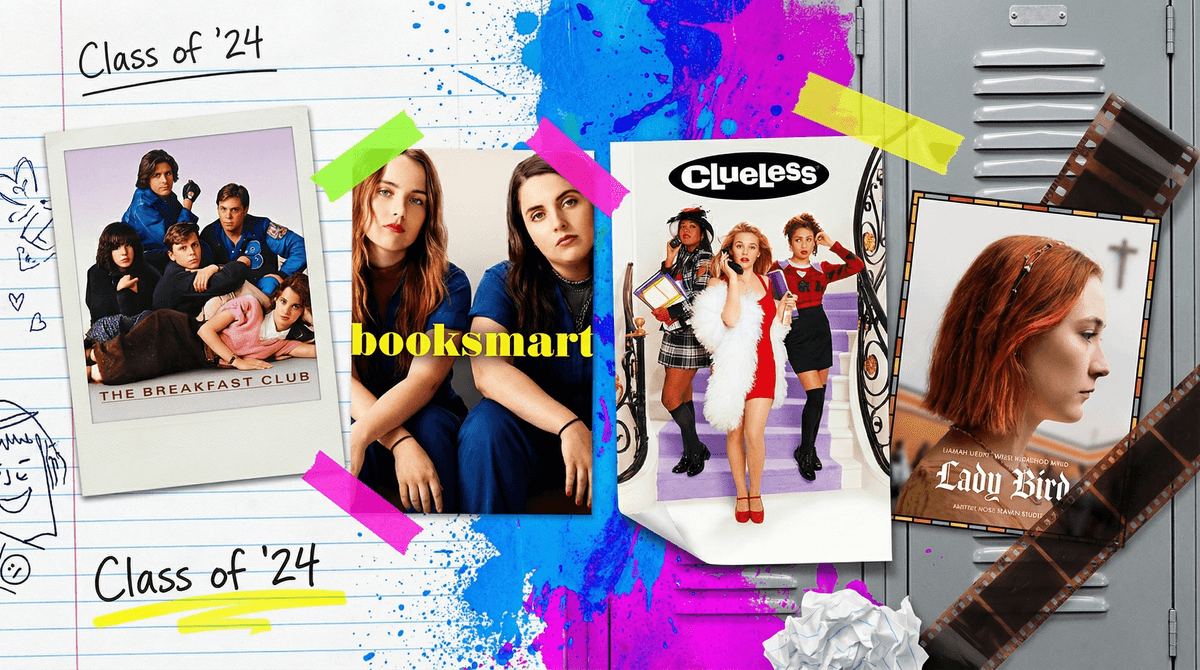
Look, we're not talking about every teen movie ever made. We're talking about the essential high school films — the ones that actually capture something real about adolescence, identity, social hierarchies, first love, and figuring out who you are when everything feels impossibly high stakes.
These are the movies that become cultural touchstones. The ones your teens' teachers might reference. The ones that show up in TikTok edits. The films that, honestly, might help your kid feel less alone when they're navigating their own cafeteria politics or identity questions.
And here's the thing: watching these together isn't just nostalgia for you — it's media literacy in action. These movies give you a shared language to talk about peer pressure, representation, consent, social class, and how Hollywood has (or hasn't) evolved in portraying teen life.
High school movies do something unique: they validate the teenage experience while also creating distance from it. Your kid can watch someone else navigate humiliation, heartbreak, or social anxiety and process their own feelings more safely.
Plus, these films are time capsules. Watching The Breakfast Club from 1985 versus Booksmart from 2019 opens up conversations about how teen culture, gender roles, and social expectations have shifted. Or haven't.
And let's be honest — some of these are just really good movies. Period. Not "good for a teen movie." Just good.
The Foundational Classics (1980s-1990s)
These shaped the entire genre. Some have aged beautifully. Others... well, they're complicated.
The John Hughes Era:
- The Breakfast Club (1985) — The archetypes that defined a generation. Still resonant, though some moments feel dated.
- Ferris Bueller's Day Off (1986) — Pure wish fulfillment and surprisingly philosophical.
- Pretty in Pink (1986) — Class consciousness and that controversial ending.
- Sixteen Candles (1984) — Warning: Contains a deeply problematic sexual assault scene played for laughs. Worth discussing why this was normalized.
Other 80s Essentials:
- Fast Times at Ridgemont High (1982) — Surprisingly mature handling of abortion and teen sex.
- Heathers (1988) — Dark satire about toxic popularity culture. Heavy content around suicide.
- Say Anything (1989) — The boombox scene, yes, but also a genuinely healthy romantic relationship.
90s Defining Moments:
- Clueless (1995) — Jane Austen meets Beverly Hills. Smarter than it looks.
- 10 Things I Hate About You (1999) — Shakespeare adaptation with actual feminist themes.
- Dazed and Confused (1993) — Last day of school, 1976. Captures teenage aimlessness perfectly.
- Romy and Michele's High School Reunion (1997) — About how high school hierarchies become meaningless.
- She's All That (1999) — The makeover trope in its purest form.
- American Pie (1999) — Raunchy but surprisingly earnest about teen sexual anxiety. Ages 16+.
- Can't Hardly Wait (1998) — The graduation party movie.
- Bring It On (2000) — Cheerleading, cultural appropriation, and surprising self-awareness.
The 2000s Evolution
Teen movies got more diverse, more specific, and more willing to tackle harder topics.
Early 2000s:
- Mean Girls (2004) — The defining movie about female social aggression. Endlessly quotable.
- Bend It Like Beckham (2002) — Cultural identity, family expectations, and soccer.
- Napoleon Dynamite (2004) — Celebrates the weird kids.
- Superbad (2007) — Vulgar but genuine about male friendship and toxic masculinity. Ages 16+.
- Juno (2007) — Teen pregnancy handled with humor and heart.
Late 2000s:
- Easy A (2010) — Slut-shaming, double standards, and Nathaniel Hawthorne.
- The Perks of Being a Wallflower (2012) — Mental health, trauma, and finding your people. Heavy content.
- Nick and Norah's Infinite Playlist (2008) — One night in New York, indie music, and connection.
The Modern Era (2010s-2020s)
These films reflect contemporary teen life: more diverse, more explicit about identity, more aware of social media.
Identity and Representation:
- The Edge of Seventeen (2016) — Captures teenage misery and awkwardness perfectly.
- Love, Simon (2018) — First major studio teen rom-com with a gay protagonist.
- Lady Bird (2017) — Mother-daughter relationships and class anxiety in senior year.
- Eighth Grade (2018) — Middle school, technically, but captures social media anxiety brilliantly.
- Booksmart (2019) — Smart girls realizing they missed out. Hilarious and genuine.
- The Half of It (2020) — Cyrano de Bergerac meets queer coming-of-age.
- Spider-Man: Into the Spider-Verse (2018) — Superhero movie that's really about living up to expectations.
Diverse Perspectives:
- The Hate U Give (2018) — Police violence, activism, and code-switching between worlds.
- Dope (2015) — Black nerd culture and survival in Inglewood.
- To All the Boys I've Loved Before (2018) — Korean-American protagonist in a genuinely sweet rom-com.
- The Spectacular Now (2013) — Alcoholism and first love, unflinching.
Genre-Benders and Outliers
Not Strictly High School But Essential:
- Dead Poets Society (1989) — Prep school, poetry, and tragic consequences.
- Stand and Deliver (1988) — True story about a calculus teacher in East LA.
- Election (1999) — Dark satire about student government and adult pettiness.
- Rushmore (1998) — Wes Anderson's oddball about an overachieving student.
- Donnie Darko (2001) — Sci-fi psychological thriller set in high school. Cult classic.
Musicals:
- Grease (1978) — The musical. Problematic gender politics but undeniably iconic.
- High School Musical (2006) — Disney Channel phenomenon that defined a generation.
- Pitch Perfect (2012) — College, technically, but captures that transition moment.
Sports and Competition:
- Remember the Titans (2000) — Integration, football, and leadership.
- Friday Night Lights (2004) — Texas high school football as religion.
- Whiplash (2014) — Music conservatory, but about perfectionism and abuse.
International Perspectives:
- Whale Rider (2002) — Māori girl fighting tradition.
- Hunt for the Wilderpeople (2016) — New Zealand foster kid adventure.
The Ones That Deserve More Attention
- The Way Way Back (2013) — Summer before high school, finding confidence.
- Sing Street (2016) — 1980s Dublin, starting a band to impress a girl.
- Me and Earl and the Dying Girl (2015) — Friendship, film, and terminal illness.
- The Kings of Summer (2013) — Three boys build a house in the woods.
- Akeelah and the Bee (2006) — Spelling competition and community support.
Ages 13-14 (Middle School/Early High School): Start with the gentler entries: Ferris Bueller, Clueless, To All the Boys, Bend It Like Beckham, Eighth Grade (though it's intense), High School Musical.
Ages 15-16 (Mid High School): Most of the list opens up here: Mean Girls, The Breakfast Club, 10 Things I Hate About You, Lady Bird, The Edge of Seventeen, Love, Simon, Booksmart.
Ages 17+ (Late High School): The harder stuff: Heathers, Superbad, American Pie, The Perks of Being a Wallflower, The Hate U Give, Fast Times at Ridgemont High.
The Problematic Favorites
Many beloved classics contain content that hasn't aged well: sexual assault played for comedy (Sixteen Candles, Revenge of the Nerds), homophobic jokes, racist stereotypes, or casual misogyny.
Don't skip these movies — they're culturally important. But do watch them together and talk about what's changed and why. This is actually a gift: you get to discuss consent, representation, and evolving social norms through concrete examples.
The Conversation Starters
These films open doors to discussions about:
- Social hierarchies (Mean Girls, The Breakfast Club)
- Class and privilege (Pretty in Pink, Lady Bird)
- Identity and coming out (Love, Simon, The Half of It)
- Mental health (The Perks of Being a Wallflower, The Edge of Seventeen)
- Race and code-switching (The Hate U Give, Dope)
- Consent and healthy relationships (Say Anything vs. many others)
Why Co-Viewing Matters
Your teen might roll their eyes at watching movies "with mom/dad," but there's real value here:
- Shared cultural literacy — You'll understand their references, they'll understand yours
- Low-stakes emotional processing — Easier to discuss fictional characters' choices than their own
- Historical context — You can explain what life was actually like before smartphones
- Media literacy skills — Learning to analyze how stories are told and whose perspectives are centered
Want to make it less awkward? Frame it as "I want to show you this movie I loved" or "Let's watch something together" rather than "We need to have family movie night."
High school movies aren't just entertainment — they're cultural artifacts that help teens (and adults) process the universal weirdness of adolescence. The best ones make you laugh, cringe, and maybe cry a little.
You don't need to watch all 50. Start with the ones that match your kid's interests or current struggles. The artsy kid might connect with Sing Street. The athlete might see themselves in Remember the Titans. The anxious overachiever might find comfort in Booksmart or The Edge of Seventeen.
And honestly? Some of these are just really fun. Ferris Bueller is a blast. Clueless is endlessly quotable. Mean Girls holds up shockingly well.
The goal isn't to watch every essential high school movie. The goal is to find the ones that create connection — between you and your kid, between your kid and the wider world, between who they are now and who they're becoming.
Start with these five based on your teen:
- Struggling socially? The Breakfast Club or The Edge of Seventeen
- LGBTQ+ or questioning? Love, Simon or The Half of It
- Dealing with friend drama? Mean Girls or Booksmart
- Feeling like an outsider? Lady Bird or Napoleon Dynamite
- Just want to laugh? Ferris Bueller's Day Off or Clueless
Want recommendations for other age groups? Or need help talking about problematic content in older films?