

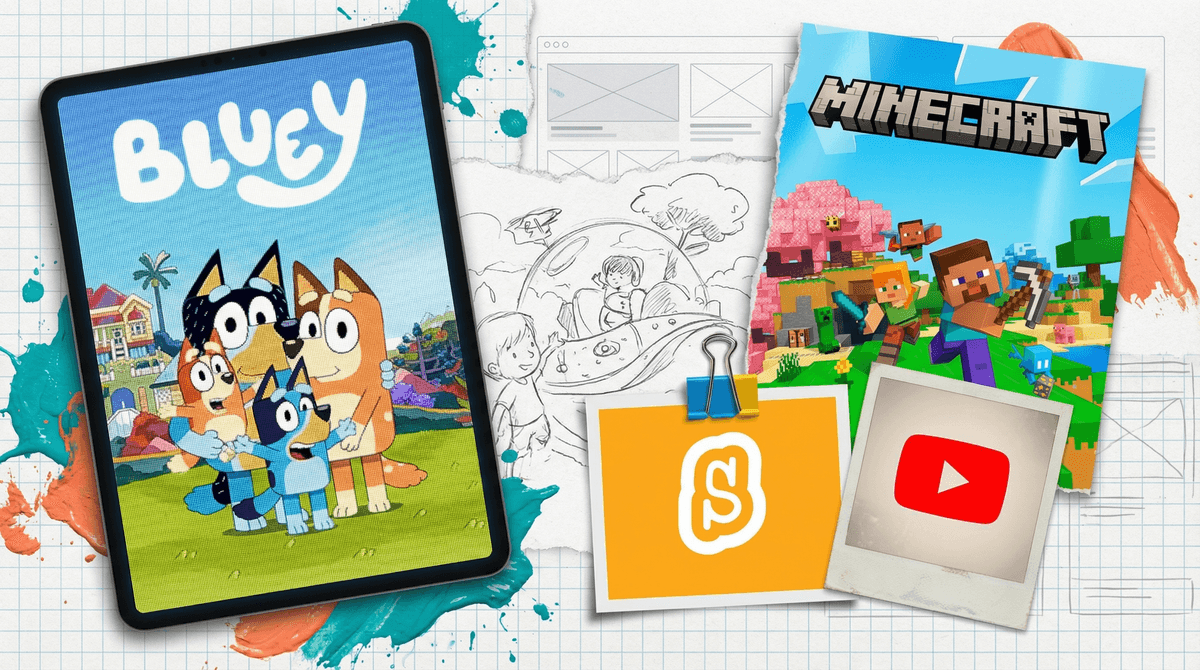
Here's the thing that makes every parent want to scream: the American Academy of Pediatrics says "limit screen time," but then you watch your kid spend two hours building an elaborate city in Minecraft with friends while problem-solving and collaborating, and you think... is this really the same as two hours of brain-numbing YouTube shorts?
It's not. And we need to stop pretending it is.
The quality vs. quantity framework asks a fundamentally different question than "how many hours today?" Instead, it asks: What is actually happening during those screen minutes? Are they creating or consuming? Connecting or zoning out? Learning or just... existing?
According to our community data, families are averaging about 4.2 hours of screen time daily. But that number alone tells us almost nothing useful. What matters is the texture of those hours.
The "screen time = bad" narrative is honestly making parents lose their minds. You're counting minutes like a parking meter while your kid is video chatting their grandmother or learning to code. Meanwhile, you feel guilty about the educational app but not about the third hour of Bluey (which, let's be real, is also teaching emotional regulation, so...).
Here's what the research actually shows: the content and context matter more than the clock. A 2022 study found that interactive, educational, or creative screen time showed neutral or even positive associations with child development, while passive consumption (especially of low-quality content) showed the negative effects we worry about.
In our community, 42% of kids use YouTube solo, while 38% use it supervised. That distinction—what they're watching and whether there's co-viewing or discussion—matters infinitely more than whether it's 30 or 60 minutes.
1. Active Creation (Green Light)
This is your kid making something: coding in Scratch, building in Roblox Studio, editing videos, writing stories, composing music in GarageBand. They're using screens as tools, not entertainment delivery systems.
What it looks like: Focused, engaged, sometimes frustrated (in a good way), producing something that didn't exist before.
2. Meaningful Connection (Green Light)
Video calls with family, collaborative gaming with friends, group chats about homework, multiplayer games with actual teamwork. Yes, even that Roblox session where they're building with their cousin counts.
What it looks like: Conversation, laughter, social problem-solving, relationship maintenance.
3. Active Consumption (Yellow Light)
This is where it gets nuanced. Watching educational content, reading articles, playing story-driven games, following tutorials. The key is active engagement—they're learning, thinking, processing.
What it looks like: They can tell you what they watched, they're asking questions, they're applying what they learned.
4. Passive Consumption (Red Light)
The zombie scroll. Endless TikTok (though only 8% of our community uses it, thankfully), autoplay YouTube, mindless game grinding, or that thing where they're "watching" something but their eyes are glazed over.
What it looks like: Can't remember what they just watched, irritable when interrupted, time disappears without anything to show for it.
Ages 3-7: At this age, almost all quality screen time needs to be co-viewed or at least co-present. The magic happens in the conversation about what's on screen. Daniel Tiger is great, but it's 10x better when you talk about the feelings afterward.
Ages 8-12: This is when creation and connection can start happening independently. About 55% of our community kids are gaming—and that's fine if it's Stardew Valley with friends, less fine if it's grinding for loot boxes. Check in on what they're making and who they're playing with.
Ages 13+: Teens need more autonomy, but quality still matters. The kid spending hours learning Blender for 3D modeling? That's incredible. The one who can't look away from infinite scroll? That needs intervention.
Start with a week of observation. Don't change anything—just notice. Keep a simple log:
- What are they doing on screens?
- Which category does it fall into?
- What's their mood before, during, and after?
You'll probably find that your 4.2 hours breaks down into something like: 30% creation/connection, 40% active consumption, 30% passive consumption. Now you have data instead of guilt.
Then make swaps, not cuts. Instead of "only one hour today," try "let's do 30 minutes of creation before consumption" or "screen time needs to be social or creative today."
Reality check: Some passive consumption is fine. Kids need to zone out sometimes. Adults watch Love Is Blind after work for a reason. The goal isn't perfection—it's proportion.
Stop counting minutes like a screen time accountant. Start asking better questions: What are they making? Who are they connecting with? What are they learning? How do they feel afterward?
The kid who spends three hours building an elaborate Minecraft world with friends, learning redstone engineering and collaboration? That's not the same as three hours of passive YouTube consumption. Your parenting instinct knows this—now you have permission to trust it.
- Track quality, not just quantity for one week—you might be surprised by what you find
- Have a conversation with your kids about the four categories—they're often more aware than we think
- Set one quality-based rule instead of a time-based one (like "creation before consumption" or "no passive scrolling before school")
- Explore what "educational" actually means
 for your family's values
Remember: 68% of our community kids don't have smartphones yet. You have time to build these frameworks before the infinite scroll becomes pocket-sized. Use it wisely.