

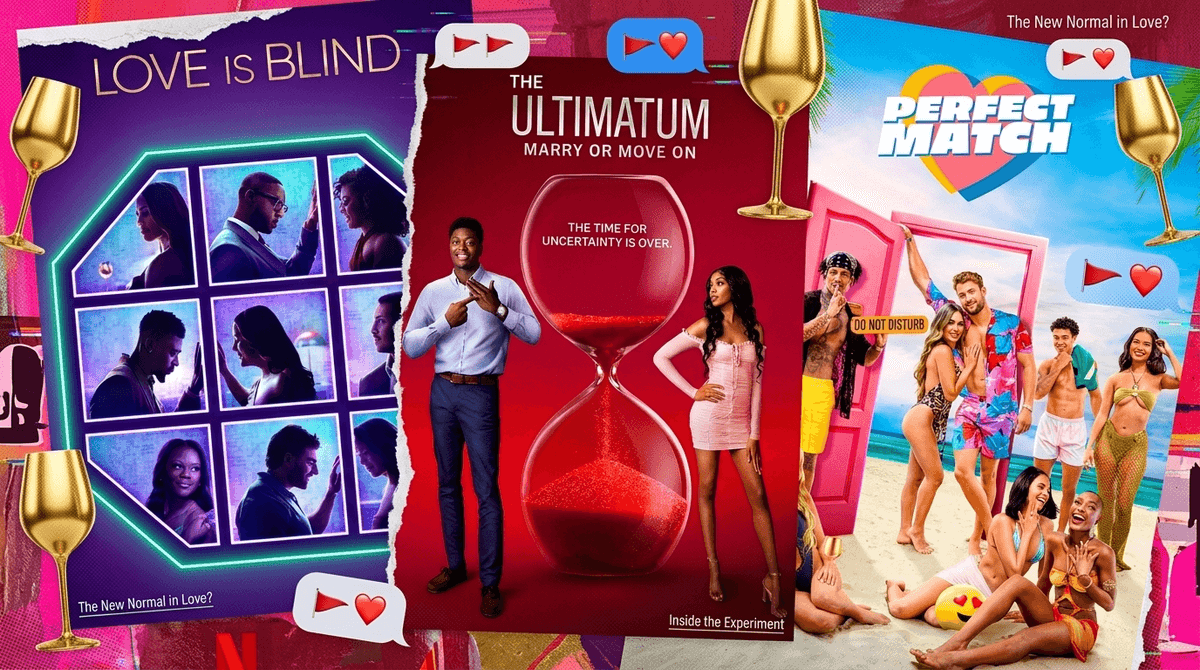
TL;DR: Love Is Blind is a viral Netflix reality series where singles get engaged without ever seeing each other. While it’s rated TV-MA for language and suggestive content, it’s a massive cultural touchpoint for teens. It’s less about "finding love" and more about high-stakes drama, but it serves as a perfect "Trojan Horse" for talking to your kids about red flags, gaslighting, and the difference between reality and "reality TV."
Quick Links:
- Love Is Blind (Netflix)
- The Ultimatum
- Perfect Match
- TikTok (where most of the spoilers live)
If you’ve missed the gold wine glasses and the frantic social media discourse, here’s the gist: Love Is Blind is a "social experiment" where men and women date in "pods." They can hear each other through a wall but cannot see each other.
The goal? To see if emotional connection can outshine physical attraction. If they find "the one," they propose. Only after the proposal do they meet face-to-face. Then, the show follows them as they go on a tropical vacation, move in together, meet the parents, and eventually stand at the altar to say "I do" or "I do not" in front of their entire family.
It’s high-velocity drama. It’s often messy. And it’s almost always trending on Twitter/X and Instagram the second a new batch of episodes drops.
You might wonder why a 16-year-old cares about 30-somethings getting married. It’s not about the marriage; it’s about the memes.
The show is designed for the "clip culture" of TikTok. Whether it’s a contestant saying something incredibly cringey, a dramatic reveal, or a massive blowout fight at a pool party, these moments are sliced into 30-second videos that dominate FYPs (For You Pages).
Even if your teen isn't sitting down to watch the full 60-minute episodes on Netflix, they likely know exactly who the "villain" of the season is because of their social media feeds. There’s a certain social currency in being able to discuss whether "Clay was out of pocket" or "AD deserved better."

Let’s be real: Love Is Blind is not a documentary on healthy relationships. In fact, it’s often a highlight reel of what not to do. However, for an intentional parent, this is actually a goldmine.
Instead of lecturing your teen about "toxic behavior," you can watch a scene of a contestant gaslighting their partner and ask, "Wait, did he just try to flip that on her?"
Key themes that pop up every season:
- Love Bombing: Contestants saying "I love you" and "you're my soulmate" after 48 hours of talking through a wall.
- The "Influencer" Pipeline: Discussing whether people are there for "the right reasons" or just to get enough Instagram followers to quit their day jobs.
- Body Image and Perception: The show claims "looks don't matter," but the drama usually explodes the moment someone's physical expectations don't match reality.
- Alcohol Usage: Notice those gold cups? They are opaque so the editors can cut scenes together without you seeing how much the contestants are actually drinking. The show has faced criticism for plyant contestants with booze to fuel the drama.
Netflix labels Love Is Blind as TV-MA.
Middle School (Ages 11-13): Generally, this is a skip. While it’s not "explicit" in the way a show like Euphoria is, the themes of marriage, emotional manipulation, and the frequent use of profanity are a bit heavy. Plus, the nuance of the "experiment" usually goes over their heads—they just see the shouting.
High School (Ages 14-18): This is the sweet spot for viewership. Most high schoolers are already seeing the highlights on TikTok or YouTube. If they are going to watch it, it’s better as a co-viewing experience or something you discuss afterward. It’s a great way to talk about consent, boundaries, and how "editing" can make anyone look like a hero or a villain.
Community Data Note: Our surveys show that by 10th grade, roughly 35% of students are regularly consuming "dating reality" content, often as a background activity while doing homework or scrolling their phones.
If you want to have a real conversation about Love Is Blind without your teen rolling their eyes into the back of their skull, focus on the mechanics of the show rather than the "morality" of it.
- The "Social Media Fame" Angle: "Do you think [Contestant Name] actually wanted to get married, or do you think they just wanted to get verified on TikTok?"
- The "Reality" vs. Reality Angle: "How do you think the producers edited that fight? Do you think we’re seeing the whole story?"
- The "Red Flag" Identification: "If someone you just met started acting like that, what would your move be?"
- The "Ohio" Factor: If your teen calls a contestant's behavior "Ohio" (meaning weird or cringe), don't correct them. Just lean in. "Yeah, that proposal was definitely Ohio. Why was he crying like that?"
If you’re looking for something with a similar "social experiment" vibe but maybe a different flavor:
- The Circle: Also on Netflix. It’s basically a game of social media "catfishing." It’s actually a fantastic look at how we present ourselves online versus who we really are.
- Survivor: The GOAT of reality TV. It focuses more on strategy and physical endurance than romance, making it a bit more "brainy" and family-friendly.
- The Amazing Race: If you want the drama of relationships under pressure but with a travel/educational twist.
Love Is Blind is, in many ways, "brain rot." It’s designed to be addictive, sensational, and a little bit trashy. But in the world of digital wellness, "trashy" doesn't always mean "useless."
As a parent, you can treat this show like a laboratory. It’s a safe space to observe terrible relationship choices from a distance. You aren't judging your teen's friends; you're judging a stranger in a pod. That distance makes it much easier for teens to open up about what they think is "normal" or "healthy" in a relationship.
So, if you see the gold cups on the screen, don't immediately reach for the remote. Sit down, grab some popcorn, and get ready to talk about why being "ghosted" at the altar is the ultimate red flag.