

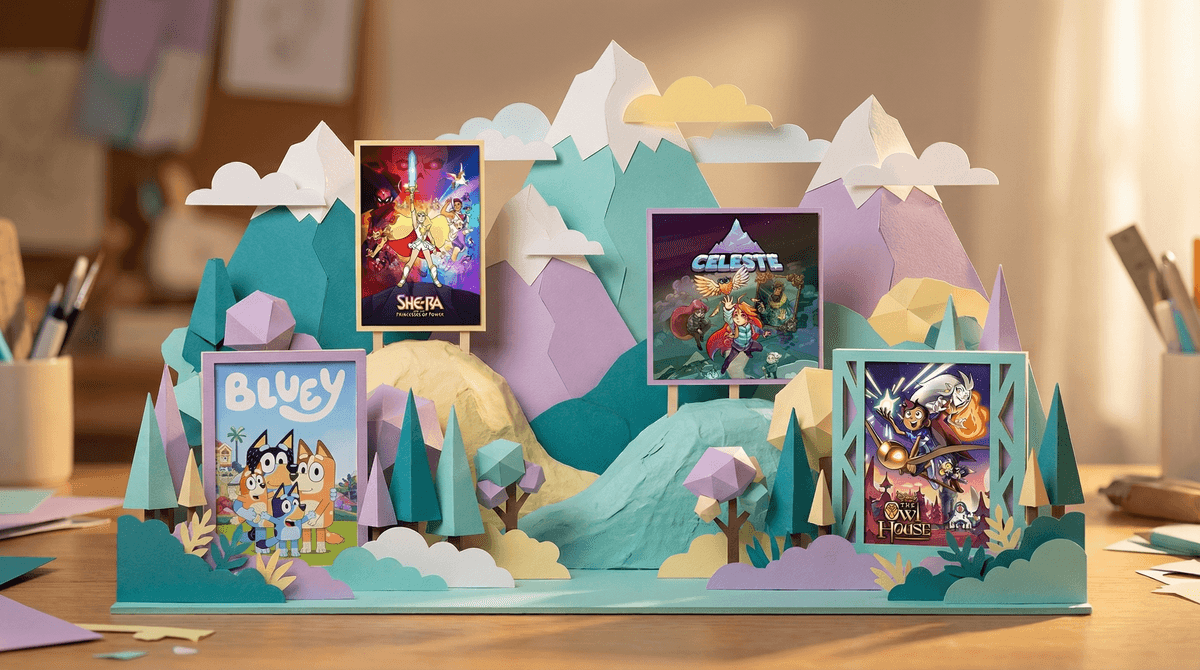
Look, we're not here to police every piece of media your kid consumes for perfect gender politics. But here's the thing: kids are forming their understanding of what boys and girls "should" be like from the shows, games, and content they're absorbing. And a lot of that content—even the stuff that seems harmless—is still serving up some pretty tired stereotypes.
Positive gender representations means content where:
- Characters aren't limited by their gender (girls can be loud and messy, boys can be sensitive and creative)
- Interests and abilities aren't gendered (sports aren't just for boys, art isn't just for girls)
- Emotions are universal (boys cry, girls get angry)
- Bodies and appearances aren't the focus of a character's value
- Gender expression is flexible and respected
- Leadership, intelligence, and heroism aren't defaulted to one gender
This isn't about making everything "woke" or whatever. It's about giving kids a wider range of role models and possibilities. Because the research is pretty clear: kids who see diverse gender representations have better self-esteem, wider interests, and healthier relationships.
Your 6-year-old who loves Bluey? They're learning that dads can be the primary caregiver and that's completely normal. Your 10-year-old playing Celeste? They're seeing a girl protagonist tackle challenges with determination and vulnerability.
But your 8-year-old watching certain YouTube channels? They might be getting a steady diet of "girls vs. boys" content where girls are portrayed as dramatic and boys as gross but funny. Your tween playing certain mobile games? Female characters might only exist as rewards or eye candy.
The impact is cumulative. One princess movie isn't going to ruin your daughter. But if every show, game, and book reinforces the same narrow ideas? That adds up.
Studies show that kids as young as 6 start limiting their own interests based on gender stereotypes. Girls drop out of sports and STEM activities. Boys stop expressing emotions or showing interest in creative pursuits. And a lot of that comes from the media messages they're absorbing.
Here's what positive gender representation actually looks like in practice:
In shows and movies:
- Female characters with goals beyond romance or appearance
- Male characters who show vulnerability and emotional intelligence
- Diverse body types and presentations
- Girls and boys working together as equals
- Parents and adults modeling non-stereotypical roles
Great examples: The Owl House (powerful female protagonist, healthy relationships), Hilda (fearless girl adventurer, supportive male friends), Avatar: The Last Airbender (complex characters of all genders, girls are warriors and leaders), She-Ra and the Princesses of Power (redefines what princesses can be).
In games:
- Character creators that don't lock abilities or items by gender
- Female protagonists who aren't sexualized
- Storylines where gender isn't the defining trait
- Collaborative rather than exclusively competitive gameplay
Great examples: Splatoon (gender-neutral gameplay), Stardew Valley (everyone can do everything), Spiritfarer (female protagonist in a nurturing role that's also heroic).
In books:
- Protagonists of all genders in all types of stories
- Supporting characters who break stereotypes
- Illustrations that show diverse expressions of gender
- Stories where gender isn't the conflict
Great examples: Nimona by ND Stevenson, the Keeper of the Lost Cities series, The Wild Robot by Peter Brown.
Not every piece of media needs to be a gender studies thesis, but here are some patterns worth noticing:
The "strong female character" who's just mean: Being tough doesn't mean being cruel or emotionless. Real strength includes vulnerability.
The "sensitive boy" who's the punchline: If the only emotional male character is portrayed as weak or ridiculous, that's a problem.
Appearance-focused narratives for girls: If the main character's journey is primarily about being pretty or getting the guy, that's limiting.
Boys will be boys excuses: Content that treats aggression, messiness, or disrespect as inherently male traits is reinforcing harmful stereotypes.
Gender as the joke: "Girls vs. boys" content, "what girls think/what boys think" memes—this stuff is everywhere and it's exhausting.
Ages 3-7: This is when kids are forming their foundational understanding of gender. Look for:
- Shows where characters of all genders do all kinds of activities
- Books with diverse protagonists
- Games that don't segregate by gender
- Content that shows emotions as universal
Ages 8-12: Kids are becoming more aware of stereotypes and starting to self-limit. Prioritize:
- Complex characters who defy simple categorization
- Stories where gender isn't the main conflict
- Content that shows diverse paths to success
- Media that models healthy relationships
Ages 13+: Teens are actively constructing their identities. They need:
- Nuanced portrayals of gender and relationships
- Content that questions stereotypes rather than reinforcing them
- Diverse representation across all media types
- Space to discuss and critique what they're seeing
You don't need to turn every viewing session into a teaching moment, but when opportunities arise:
For younger kids: "I noticed that in this show, only the boys play sports. Do you think that's true in real life?" Simple observations open conversations.
For middle grades: "What do you think about how they showed that character? Does everyone who's [gender] act that way?" Help them develop critical thinking.
For teens: "I'm curious what you think about [character/situation]." Then actually listen. They're forming complex opinions—let them share.
And always: Point out positive examples when you see them. "I love how in this game, everyone can be a builder or a fighter" or "It's cool that the dad in this show is the one who cooks."
Perfect media doesn't exist. You're going to let your kid watch shows and play games that have some stereotypical elements—and that's fine. The goal isn't perfection; it's balance and awareness.
Make sure your kid's media diet includes examples of people of all genders doing all kinds of things. Talk about what you're seeing. Model the behavior you want them to learn. And remember: you're the most important influence in their life, not Netflix or YouTube.
The media landscape is actually getting better on this front. There's more thoughtful content now than there was even five years ago. Learn more about finding age-appropriate content that aligns with your family's values.
- Audit your current rotation: What are the top 5 shows/games/books your kid is consuming right now? What messages are they getting about gender?
- Add some variety: Pick one new show, game, or book from the recommendations above
- Watch together: Co-viewing gives you natural opportunities for conversation
- Ask questions: "Who's your favorite character? Why?" can reveal what messages are landing
- Trust your gut: If something feels off to you, it probably is—and that's worth discussing with your kid
Want to explore specific recommendations for your kid's age and interests? Check out our personalized media guides or See if a show is good for gender representation.