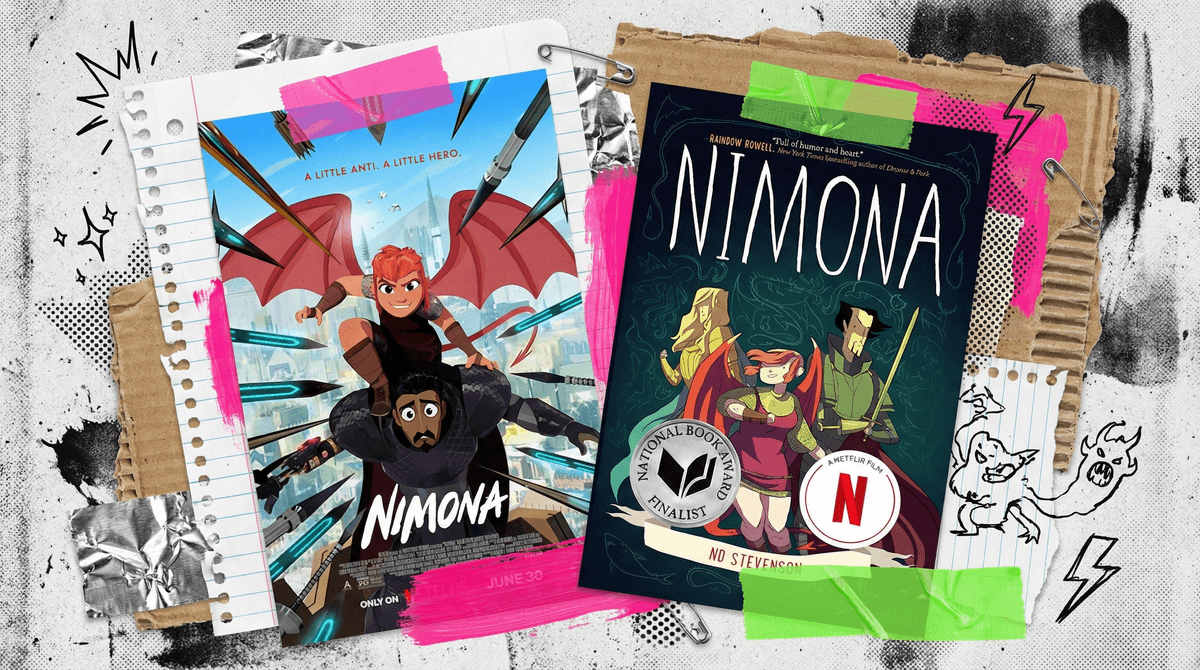
If you’re coming to this because your kid watched the movie on repeat, be ready for a bit of a tonal shift. The book is scrappier, darker, and arguably more honest about what it means to be an outcast. While the film is a polished, neon-soaked adventure, the original graphic novel feels like a punk-rock zine that grew into a masterpiece. It’s got a raw energy that makes the emotional beats land a lot harder.
The "villain" vs. the "monster"
The core of the story is the relationship between Lord Ballister Blackheart and Nimona. Blackheart is the "villain" who actually has a strict moral code—he refuses to kill, he has rules, and he’s mostly just trying to expose the Institution for the frauds they are. Then there’s Nimona. She’s the one who forces the conversation about what it means to be dangerous.
Unlike many stories where the sidekick is just there for comic relief, Nimona is a genuine chaos agent. She has a body count, and she doesn't feel particularly bad about it. This is where the "teen" rating really matters. The book doesn't shy away from the fact that Nimona has been hurt by the world and is more than happy to hurt it back. If your kid is used to the sanitized "nobody actually gets hurt" violence of superhero cartoons, this will be a wakeup call. It’s a great bridge for kids who are ready to move past black-and-white morality and start engaging with characters who are genuinely "gray."
Why the format works
Parents often ask if graphic novels are "real" reading, and Nimona is the perfect exhibit A for why they are. ND Stevenson uses the layout of the panels to tell the story in a way a standard novel couldn't. The way Nimona’s shape shifts across the page—sometimes subtle, sometimes monstrous—conveys her internal instability better than a paragraph of description ever could.
If you have a kid who is a "reluctant reader" because they find long blocks of text boring, this book is a cheat code. It’s fast-paced and visual, but the vocabulary and the thematic depth are just as sophisticated as anything they’d find in a standard YA novel.
The "Netflix" of it all
If you’re debating between the book and Netflix’s Nimona movie, the answer is both, but for different reasons. The movie leans into the high-tech, "techno-medieval" aesthetic and really pumps up the friendship aspect. The book is more focused on the tragedy of the characters. The relationship between Blackheart and Goldenloin is also handled with a bit more nuance here. It’s a foundational entry in the new wave of LGBTQ+ stories for tweens because the queerness isn't a "reveal" or a plot point—it just is.
The friction point
The ending is the thing that will stick with you. It isn't a neat, tied-with-a-bow Disney finale. It’s messy and a little bit heartbreaking. It’s the kind of book a kid finishes and then immediately wants to talk about, which makes it a top-tier choice for a family book club or a long car ride. Just be prepared for them to take Nimona’s side in every argument about authority for the next week.