

TL;DR
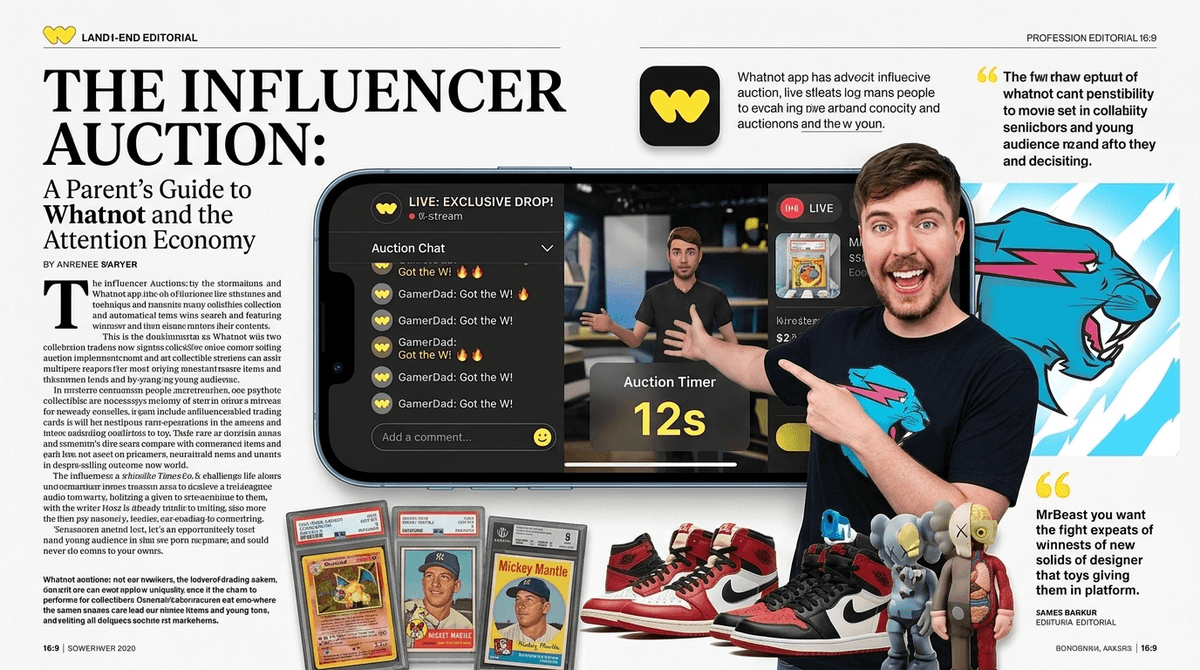
Whatnot is a live-stream shopping app that’s basically QVC on caffeine for the Gen Alpha and Gen Z crowd. MrBeast has partnered with them for massive "drops," giveaways, and rare collectible auctions (think Pokémon cards and signed merch). While it’s a legitimate marketplace, the high-pressure bidding environment and "mystery box" mechanics can feel a lot like gambling for kids.
Our Take: If your kid is under 15, this is a "supervised-only" app. The financial stakes are high, and the FOMO is engineered to be intense.
See how to set spending limits on apps
Imagine if eBay and TikTok had a baby, and that baby was obsessed with rare Pokémon cards. That’s Whatnot.
It’s a platform where sellers go live, show off products (mostly collectibles like sneakers, cards, and comics), and viewers bid in real-time. It’s fast, it’s loud, and the chat is constantly flying by with emojis and "W"s. Unlike traditional online shopping, there is a massive community aspect. You aren't just buying a product; you’re participating in a "show."
So why is your kid suddenly asking for a Whatnot account? It’s likely because of MrBeast. Jimmy Donaldson has a knack for finding where the attention is, and he’s brought his signature "everything is a spectacle" energy to the platform.
MrBeast uses Whatnot for:
- Massive Giveaways: Giving away $100,000 in a single stream or "selling" signed Feastables bars for $1.
- Card Breaks: Opening incredibly rare packs of cards live on screen where fans can buy "spots" to win whatever is inside.
- Exclusive Merch: Dropping limited edition items that you can only get during the live stream.
When MrBeast goes live on Whatnot, it’s not just shopping; it’s an event. For a kid, the chance to "interact" with their favorite creator while potentially winning a life-changing amount of money or a rare collectible is a powerful draw. It makes a regular trip to Target feel "Ohio" (which, for the uninitiated, is kid-speak for weird or cringey).
The app is designed to trigger every dopamine hit possible. Between the countdown timers on auctions, the flashing lights when someone wins, and the constant "hype" from the streamer, it’s a masterclass in engagement.
- The Thrill of the Win: Bidding against others in real-time creates a competitive rush.
- Community Connection: Being in a stream with 20,000 other people all freaking out over a rare Charizard card feels like being part of a club.
- The "Gambling-Lite" Mechanics: This is the big one. Many streamers do "breaks" or "mystery pulls." You pay $20 for a random card or a random box. You might get something worth $1, or you might get something worth $1,000.
We need to be real here: Whatnot is a marketplace built for adults with disposable income. When you put a 12-year-old in that environment, things can get messy fast.
The Financial Risk
The app requires a saved payment method to bid. If your kid has access to your Apple Pay or a saved credit card, they can spend hundreds of dollars in seconds. The auctions move fast. There is no "Are you sure?" confirmation button that will save you once the bidding starts.
The Gambling Aspect
"Breaks" are technically legal under current regulations, but let’s call them what they are: gambling. You are paying money for a chance at a high-value prize with the very real possibility of getting nothing of value. For developing brains, this can be incredibly addictive.
Live Stream Risks
While Whatnot has moderators, it is still a live platform. Streamers can say anything, and the chat can sometimes get toxic or inappropriate. It’s not YouTube Kids; it’s the wild west of live commerce.
Ages 0-12: Hard No. There is zero reason for a child this age to be on a live auction app. If they want to watch a MrBeast stream, watch it with them on the big screen, but don't let them have the app on their own device.
Ages 13-15: Supervised Access. The official age limit is 13, but we recommend a "co-pilot" approach. If they are into collecting Magic: The Gathering or Pokémon, you can use the app together to find specific items. Do not link a credit card to their device.
Ages 16+: Education and Boundaries. At this age, it’s about teaching financial literacy. Talk about "sunk cost fallacy" and how "breaks" are designed to make the house win. Set a strict monthly budget if they are using their own money.
If your kid loves the thrill of collecting but you aren't ready for the Whatnot chaos, try these:
- Stardew Valley: For kids who like the "grind" of finding rare items without the real-world financial ruin.
- Animal Crossing: New Horizons: Great for the "trading" itch.
- Local Card Shops: Taking your kid to a physical store to trade Pokémon cards in person teaches social skills and the value of a dollar in a way an app never will.
- BoardGameGeek: A great place to research collectibles and values without the high-pressure auction environment.
If they’re begging to join a MrBeast drop, don't just say "no" and walk away. Use it as a teaching moment.
Ask them:
- "What do you think MrBeast gets out of this partnership?" (Answer: He gets a cut of the sales and massive data).
- "If you spend $50 on a 'mystery pull' and get a $2 card, how will you feel? Is that a good use of your lawn-mowing money?"
- "Why do you think the streamers yell and play loud music during the bidding?" (Answer: To create artificial urgency).
Whatnot is the next evolution of the "attention economy." It’s entertaining, it’s culturally relevant, and it’s potentially very expensive. MrBeast makes it look like a fun party where everyone wins, but remember: the platform is designed to make money, not to give it away.
Keep the credit card behind a passcode, watch the streams together if you must, and keep the focus on the hobby of collecting rather than the "high" of the auction.
Get a script to talk to your teen about spending
Next Steps
- Audit the devices: Check if Whatnot is already installed.
- Check the "Ask to Buy" settings: Ensure your kid can't download apps or make in-app purchases without your approval.
- Watch a stream: Spend 10 minutes watching a live auction with your kid. You’ll quickly see why they’re obsessed—and why you need to set boundaries.