

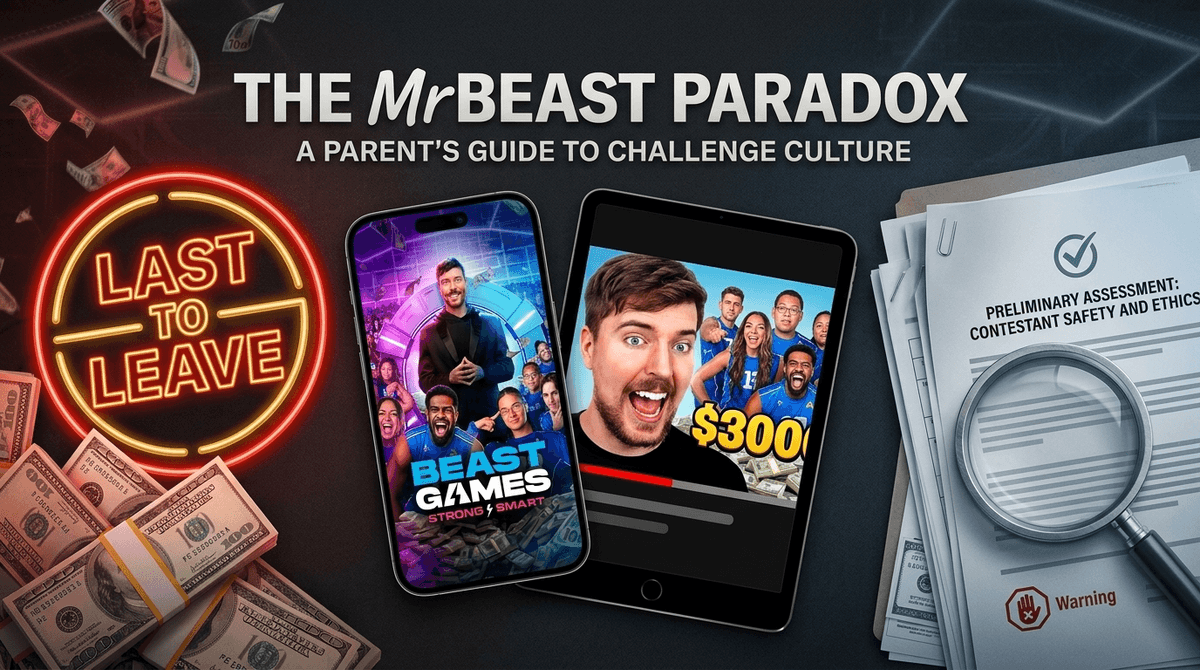
TL;DR: MrBeast is the undisputed king of the attention economy, but 2024 and 2025 have been a reality check. Between the Beast Games lawsuits over contestant safety, the Lunchly mold scandal, and leaked internal memos about "helping talent be idiots," the "philanthropy" label is wearing thin. If your kids are obsessed, it’s time to talk about the difference between real kindness and a business model built on high-stakes survival.
Quick Links for the "MrBeast Feed" Pivot:
- Mark Rober (Ages 7+) – Engineering and science with a similar "big build" energy but way more brainpower.
- Smarter Every Day (Ages 8+) – Pure curiosity and high-speed cameras.
- Dude Perfect (Ages 6+) – Trick shots and friendly competition without the "survive 50 hours in a box" trauma.
- YouTube Kids (Ages 4-8) – Essential for keeping the algorithm from serving up "extreme" content too early.
If you’ve walked past your kid's tablet lately, you’ve probably seen a thumbnail of a guy with a frozen, wide-eyed expression standing in front of a giant pile of cash or a private island. That’s MrBeast, and he pioneered "Challenge Culture."
It’s a genre of YouTube content where the stakes are always "life-changing." We’re talking "Last to Leave the Circle Wins $500,000" or "Spending 7 Days Buried Alive." It’s hyper-edited, fast-paced, and designed to trigger a dopamine hit every six seconds. In 2026, this isn't just a hobby for kids; it's the dominant media landscape. Research shows nearly 80% of kids aged 2-12 are watching YouTube, and MrBeast is the sun that world revolves around.
For years, we parents gave MrBeast a pass because he "gives away so much money." He builds wells in Africa, cures blindness, and gives cars to waitresses. It feels good! But lately, the curtain has been pulled back, and what’s behind it is a bit... messy.
The Beast Games Lawsuits
The biggest headline of 2025 involves the Beast Games show on Amazon Prime Video. A class-action lawsuit from contestants alleged "chronic mistreatment," including lack of adequate food, medical care, and even claims of sexual harassment on set. While the show was renewed for more seasons, the "good guy" image took a massive hit. It turns out that scaling up YouTube stunts to TV-sized productions without professional HR or safety standards is a recipe for disaster.
The Lunchly "Mold" Fiasco
Then there’s Lunchly, the "healthier" alternative to Lunchables launched by MrBeast, Logan Paul, and KSI. In late 2024, the internet exploded with videos of kids finding moldy cheese in their kits. It was a classic "influencer brand" problem: high-speed marketing meeting low-speed quality control.
The "How to Succeed" Memo
A leaked internal document titled "How to Succeed in MrBeast Production" surfaced, essentially telling staff to do "whatever it takes" to make the content viral, even if it meant encouraging talent to act like "idiots." It confirmed what many of us suspected: the "kindness" is often a carefully engineered product meant to maximize retention and sell Feastables bars.
Kids love the spectacle. It’s the modern-day Price is Right meets Survivor, but with a guy who looks like their older brother’s friend.
The concern for us isn't necessarily the "brain rot" factor (though the editing is definitely hyper-stimulating). It’s the values being taught:
- Transactional Kindness: The idea that you only do good things if a camera is rolling and you can monetize the views.
- The "Lottery" Dream: It teaches kids that wealth comes from winning a random, extreme stunt rather than consistent effort.
- Desensitization to Hardship: When kids watch people suffer in a "box" for 50 hours for entertainment, it blurs the line between a fun game and actual exploitation.
Ages 5-8: Keep it on YouTube Kids
At this age, kids can’t distinguish between "staged for views" and reality. They might try to imitate "challenges" at home (like the "Dry Ice Challenge" or "Blackout Challenge") which can be physically dangerous. Stick to Dude Perfect for sports-based fun.
Ages 9-12: The Co-Watching Phase
This is the peak MrBeast era. If they're watching, watch with them occasionally. Ask questions: "Do you think that person actually stayed in that room for a week?" or "How much money do you think MrBeast made from the ads on this video compared to what he gave away?"
Ages 13+: Critical Media Literacy
Teens should be looking at the business side. This is a great time to talk about the "Creator Economy." Use the Beast Games lawsuit as a case study in labor rights and why "volunteering" for a multi-million dollar production is a red flag.
If you want to nudge your kid toward content that builds their brain instead of just melting it with 10,000-degree knives, try these:
Mark is a former NASA engineer who does "challenges," but they're focused on problem-solving. Think: building a glitter bomb to catch porch pirates or a squirrel-proof bird feeder. It’s high production value without the ethical "ick."
For the older kids (11+), this channel tackles mind-bending science questions. It’s "challenge-adjacent" because he often goes to extreme lengths to prove a point, but the goal is always education.
Surprisingly, many kids who like the "process" of MrBeast builds actually love seeing how real things are manufactured. It’s calming, oddly satisfying, and zero-drama.
If your kid likes the competition aspect, this is the "anti-MrBeast." It’s competition with actual kindness, where people help each other when their cakes collapse.
If your kid is defensive about their favorite YouTuber, don't just ban it. That’s a one-way ticket to them watching it secretly at a friend's house. Instead, try these conversation starters:
- "I saw there’s a lawsuit about the Beast Games show. What do you think about the contestants saying they weren't given enough food?"
- "If you had $1 million to give away, would you do it privately or would you film it? Why?"
- "Do you think Lunchly is actually better for you than a Lunchable, or is it just because MrBeast’s face is on the box?"
MrBeast isn't the "villain" of the internet, but he is a businessman first and a philanthropist second. In 2026, the "MrBeastification" of YouTube means everything is louder, faster, and higher-stakes. Our job as intentional parents isn't to be the "screen police," but to be the "context providers."
We can let them enjoy the spectacle while making sure they know that real life doesn't happen in a giant red circle, and real kindness doesn't require a thumbnail.
Learn more about how YouTube algorithms target your kids
Next Steps
- Check the Feed: Open your kid's YouTube and see if it's 100% "extreme challenge" content.
- Introduce a "Smart" Channel: Subscribe to Mark Rober or Smarter Every Day on their account.
- Set a "No-Shorts" Rule: YouTube Shorts is where the most aggressive, low-quality challenge clones live. Consider disabling it if your kid is getting too "zombie-fied."