

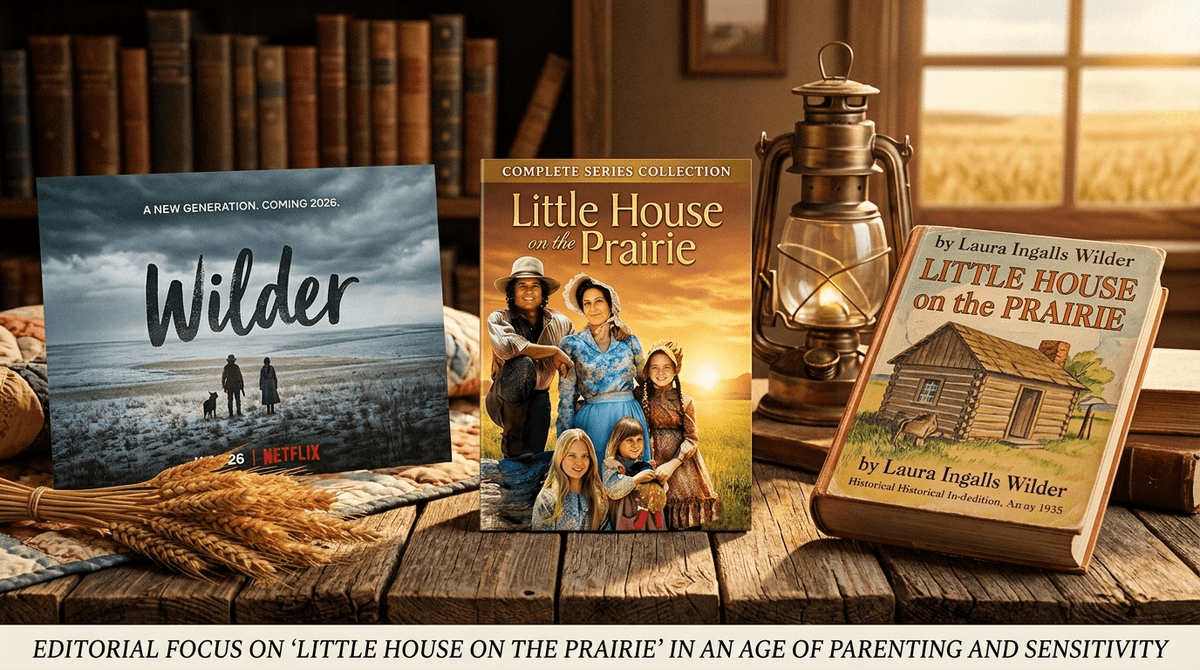
Little House on the Prairie: A Parent's Guide
Everything you need to know about the grittier 2026 Netflix reboot, historical context, and sharing this pioneer legacy with your kids.
TL;DR: The 2026 Netflix reboot of Little House on the Prairie is not your grandmother’s Michael Landon special. It’s beautiful, intense, and historically raw—think The Revenant meets Anne with an E. While the original book series remains a staple for middle-grade readers, parents should be ready to navigate the reboot’s PG-13 vibes and the books’ complicated depictions of Indigenous people.
Get a list of historical fiction for your child’s age group
Screenwise Parents
See allIf you grew up with the 1970s Little House on the Prairie, you probably remember sun-drenched hills, fiddle music, and Pa Ingalls’ perfect hair.
The 2026 Netflix version, simply titled Wilder in some regions but listed as Little House on the Prairie (2026), leans heavily into the "gritty reboot" trend. It focuses on the actual survival aspect of the 1870s. We’re talking about the terrifying reality of the "Long Winter," the genuine threat of starvation, and the psychological toll of isolation.
Is it "brain rot"? Absolutely not. It’s high-quality prestige television. But is it for your six-year-old? Probably not. The reboot is firmly aimed at the 12+ crowd. It deals with themes of grief, the harshness of Manifest Destiny, and the reality of frontier medicine that might be a bit much for younger kids who just want to see a cute dog in a wagon.
The Little House on the Prairie books by Laura Ingalls Wilder have been under the microscope for a few years now. In 2026, the conversation hasn't slowed down—it’s actually become more nuanced.
The books are masterclasses in "show, don't tell" when it comes to 19th-century daily life. Kids learn how to make a button lamp, how to smoke meat, and why a single piece of candy was a Christmas miracle. However, the depiction of the Osage people and the "Ma Ingalls" perspective on Native Americans is, to put it bluntly, racist.
As intentional parents, we don't have to "cancel" the books, but we can't just hand them over without a conversation. The 2026 reboot actually does a much better job of showing the perspective of the Indigenous tribes whose land the Ingalls family was technically squatting on. It turns a one-sided pioneer story into a complex historical drama.
Learn more about navigating problematic classics with your kids
If your kid is showing interest in the pioneer lifestyle—maybe they’ve been watching "TradWife" content on TikTok or they’re just into the "cottagecore" aesthetic—here is how to navigate the media landscape.
Ages 5-8: The "Cozy" Pioneer
Stick to the classics and the gentler side of the prairie.
- Little House on the Prairie (1974): Still the gold standard for younger kids. It’s episodic, moralistic, and generally safe.
- Spirit: Riding Free: While not "Little House," it captures that frontier spirit and love for the land without the crushing weight of 19th-century poverty.
- The Long Winter (Picture Book versions): There are many adapted versions of Laura’s stories that focus on the family bond rather than the more intense survival elements.
Ages 9-12: The Reality Check
This is the sweet spot for the original novels and some interactive history.
- Little House on the Prairie (The Book Series): Great for reading together. You can pause and talk about the "Manifest Destiny" of it all.
- Anne with an E: If they like the period setting but want something more character-driven and modern in its sensibilities, this is a perfect bridge.
- The Oregon Trail: The 2020s Apple Arcade/PC remake is fantastic. It’s educational, acknowledges the Indigenous perspective, and teaches resource management better than any textbook.
Ages 13+: The Gritty Reboot
- Little House on the Prairie (2026): This is for your teens who liked Stranger Things or The Last of Us. It’s a survival story. It’s dark, it’s beautifully shot, and it’s a great conversation starter about American history.
- Frontier House: An older PBS reality show where modern families try to live like 1880s pioneers. It’s a "no-BS" look at how hard this life actually was.
If the show has your kids wanting to "live off the land" but you aren't ready to buy a cow, there are some great digital alternatives that capture the pioneer spirit without the stranger-danger risks of Roblox.
- Stardew Valley: This is the ultimate "pioneer-adjacent" recommendation. It’s about building something from nothing, community, and the seasons. It’s wholesome, deep, and has zero "brain rot" qualities.
- Terraria: For kids who want more "survival" and "crafting" and less "farming." It’s basically 2D Minecraft but with more focus on progression and world-building.
- Catan: If you want to take it offline, this board game is the classic introduction to resource management and expansion—very much in the spirit of the Ingalls family trying to survive on a claim.
In 2026, there’s a weird intersection between Little House on the Prairie and certain "traditional" lifestyle trends on social media that can sometimes skew toward some pretty restrictive gender roles or "off-grid" extremism.
The 2026 Netflix reboot actually pushes back against this by showing that Ma Ingalls (Caroline) was a powerhouse of labor and intellect, not just a quiet woman in a bonnet. When talking to your kids, it’s worth pointing out that "pioneer life" wasn't an aesthetic—it was a grueling, 24/7 job for everyone involved, regardless of gender.
Don't just let the credits roll on the 2026 reboot. Use it as a springboard:
- On Resourcefulness: "If we lost power for a week like the Ingalls did in The Long Winter, what skills do we actually have? Could we make our own heat? Could we stretch our food?"
- On Perspective: "In the book, Laura is afraid of the Indians. In the new show, we see the Osage family's perspective. Why do you think the book was written that way, and why is the show different?"
- On Contentment: "Pa was always looking for the next 'better' plot of land. Do you think he was ever satisfied? Is it better to keep moving or to stay and build roots?"
The Little House franchise is having a massive moment in 2026. Whether you're revisiting the original books or diving into the new Netflix series, it’s a great opportunity to talk about American history, survival, and family resilience.
Just be mindful: the new show is heavy. If your kid is sensitive to animal death (the "Old Dan" scene in the reboot is brutal) or the reality of childhood illness, maybe stick to Anne with an E for now.
- Audit your bookshelf: If you have the old copies, read them with your kids, not just to them.
- Watch the pilot: Watch the first episode of the 2026 series alone first to gauge if your kid is ready for the intensity.
- Get digital: Download Stardew Valley for a family farm project.
See the best ways to discuss historical racism with your children