

Stranger Things: A Parent's Guide to Age-Appropriateness
Stranger Things is Netflix's nostalgic sci-fi horror series that gets progressively darker and more violent with each season. Season 1 is generally okay for mature 12-year-olds, but by Season 4, we're talking genuine horror that would make many adults uncomfortable. The show features intense violence, body horror, teen sexuality, substance use, and pervasive strong language. If your kid loved the adventure vibes of The Goonies or early Harry Potter, they might be ready for Season 1—but you'll need to reassess before each subsequent season.
Quick age guidance:
- Season 1: 12+ (with parent discretion)
- Season 2: 13+
- Season 3: 14+
- Season 4: 15-16+ (seriously, this one's rough)
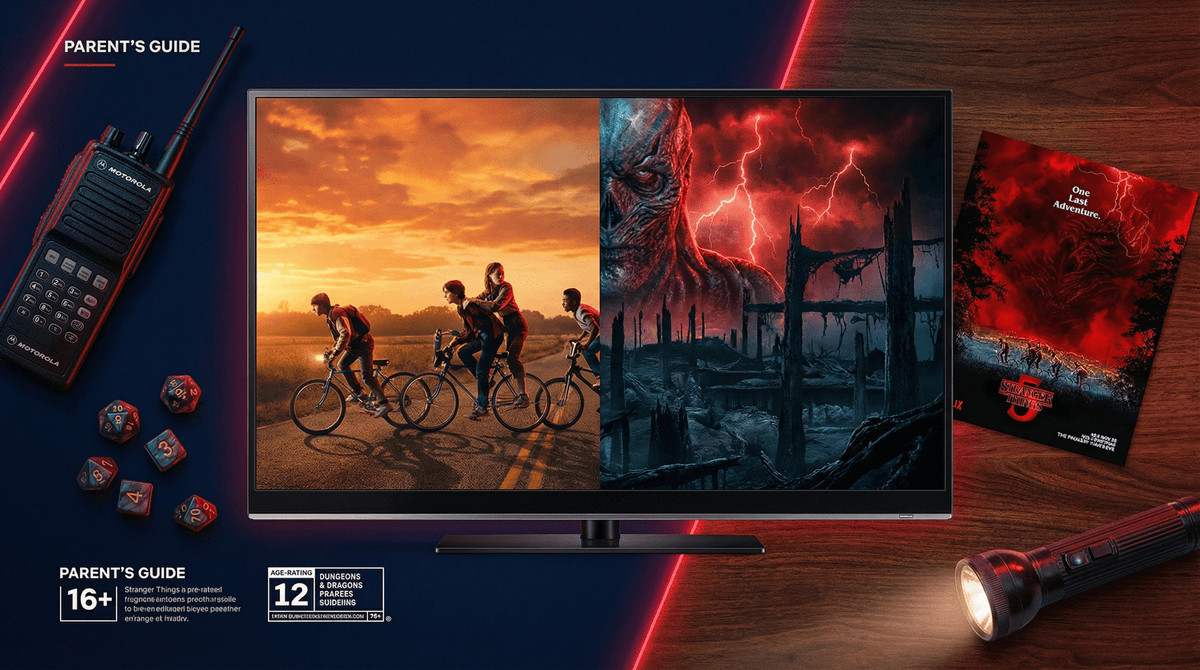
The problem with Stranger Things is that it starts as a relatively tame adventure story about kids on bikes fighting monsters, and gradually transforms into legitimately disturbing horror. Parents who greenlit Season 1 for their 11-year-old often find themselves in an awkward spot when that same kid wants to watch Season 4's graphic violence and psychological terror three years later.
The show also benefits from massive cultural momentum. When 67% of middle schoolers have seen at least some of it (according to our Screenwise community data), your kid will absolutely know they're missing out. The Demogorgon, Mind Flayer, and Vecna have become part of the cultural vocabulary—referenced in Roblox games, Halloween costumes, and playground conversations.
But here's what's actually in it, season by season.
The appeal: Kids disappearing into an alternate dimension, a telekinetic girl with a shaved head, government conspiracies, and a core friend group that feels authentic. The 1980s nostalgia is lost on kids, but the adventure story isn't.
Content concerns:
- Violence: Mostly off-screen or implied. The Demogorgon is scary but not graphically shown attacking people until the final episodes. Some blood, but relatively restrained.
- Language: Frequent use of "shit," "damn," "ass." A few uses of "f*ck."
- Sexuality: Teen characters kiss. Brief references to sex but nothing shown.
- Substance use: Teens drink beer at a party. Adults smoke cigarettes constantly (it's the '80s).
- Themes: A child's fake body is shown (staged suicide). A teen character is slut-shamed. Bullying is a major element.
The verdict: This is the most accessible season. If your kid can handle A Quiet Place or has read the scarier Goosebumps books, they can probably handle Season 1. The emotional core—kids being brave for their friend—is genuinely moving.
The appeal: The friend group expands, we get more Eleven backstory, and the mystery deepens. Max joins the crew and becomes a fan favorite.
Content concerns:
- Violence: More graphic. A character's bones break on-screen. More blood and gore. The Mind Flayer's possession sequences are genuinely disturbing.
- Language: Increased profanity across the board.
- Sexuality: More teen making out. References to pornography (played for laughs but still).
- Substance use: More teen drinking. Billy (Max's older brother) is shown drinking and driving.
- Themes: Domestic abuse is heavily implied with Billy and his father. PTSD is a major theme for Will. A character is possessed and loses bodily autonomy in disturbing ways.
The verdict: This is where the show starts requiring more maturity. The possession storyline with Will is psychologically intense, and Billy's character introduces a level of menace and toxic masculinity that's uncomfortable to watch. Still, many 13-year-olds can handle it if they're prepared.
The appeal: Mall aesthetics, a more colorful palette, and the characters are older and dealing with relationship drama. The horror takes a backseat to action in some episodes.
Content concerns:
- Violence: Body horror escalates significantly. The Mind Flayer creates a monster from melted human bodies—it's genuinely gross. Graphic injuries including a character getting their leg impaled.
- Language: Constant strong language.
- Sexuality: More teen sexual content. Characters are shown in various states of undress. Sexual tension and innuendo increase.
- Substance use: A character is drugged (played for comedy but still disturbing in retrospect). More drinking and smoking.
- Themes: A major character death that's emotionally devastating. Torture scenes (a character gets beaten repeatedly). Russian conspiracy plotlines.
The verdict: The body horror is where many parents tap out. The melted-people monster is nightmare fuel, and the torture scenes are intense even for adults. If your kid is 14+ and has been watching the series, they're probably okay to continue, but this is a reasonable place to pause and wait a year.
The appeal: Vecna is a genuinely terrifying villain with a compelling backstory. The stakes feel real. The season is split into two volumes, making it feel like an event.
Content concerns:
- Violence: This is where the show becomes actual horror. Multiple graphic deaths including teens. Bones breaking in detail. Eyes exploding. A character's limbs are snapped backward. It's ROUGH.
- Language: Pervasive strong language throughout.
- Sexuality: A sex scene (brief, not explicit, but present). More teen relationship content.
- Substance use: Drug dealing is a plot point. More drinking and smoking.
- Themes: Suicide, depression, trauma, and PTSD are major themes. Vecna targets teens with trauma and guilt. A school shooting is referenced in the context of Satanic Panic. Extremely intense and prolonged scenes of psychological and physical torture.
The verdict: This is legitimately scary horror that would earn an R rating as a film. The emotional intensity is also significant—characters dealing with survivor's guilt, depression, and feeling like they deserve to die. Many high schoolers can handle the gore but struggle with the psychological weight. This is genuinely a 16+ season, and even then, know your kid.
Beyond cultural momentum, Stranger Things does something rare: it takes kids seriously as heroes. The adults are often clueless or absent, and the kids save the day through friendship, bravery, and cleverness. That's catnip for the tween/teen demographic.
The show also features genuinely great representation without making it A Thing™. Lucas and Erica are smart and brave. Robin is gay and it's handled beautifully. Max deals with real grief and depression. These characters feel authentic, and kids connect with them.
Plus, let's be honest: the show is well-made. The acting is strong (especially from the kids), the production values are high, and the storytelling—while sometimes bloated—is compelling. It's not Cocomelon-level brain rot; there's real substance here.
If your kid is 10-11: Season 1 might be okay for a very mature 11-year-old who loves scary content, but most kids this age will find it too intense. The language alone is more than many parents want at this age. Consider waiting.
If your kid is 12-13: Season 1 is generally appropriate for mature 12-year-olds. You might even let them continue to Season 2 at 13. But watch with them or at least watch ahead so you can discuss the heavier themes (bullying, PTSD, possession).
If your kid is 14-15: Seasons 1-3 are probably fine, though you'll want to warn them about the body horror in Season 3. Some 15-year-olds can handle Season 4, but many will find it too intense. Check in with them about how they're processing scary content .
.
If your kid is 16+: Most teens this age can handle the full series if they enjoy horror. The psychological themes (guilt, trauma, depression) might actually resonate in meaningful ways, though you should still be available to discuss.
The series doesn't get lighter. If your kid struggled with Season 1, don't assume they'll "get used to it." Each season is more intense than the last.
The emotional content is as challenging as the gore. Yes, Season 4 has graphic violence, but it also has a teen girl trying to process her brother's death and her own suicidal ideation. That's heavy stuff that requires emotional maturity to process.
Cultural pressure is real. Your kid's friends are probably watching it, and they'll feel left out. That's okay. You can acknowledge that it sucks to miss out while still holding your boundary. Consider letting them read episode summaries or watch recap videos so they're not completely lost in conversations.
Co-viewing is your friend. Watching together (or at least being available during/after episodes) makes scary content much more manageable. You can pause to discuss, fast-forward through the worst parts, or just provide reassurance.
The TV-14 rating is a joke. Netflix rates the entire series TV-14, but that's wildly inconsistent across seasons. Season 4 would absolutely be R-rated as a film. Don't rely on the official rating.
If your kid wants the adventure-and-friendship vibes without the horror:
- The Mysterious Benedict Society: Smart kids on a mission, puzzles, and intrigue without the gore
- Gravity Falls: Supernatural mystery with humor and heart, much lighter on scares
- Avatar: The Last Airbender: Epic adventure with kids as heroes, beautifully told
- Lockwood & Co: Ghost-hunting teens in London, some scares but much less graphic
- Percy Jackson books: If they want the "kids vs. monsters" vibe in a different format
For older teens who can handle Season 4, they might also enjoy The Haunting of Hill House (also intense but beautifully made) or Dark (complex sci-fi mystery, less gore, more mind-bending).
Stranger Things is genuinely great television that becomes genuinely disturbing horror by Season 4. The series is not consistent in its intensity, and you should reassess before each season rather than giving blanket approval.
Season 1 is a reasonable entry point for mature 12-year-olds. Season 4 is not appropriate for most kids under 16, full stop. The TV-14 rating is misleading, the cultural pressure is real, and you're not a bad parent for saying "not yet."
If you do let your kid watch, co-view when possible, discuss the themes, and check in about how they're processing the scary content. And if they're not ready? That's completely fine. There's no shortage of great content that won't give them nightmares about Vecna.
Next Steps: