

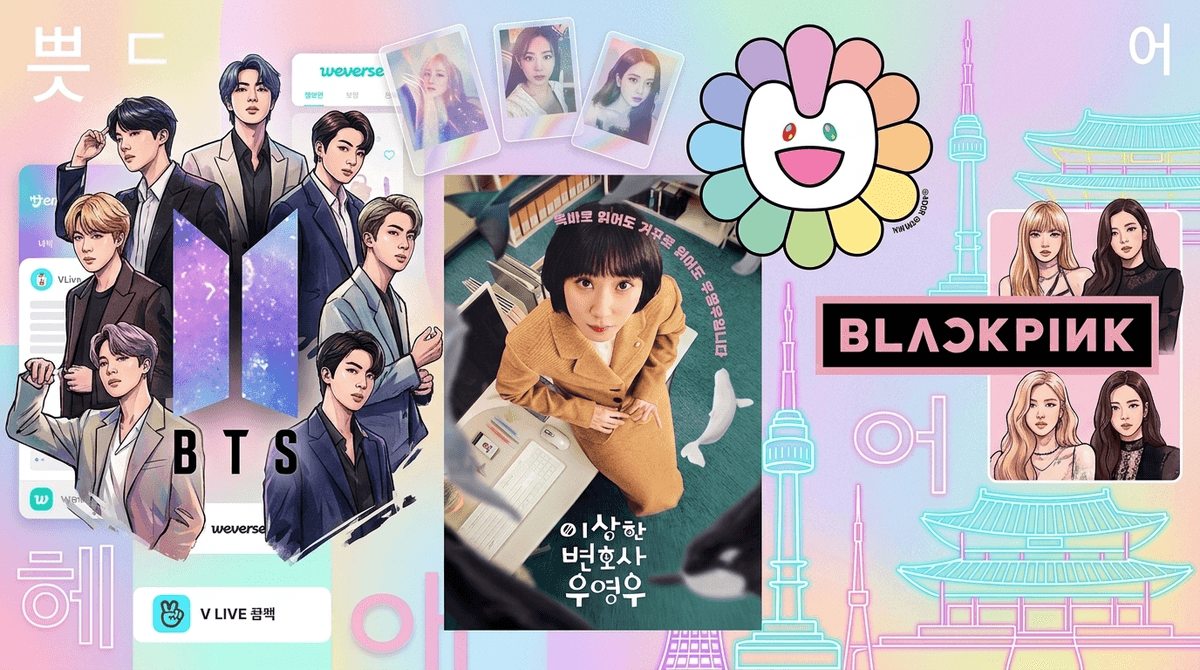
TL;DR: Korean pop culture (the "Hallyu Wave") is more than just catchy songs; it’s an entire digital ecosystem. From the "stan" culture on TikTok to the high-production gloss of Netflix dramas, it’s a world of intense fandom, high beauty standards, and surprisingly wholesome storytelling.
Quick Links for the Hallyu-Curious Parent:
- The Gateway Music: BTS, BLACKPINK, and NewJeans.
- Best "Starter" K-Dramas: Extraordinary Attorney Woo (Ages 12+) and Hometown Cha-Cha-Cha (Ages 12+).
- The Apps They Use: Weverse for artist updates and Viki for streaming.
- The Learning Curve: Duolingo (Korean course) or Lingodeer.
If your kid has suddenly started asking for "tteokbokki" for dinner, has a "bias" (favorite member) in a group of seven identical-looking (to you) boys, or is spending their life savings on small pieces of cardboard (photocards), welcome to the Hallyu Wave.
Korean culture is arguably the most dominant global export of the 2020s. It’s not a niche interest anymore; for many Gen Z and Gen Alpha kids, it is the mainstream. But unlike the boy band crazes of the 90s, this one lives almost entirely in a hyper-connected digital space. Here is how to navigate the "stan" life without losing your mind.
"Hallyu" literally means "Korean Wave." It refers to the global spread of South Korean culture—music (K-Pop), television (K-Dramas), movies, and even skincare.
What makes it different from Western pop culture is the intensity. K-Pop "idols" (the performers) undergo years of rigorous training in dance, vocals, and media etiquette before they even debut. The result is a level of polish that makes Western pop stars look like they’re performing at a middle school talent show.
It’s easy to dismiss K-Pop as "brain rot" or just more manufactured pop, but there are some genuinely cool things happening here:
- Work Ethic: The "idols" are famously hard-working. Watching behind-the-scenes content often shows kids the value of practice and discipline.
- Clean Content: Compared to the current state of American Top 40, K-Pop lyrics are remarkably clean. You rarely hear swearing or explicit sexual references in mainstream K-Pop tracks.
- Community: "Stan culture" (a portmanteau of "stalker" and "fan," though it’s lost its negative edge) provides a massive global community. Your kid can talk to someone in Brazil or France about their favorite Stray Kids song.
- Cultural Curiosity: This is the ultimate "gateway drug" to a new language and history. If your kid is suddenly motivated to use Duolingo to learn Korean, that’s a win.
If you want to sound like you know what’s going on at the dinner table, here are the heavy hitters:
The undisputed kings. They are currently doing their mandatory military service in Korea, but their catalog is massive. They focus on themes of mental health, self-love, and social commentary. Ages: All ages.
The biggest girl group in the world. Think "Girl Power" on steroids. Their music is high-energy, fashion-forward, and very Instagram friendly. Ages: 8+.
The current "it" girls for the younger crowd. Their aesthetic is very Y2K/90s nostalgia. Their songs like "Ditto" and "Hype Boy" are everywhere on TikTok. Ages: All ages.
Known for "noisy" music (self-produced EDM/Hip-Hop). They have a very loyal, slightly more intense fanbase. Ages: 10+.
Most parents know Squid Game, which is... not for kids. It’s ultra-violent and cynical. But the vast majority of K-Dramas are actually much more conservative and wholesome than American TV.
In a typical K-Drama rom-com, it might take 10 episodes just for the main characters to hold hands. For parents tired of the hyper-sexualization in shows like Euphoria, K-Dramas can be a breath of fresh air.
Recommended K-Dramas for Teens:
- A brilliant lawyer on the autism spectrum navigates her career and life. It’s heartwarming, educational, and genuinely funny. Ages: 12+.
- A South Korean heiress accidentally paraglides into North Korea. It’s a classic romance that also gives a (stylized) look at the tension between the two countries. Ages: 13+.
- If your teen likes zombies, this is the one. It’s set in a high school. Warning: It’s very gory and intense. Ages: 16+.
Check out our guide on the best K-Dramas for middle schoolers
This is where the "wellness" part of Screenwise comes in. K-Pop isn't just listening to music; it’s a lifestyle that happens on specific apps.
This is the "official" fan app. Idols post updates, go live, and reply to fan comments. The Risk: It’s a direct line to the artist, which can fuel parasocial relationships (where a kid feels like they are "friends" with a celebrity). It also has a shop where merch drops constantly.
K-Pop fans are the masters of the "fancam" (short videos focusing on one performer). The algorithm will feed your kid endless loops of these. The Risk: Sleep deprivation. When a new music video drops, fans often hold "streaming parties" to break records, which can mean staying up all night.
Discord and X (formerly Twitter)
This is where the "fan wars" happen. If your kid is stressed because "the fandom is fighting," they are likely on these platforms. It can get toxic quickly.
1. The Beauty Standard Trap
This is the big one. K-Pop idols are often thin to a degree that is medically concerning, and plastic surgery is culturally normalized in South Korea. If your child is struggling with body image, the constant stream of "perfect" Korean idols can be a trigger.
2. The Bank Account Drain
K-Pop marketing is genius and predatory. They sell "blind boxes" of albums where you don't know which member’s photocard you’ll get. This leads kids to buy 5, 10, or 20 copies of the same CD just to get the "rare" card. It’s essentially gambling for kids.
3. Parasocial Intensity
Because idols are trained to act like the "perfect boyfriend/girlfriend" to their fans, kids can get deeply emotionally invested. When an idol gets a real-life girlfriend or boyfriend, the "stans" often melt down. It’s a good opportunity to talk about the difference between entertainment and reality.
Learn more about how parasocial relationships affect teen mental health
Instead of rolling your eyes at the "boy bands," try these conversation starters:
- "I noticed you’re really into NewJeans. What’s your favorite song? Can you show me the choreography?" (They love showing off the dances).
- "I heard the training to become an idol is really intense. Do you think it’s fair how much they have to work?"
- "I see you’re collecting those cards. How much does a rare one actually go for on eBay?"
- "The skin in these dramas is literally perfect. Do you think that’s filters or just a really good 10-step routine?"
The Hallyu Wave is a vibrant, creative, and largely positive subculture that encourages kids to learn about a different part of the world. Compared to the "edgy" or "dark" content often found in Western media, K-Pop and K-Dramas are often a much safer bet for younger teens.
However, the digital delivery system for this culture is designed to be addictive. Keep an eye on the "streaming party" late nights and the "photocard" spending. If you can manage the digital habits, the content itself is usually a win.
- Check the Apps: Look at Weverse and Viki on your kid's phone.
- Watch Together: Pick a "safe" K-Drama like Extraordinary Attorney Woo for your next family movie night.
- Set Spending Limits: Talk about the "blind box" nature of K-Pop albums before the next comeback.
- Take the Screenwise Survey: Understand how your family's digital habits compare to your community.