

TL;DR
- The Problem: In-app purchases aren't just about "buying a toy." They are tied to social status, identity, and complex psychological "dark patterns" designed to make kids lose track of real-world value.
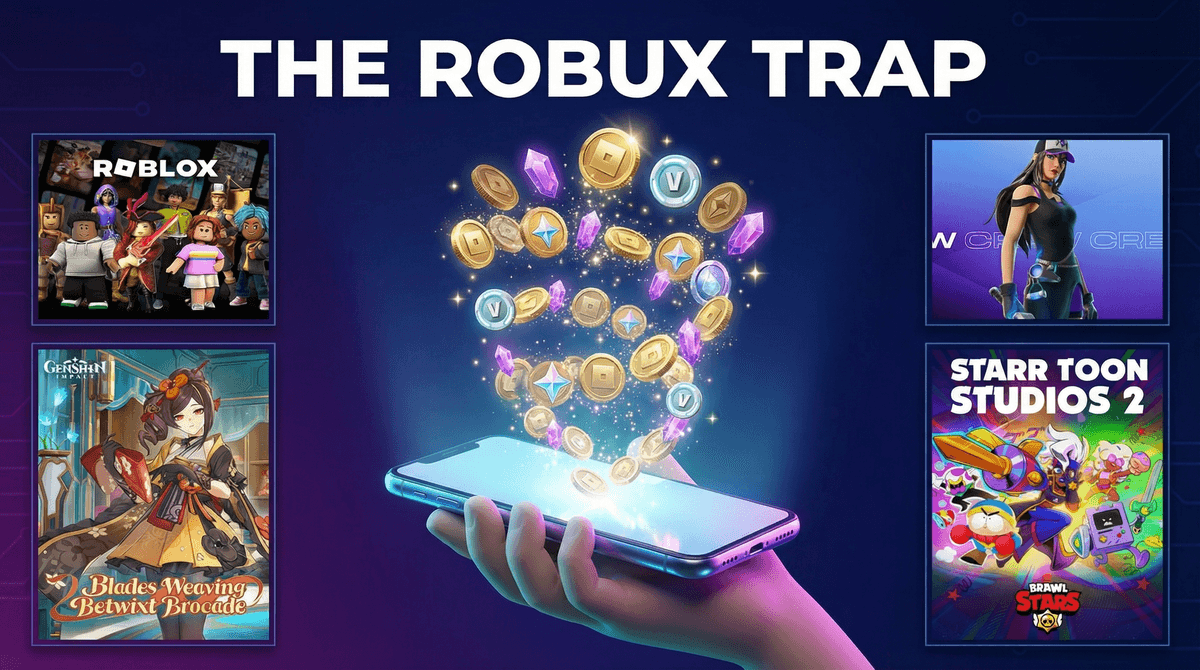
- The Culprits: Games like Roblox, Fortnite, and Brawl Stars are masters of the "micro-transaction" ecosystem.
- The Strategy: Move away from "no" and toward financial literacy. Use this guide on setting up Roblox parental controls to put hard stops in place while you teach them the difference between "need" and "FOMO."
- Quick Links:
- Fortnite (The "Skins" King)
- Roblox (The Virtual Economy)
- Genshin Impact (The "Gacha" Gambling Trap)
- Stardew Valley (A "Buy-Once-Play-Forever" Alternative)
If you’ve ever had a 9-year-old look at you with genuine, tearful desperation because they need 800 Robux to buy a specific "skin" or a "pet," you know it feels a little crazy. To us, it’s literally paying for pixels. To them, it’s the difference between being "cool" and being a "noob" (the ultimate digital insult).
The "trap" isn't just the spending; it’s the obfuscation of value. Games rarely show you a price tag in dollars. They show it in V-Bucks, Gems, or Robux. This is a deliberate "dark pattern" designed to disconnect the brain from the reality of the bank account. When $10 becomes 800 units of a fake currency, the "pain of paying" disappears.
It’s easy to dismiss this as "brain rot," but for kids, these virtual items serve two very real purposes:
- Identity and Expression: In a world where they spend 2 hours a day in Roblox, their avatar is their identity. Choosing a skin is like choosing an outfit for the first day of school.
- Social Currency: If everyone in the friend group has the "skibidi" themed skin or the latest Fortnite emote, not having it feels like being the only kid at the lunch table without the cool sneakers. It’s social survival, just digitized.

Game developers hire behavioral psychologists to make these games addictive. Here are the red flags to watch for:
- Loot Boxes (The Gambling Gateway): You pay $2 for a "crate" but don't know what's inside. You might get the "Legendary" sword, or you might get a digital sticker. This is literally gambling mechanics for minors. Genshin Impact is the heavyweight champion of this.
- Artificial Scarcity (FOMO): "Only 2 hours left to buy the Limited Edition Dragon!" This creates a panic response that bypasses the logical part of a child's brain.
- Loss Aversion: "If you don't spend 5 gems now, you'll lose all the progress you made in this round!" This is huge in games like Candy Crush or Monopoly Go!.
Ages 7+ Roblox isn't one game; it's a platform of millions of games. Each game (like Adopt Me! or Blox Fruits) has its own "game passes" and items. The pressure here is constant because the economy is player-driven. It's the Wild West of spending. Check out our guide on Roblox safety and spending
Ages 12+ Fortnite pioneered the "Battle Pass" model. You pay for the right to earn cool stuff by playing. It’s a genius hook because once you pay for the pass, you feel obligated to play 20 hours a week so you don't "waste" your money.
Ages 10+ This game is a masterclass in "just one more." It uses multiple currencies (coins, gems, bling) to keep kids confused about how much they are actually spending. It's colorful, fast, and very expensive if you want to keep up with the "meta" (the strongest characters).
Ages 4-9 Even the "sweet" games do it. Toca Life starts free but locks every cool house, furniture set, and character behind a paywall. It’s "digital dollhouse" extortion.
- Ages 5-8: The Hard Lock. At this age, kids have zero concept of digital money. Your App Store or Google Play account should be password-protected for every purchase. No exceptions.
- Ages 9-12: The Allowance Phase. This is the time to introduce a "Digital Allowance." If they want 800 Robux, it comes out of their real-world birthday money or chores. Once the money is gone, it’s gone. This is where you teach them about "opportunity cost"—if you buy the skin, you can't buy the LEGO set.
- Ages 13+: The Transparency Phase. Teens should be managing their own small budgets. Discuss the "dark patterns" with them. They hate being manipulated; once they realize a game is "playing" them to get their money, they often get defensive and stop spending.
If you're tired of the constant "Can I have $5?" requests, consider pivoting your child toward games that don't have in-app purchases. These are often higher quality and much better for their mental health.
- A masterpiece of a game. You buy it once (usually around $15), and there are zero ads and zero in-app purchases. It teaches patience, planning, and hard work.
- While the "Marketplace" in the Bedrock edition does have purchases, the core game is a creative sandbox that provides hundreds of hours of value for a one-time fee.
- If you have younger kids, look for "subscription" models like Piknik or Apple Arcade where you pay a monthly fee for access to dozens of games with all in-app purchases removed.
We need to stop saying "It's just a game." To them, it's not. It’s their social circle. When you talk about spending, acknowledge that.
"I get that the 'Monkey' skin is really popular right now and you feel like the only one without it. That's a tough feeling. But we don't spend real-world grocery money on digital clothes. Let's look at your chore chart and see how you can earn it."
This validates their feelings while maintaining a firm boundary on the family finances. It also moves the conversation from "Mom/Dad is mean" to "This is how money works."
In-app purchases are the "junk food" of the digital world. A little bit is fine, but a diet of nothing but loot boxes will rot your kid's understanding of value (and your bank account).
The goal isn't to ban spending entirely—that usually just leads to kids finding sneaky ways to buy things or feeling socially isolated. The goal is intentionality.
- Audit the Apps: Look at what they are playing. If it's Monopoly Go!, maybe suggest a real board game like Catan instead.
- Set the Boundary: Use parental controls to ensure no "accidental" $99.99 purchases happen.
- Talk about the "Why": Help them see the strings being pulled by the developers.
- Take the Survey: If you haven't already, walk through the Screenwise habit survey to see how your family's spending compares to your community.
- Set up "Ask to Buy": On iPhones, ensure "Ask to Buy" is toggled on in Family Sharing.
- Check the WISE scores: Before downloading a new game, check its WISE score on Screenwise to see if it's "Pay-to-Win" or "Free-to-Play Friendly."