

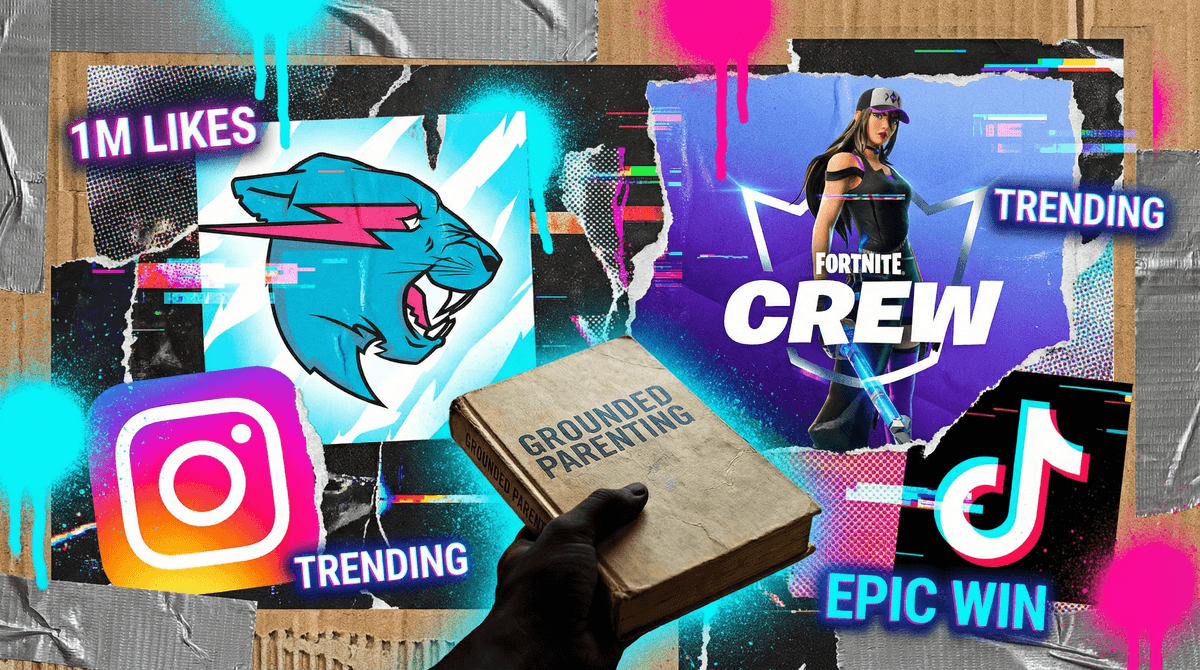
Humility used to be simple: don't brag, share credit, admit when you're wrong. But now? We're raising kids in a world where the algorithm literally rewards the opposite. Every platform is optimized for "look at me" — the flex culture of TikTok, the highlight reels of Instagram, the victory dances in Fortnite, the "git gud" trash talk in competitive gaming.
And it's not just social media. YouTube thumbnails scream "I'M THE BEST" with shocked faces and all-caps titles. MrBeast gives away millions on camera. Kids watch streamers with million-dollar setups. The message is everywhere: if you're not showing off, do you even exist?
So how do we teach humility when the entire digital ecosystem is designed to celebrate its opposite? That's the real question.
Here's what's happening: kids are growing up believing that visibility equals value. That self-worth comes from views, likes, followers, and clout. That winning means dominating and letting everyone know about it.
The research backs this up. Studies show kids who spend more time on social media report higher levels of narcissistic traits and lower empathy. Gaming culture — especially competitive games — often rewards toxic behavior and aggressive self-promotion. See what parents say about the voice chat in Roblox and you'll hear stories.
But here's the thing: humility isn't about being small or quiet. It's about having an accurate view of yourself — strengths AND weaknesses. It's about recognizing that other people matter. That you can be confident without being arrogant. That you can win without making someone else feel terrible.
And honestly? Humble kids are happier kids. They have better friendships, handle failure better, and don't tie their entire self-worth to external validation. That's not just nice — that's essential survival skills for the digital age.
Let's be real about the obstacles:
The Flex Economy: TikTok trends are literally called "flexing." Kids post their hauls, their setups, their wins. The algorithm rewards it. Learn more about how social media algorithms work.
Gaming Culture: Many popular games celebrate dominance. Victory dances, kill counts, leaderboards, trash talk. Fortnite, Call of Duty, even Rocket League — the culture often skews toward "you're trash" rather than "good game."
Influencer Culture: The most successful creators often have massive egos (or at least perform them). Kids see this and think that's how you succeed. Check out this guide on influencer culture.
Instant Feedback Loops: Every post, every stream, every game gives immediate feedback about how you're performing relative to others. It's exhausting and it makes everything feel like a competition.
Ages 5-8: This is actually the easiest age. They're still learning social rules and they WANT to be good. Focus on:
- Celebrating effort over outcomes ("You worked so hard!" not "You're the best!")
- Modeling gracious losing in board games
- Praising when they share credit or help others
- Shows like Bluey that model healthy emotional regulation and humility
Ages 9-12: This is when social comparison kicks in hard. They're noticing who's "better" at everything. Strategies:
- Talk explicitly about the difference between confidence and arrogance
- Point out humble role models in their interests (athletes, creators, characters)
- Discuss how YouTube thumbnails and titles are designed to grab attention, not reflect reality
- Encourage games that require cooperation: Minecraft (in creative mode), It Takes Two, Overcooked
- When they lose in games, practice saying "good game" genuinely
Ages 13+: Now they're deep in social media territory. This is about critical thinking:
- Analyze influencer behavior together: "Why do you think they film themselves giving to charity?"
- Discuss the performance of online personas vs. real people
- Talk about how the algorithm rewards extreme behavior
- Encourage them to follow creators who show vulnerability and failure, not just wins
- Model admitting your own mistakes and limitations
1. Control the inputs: You can't completely shield them, but you can curate. Follow creators who model humility. Watch shows where characters grow by admitting flaws. Play games that reward cooperation over domination. Check out these cooperative games.
2. Name it when you see it: "That was really humble of you to give credit to your teammate." "Did you notice how that streamer bragged for five minutes? How did that feel to watch?"
3. Celebrate the quiet wins: Made a mistake and owned it? That's huge. Helped someone without posting about it? That's character. Lost graciously? That's strength.
4. Reframe failure: In a world of highlight reels, kids need to see that everyone fails. Share your own failures. Watch content that shows the messy middle, not just the victory lap. The Try Guys are actually great for this — they literally fail at things on camera and laugh about it.
5. Create offline experiences: Sports, music, art, volunteering — anything where they're part of something bigger than themselves. Where they can be good at something without needing an audience.
6. Limit the performance pressure: Not everything needs to be posted, recorded, or shared. Some wins can just be wins. Some art can just be for you.
Teaching humility in 2026 is swimming upstream. The entire digital ecosystem is designed to reward the opposite. But here's the secret: kids actually hate the pressure to perform constantly. They're exhausted by it. They want permission to just be normal.
So give them that permission. Model it yourself. Admit when you're wrong. Share credit. Celebrate others' wins genuinely. Show them that confidence and humility aren't opposites — they're partners.
And when they do flex a little? That's okay too. They're kids. The goal isn't perfection. It's just helping them understand that their worth isn't measured in views, likes, or victory dances. It's measured in how they treat people when no one's watching.
That's the real flex.
- Audit their feeds together: Who are they following? What values do those creators model?
- Find one humble role model in their interests: A gamer, athlete, musician, or creator who shows vulnerability
- Practice gracious losing: In games, sports, everything. Make it a family value
- Talk about the performance: Help them see the difference between online personas and real people
- Create screen-free spaces: Where they can just be themselves without an audience
Want to talk through your specific situation? The Screenwise chatbot can help you figure out what makes sense for your family.