

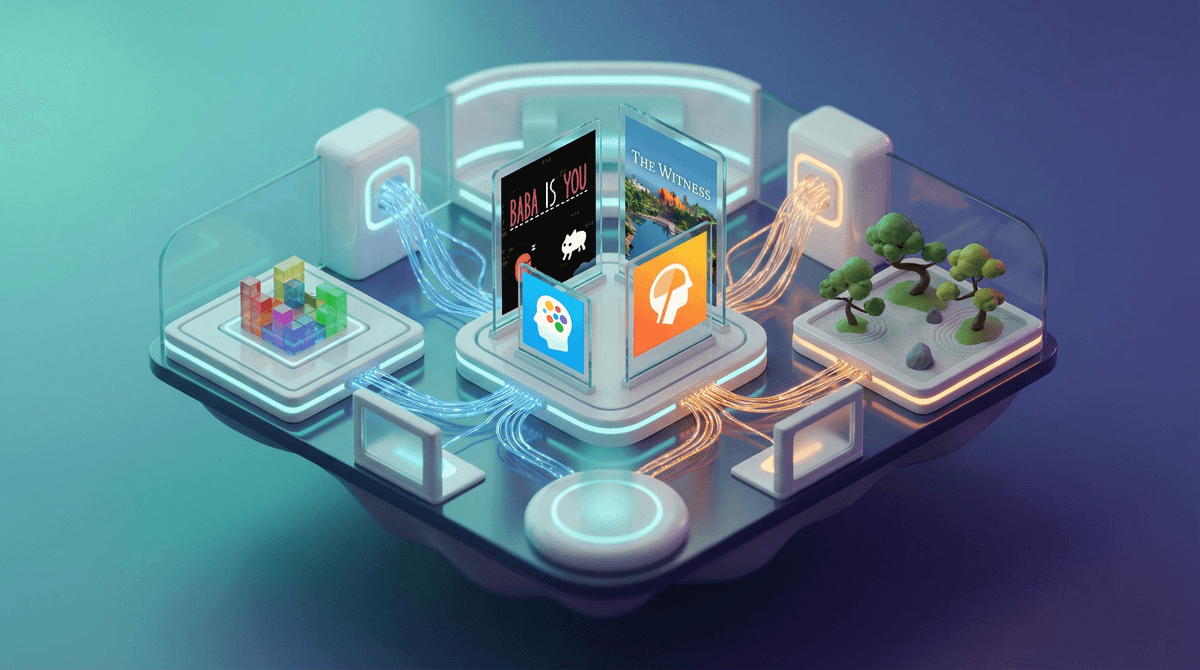
Look, we've all seen the ads. "Train your brain in just 10 minutes a day!" "Scientifically proven to boost IQ!" A cartoon brain doing pushups while your kid supposedly gets smarter by matching colored tiles.
Brain-boosting games are apps, video games, and platforms that claim to improve cognitive skills like memory, focus, processing speed, and problem-solving. Some are specifically marketed as "brain training" (like Lumosity or Peak), while others are regular games that happen to have genuine cognitive benefits (like certain puzzle games or strategy titles).
The big question: Do they actually work, or are we just paying $9.99/month for fancy flashcards?
Here's the truth: The research is... complicated. Some games do show modest improvements in specific tasks, but those gains don't always transfer to real-world skills like doing better in school or remembering where you put your water bottle. The neuroscience community has been pretty vocal about calling out overhyped marketing claims, especially after the FTC fined Lumosity $2 million in 2016 for deceptive advertising.
But that doesn't mean all games are snake oil. There ARE games and activities that can genuinely support cognitive development—you just need to know what to look for.
Here's what we actually know from research:
What works:
- Games that require working memory (holding and manipulating information) can improve that specific skill
- Strategy games that demand planning and flexible thinking do seem to enhance executive function
- Games with progressive difficulty that keep kids in the "challenge zone" are more effective than repetitive tasks
- Physical activity games that combine movement with cognitive challenges show promising results
What doesn't work:
- Doing the same matching game 500 times doesn't make you generally "smarter"
- Most brain training apps show improvement on the specific tasks in the app, but that skill doesn't magically transfer to homework or real life
- Passive screen time (watching videos, even "educational" ones) does basically nothing for cognitive development
The key insight: The best cognitive benefits come from games that require active problem-solving, adaptation, and genuine challenge—not just repetition.
Let's talk about what's actually worth your time (and money):
Legitimate Brain Training Apps (Ages 8+)
Peak - One of the better brain training apps with games designed by neuroscientists. It's not magic, but the variety of challenges (memory, attention, problem-solving) at least keeps things interesting. Free version is solid; premium is $35/year.
Elevate - Focuses more on practical skills like reading comprehension, writing, and math. Better for older kids (10+) who can appreciate the "adulting skills" angle.
Video Games With Real Cognitive Benefits
Minecraft (Ages 7+) - Yes, really. The spatial reasoning, planning, and creative problem-solving in Minecraft are legit. Survival mode especially requires resource management and strategic thinking. Just, you know, maybe not 6 hours a day.
Portal 2 (Ages 10+) - Puzzle-platformer that demands spatial reasoning, physics understanding, and flexible thinking. The co-op mode is fantastic for collaborative problem-solving.
The Witness (Ages 12+) - Gorgeous puzzle game that teaches pattern recognition and logical thinking without any instructions. Genuinely challenging even for adults.
Baba Is You (Ages 8+) - Mind-bending puzzle game where you manipulate the rules themselves. Incredible for flexible thinking and breaking mental patterns.
Strategy Games That Build Planning Skills
Slay the Spire (Ages 12+) - Deck-building roguelike that requires planning, probability thinking, and adapting to changing circumstances.
Into the Breach (Ages 10+) - Turn-based strategy where you can see exactly what enemies will do next. Teaches planning, consequence prediction, and strategic thinking.
Civilization VI (Ages 12+) - Complex strategy game about building an empire. Resource management, long-term planning, and understanding cause-and-effect relationships.
Board Games (Yes, Really)
Don't sleep on physical games. The social interaction and tactile elements actually enhance learning:
Azul (Ages 8+) - Pattern recognition and spatial planning Ticket to Ride (Ages 8+) - Route planning and strategic thinking Splendor (Ages 10+) - Resource management and forward planning Codenames (Ages 10+) - Word association and abstract thinking
Generic "brain training" apps with aggressive subscriptions - If the app is pushy about premium features and makes wild claims about IQ gains, run away.
Repetitive matching games - Candy Crush isn't making anyone smarter, and neither are its educational knockoffs.
Anything claiming to "cure" ADHD or learning disabilities - No game is a substitute for actual intervention and support.
Apps that are just digital worksheets - If it's basically homework with sound effects, the cognitive benefit is minimal and the engagement will tank quickly.
Ages 5-7: Focus on games that build foundational skills like pattern recognition and sequencing. Rush Hour Jr. and Robot Turtles are great. Screen-based options should be time-limited.
Ages 8-10: Introduce strategy games with clear rules and visible consequences. Minecraft (in creative or peaceful mode), Blokus, and simple puzzle games work well.
Ages 11-13: Complex strategy games, puzzle games with abstract thinking, and brain training apps become appropriate. This is when games like Portal 2 and The Witness really shine.
Ages 14+: Pretty much anything goes, though check individual game ratings. The focus should shift to games that build skills they care about—whether that's strategic thinking, creative problem-solving, or even game design itself.
The 20-minute rule: Most cognitive benefits max out after about 20-30 minutes of focused play. More isn't better—it's just more screen time.
Challenge matters more than content: A game that's too easy (even if it's "educational") provides zero cognitive benefit. Look for games that make your kid think hard, maybe even get a little frustrated, then figure it out.
Transfer is the real goal: Ask your kid to explain their strategy or decision-making process. That metacognitive reflection is what helps skills transfer to real-world situations.
Balance is everything: The best cognitive development comes from a mix of digital games, physical games, reading, creative play, and unstructured time. No single game is a magic bullet.
Watch for the engagement trap: If your kid is "training their brain" for 3 hours a day, that's not cognitive development—that's just screen addiction with better marketing.
Brain-boosting games aren't a scam, but they're not a miracle either. The best ones require genuine problem-solving, adapt to challenge level, and teach skills that transfer beyond the screen.
Skip the flashy brain training subscriptions with wild claims. Instead, invest in a few well-designed puzzle games, strategy games, or board games that your kid actually wants to play. Twenty minutes of engaged problem-solving in Portal 2 beats an hour of mindless matching in some "brain training" app.
And remember: The most powerful cognitive development tool is still a good book, a creative project, or a conversation where your kid has to think, explain, and defend their ideas. Games can supplement that—they just can't replace it.
-
Audit what they're already playing: Are current games providing any cognitive challenge, or is it just dopamine delivery? See if a specific game is good for cognitive development

-
Try one new puzzle or strategy game: Pick something from the list above that matches your kid's age and interests.
-
Set up a family game night: Board games provide cognitive benefits PLUS social connection. Win-win.
-
Talk about thinking: Ask your kid to explain their strategy or problem-solving process. That reflection is where the real learning happens.