Coding without the syntax
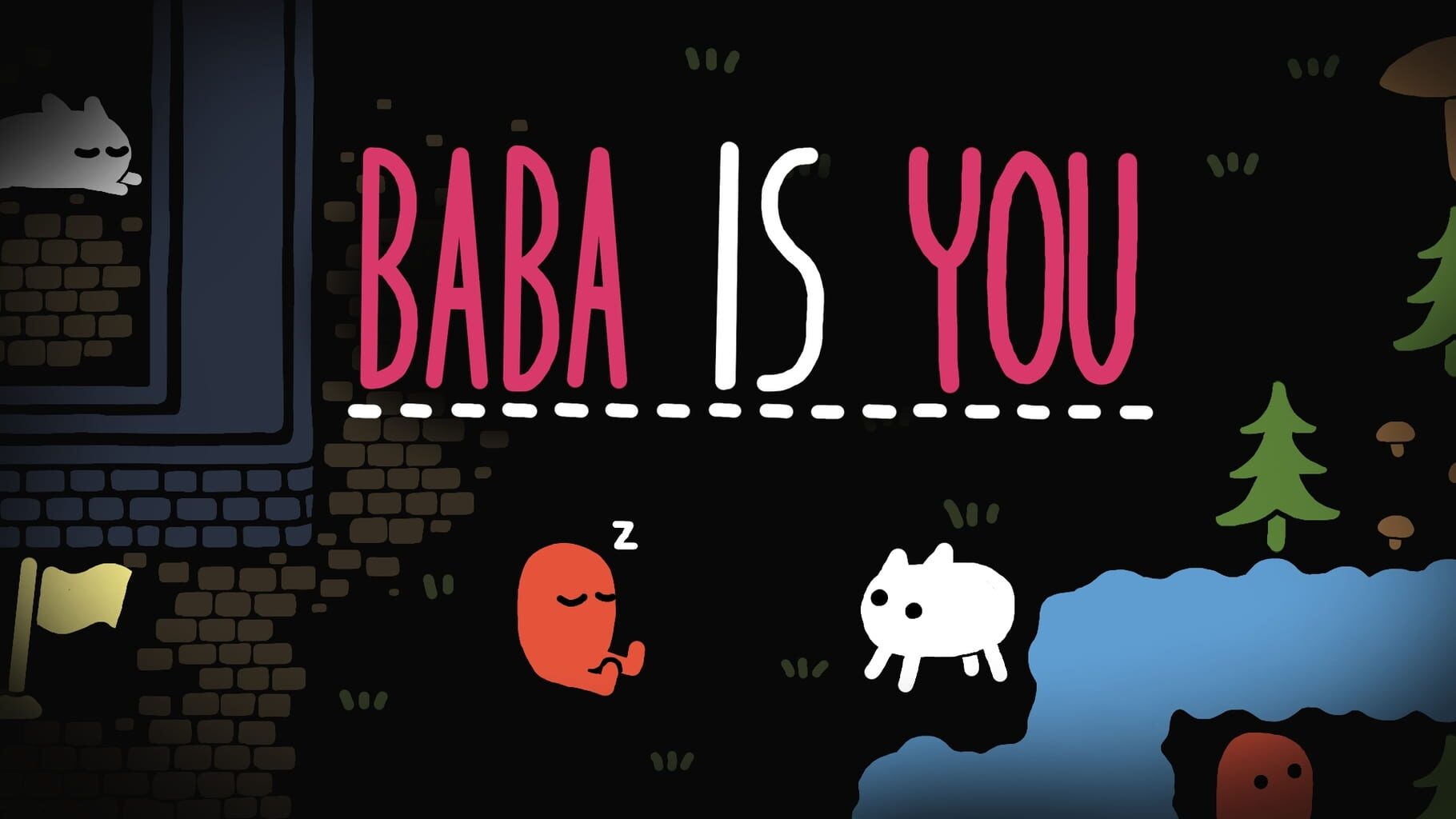
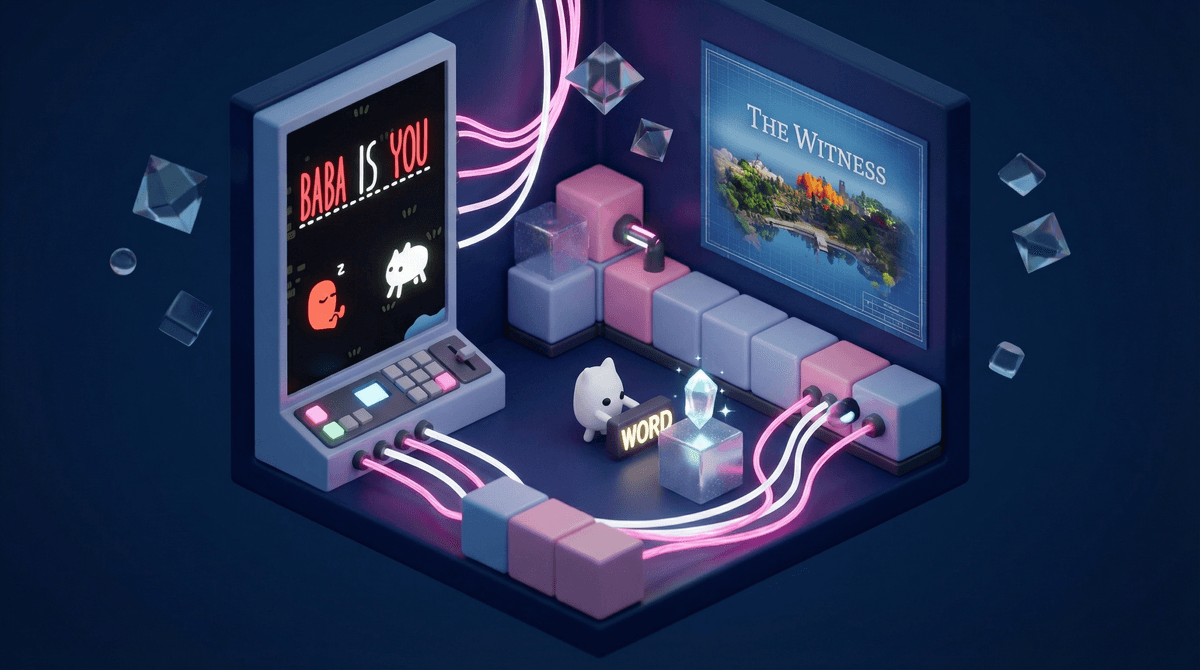
If you’ve ever tried to get your kid into "educational" coding games, you know the vibe is usually pretty dry. They’re often just digital worksheets dressed up in neon colors. Baba Is You is different because it’s a stealth learning masterpiece. It doesn't ask you to type lines of Python; it asks you to manipulate the physical logic of the world.
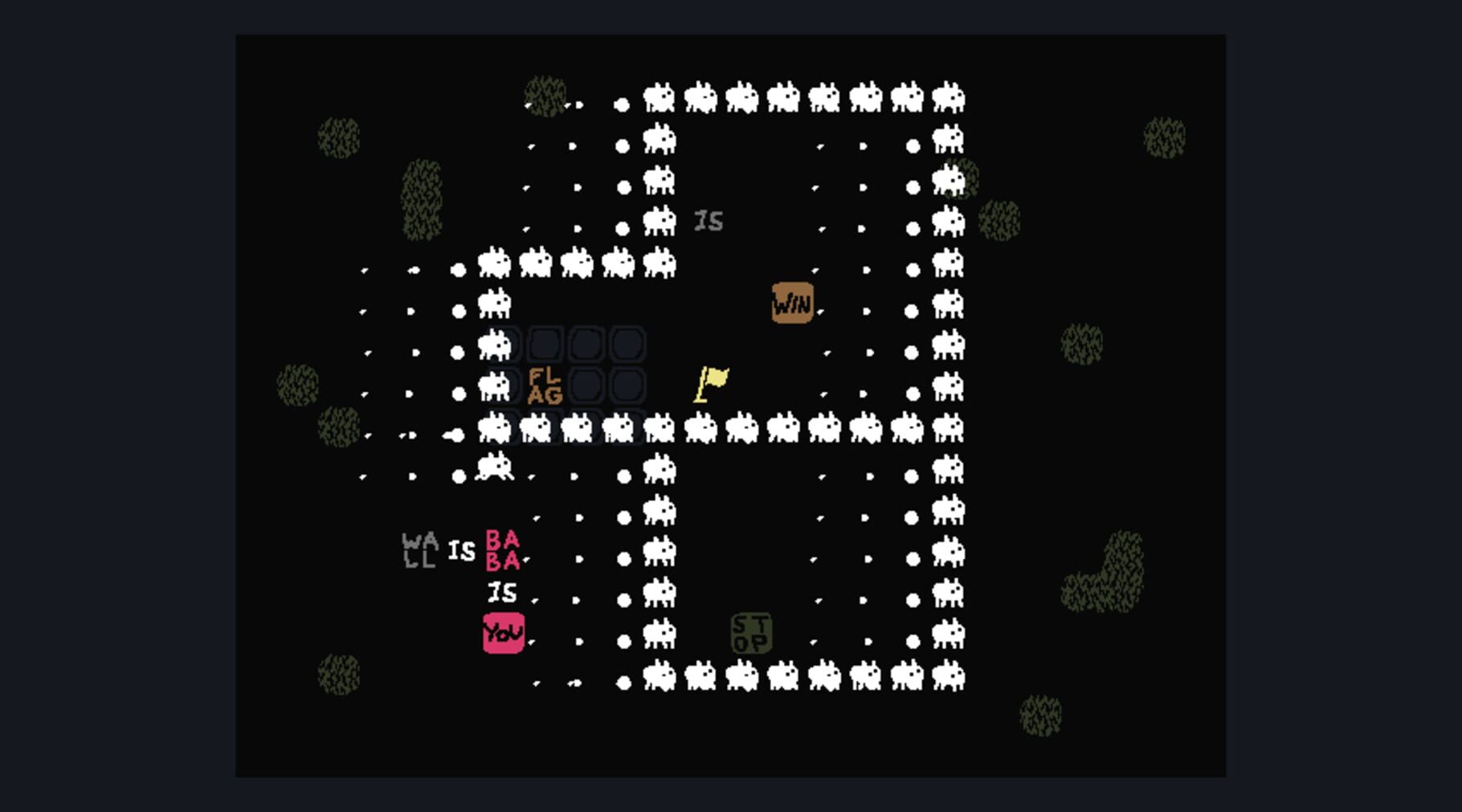
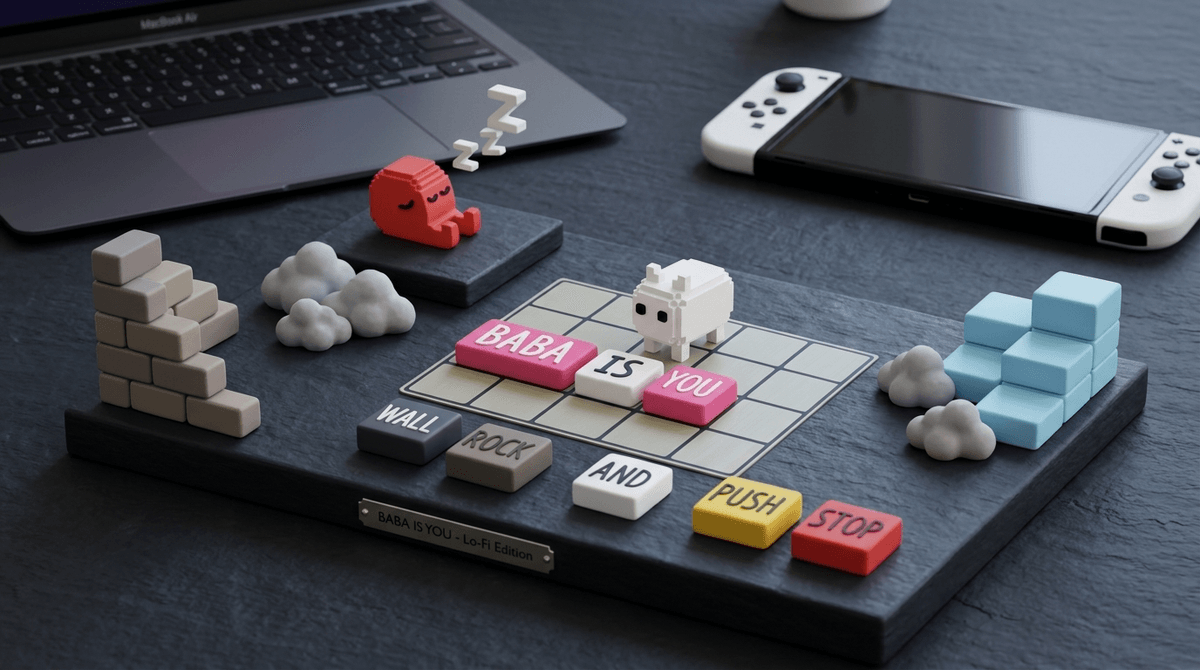
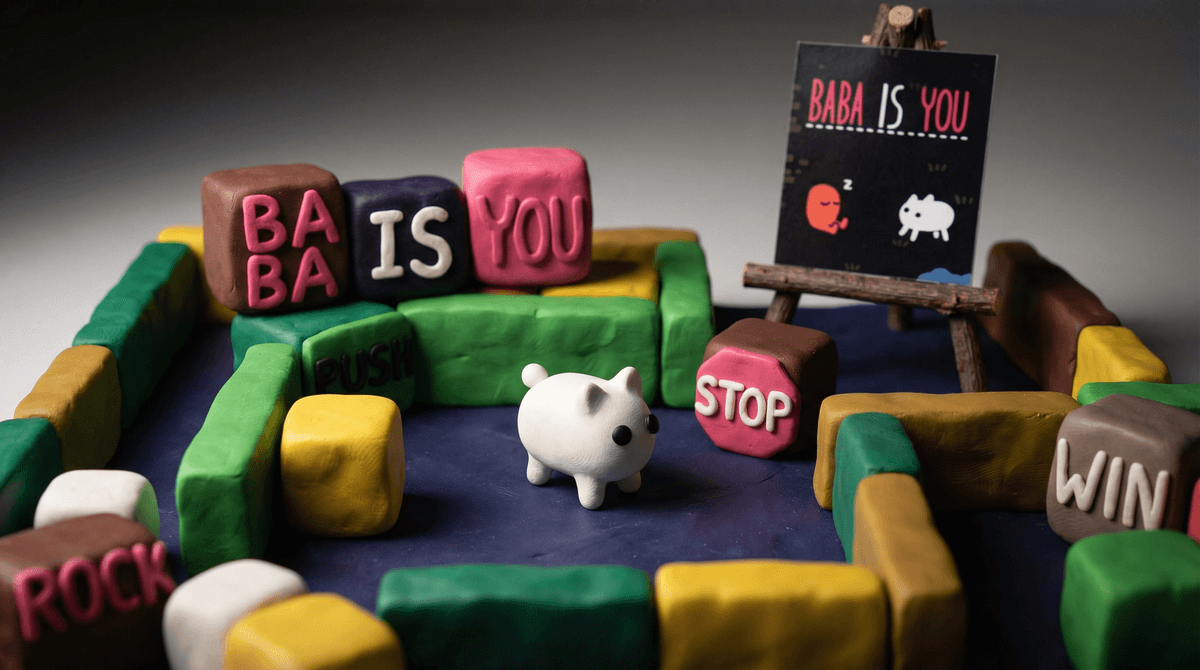
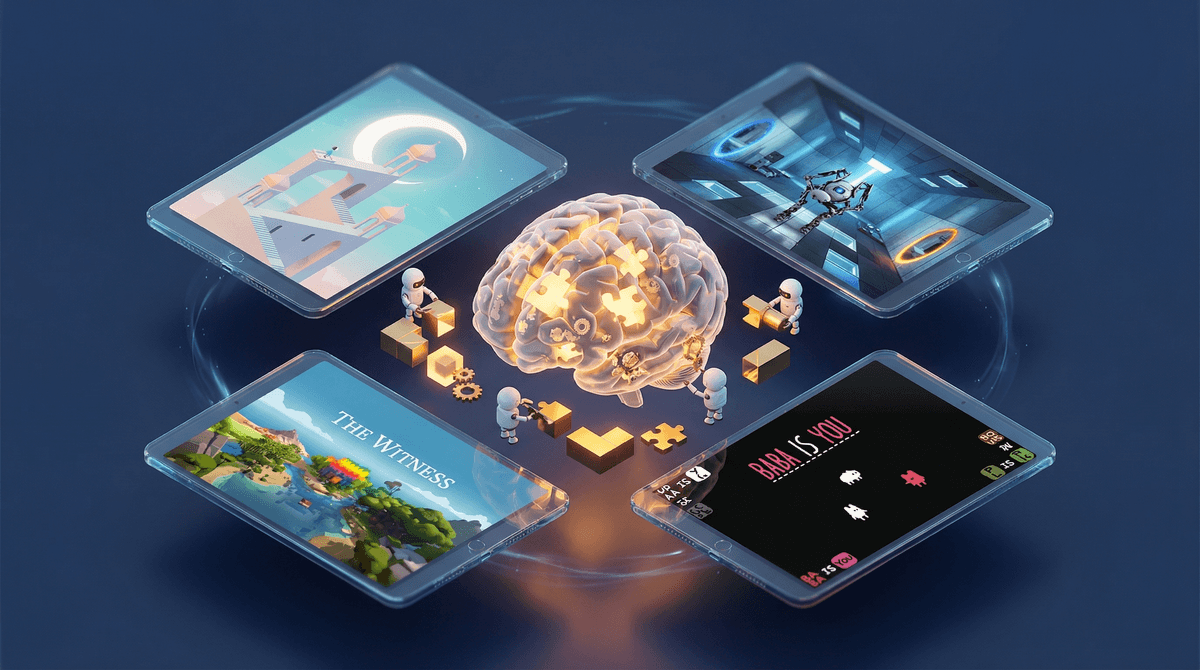
When you push the block "ROCK" next to "IS" and "PUSH," you’ve just assigned a property to an object. When you change it to "ROCK IS YOU," you’ve just reassigned the player variable. This is coding-style logic in its purest, most tactile form. For a kid who enjoys the complex "if-this-then-that" systems of Minecraft Redstone or the spatial logic of Portal, this is the logical next step. It’s a workout for the part of the brain that handles abstract systems, and it’s far more effective than any "learn to code" app I’ve seen.
The difficulty is the point
Don’t let the "E" rating or the MS Paint-style graphics fool you. This game is staggeringly difficult. Most games operate on a "lock and key" philosophy: you find the item, you use it on the door. Baba Is You asks you to redefine what the door even is.
There is a specific kind of friction here that can lead to major frustration. You will see your kid stare at a screen for ten minutes without moving a single block. That’s not "brain rot" or "wasted time"—that’s deep processing. However, if your child’s default response to a challenge is to throw the controller, you’ll want to step in early. This is a prime environment to talk about grit and resilience. The game doesn't have a hint system, so when you're stuck, you're truly stuck.
How to play it as a team
Even though it’s technically a single-player experience, Baba Is You is one of the best "couch co-op" games for families who like to think. It’s often better with two or three sets of eyes on the screen. Because the solutions are so lateral—sometimes involving breaking a rule you thought was permanent—a younger kid might spot a "weird" solution that an adult would miss because we're too used to how games "usually" work.
If you see them hitting a wall, don't give them the answer (honestly, you might not even know it). Instead, ask: "What rules can we break right now?" or "What happens if we push that 'IS' block out of the way?" It turns a solitary, potentially frustrating task into a collaborative puzzle-solving session. It’s the rare game that makes you feel like a genius when you finally click the blocks into place, and sharing that "aha!" moment is where the real value lies.