

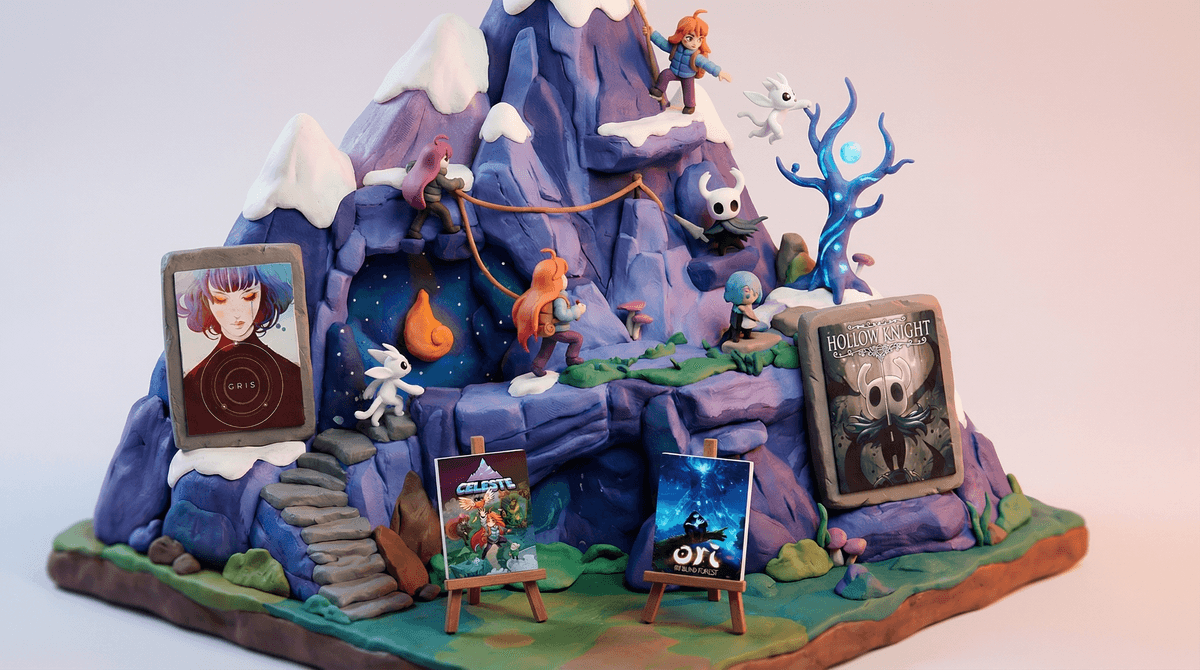
If your kid has been raving about Celeste, you've probably heard about strawberries, B-sides, and something about a mountain that represents anxiety. Celeste isn't just another platformer—it's a precision platformer with a heart, combining brutally difficult gameplay with a genuinely moving story about mental health, self-doubt, and perseverance.
Games like Celeste share some combination of these elements: tight, responsive controls that demand precision, challenging but fair difficulty, and often meaningful narratives that explore themes beyond "save the princess." Think less Mario's cheerful romp, more introspective journey with real emotional stakes.
The good news? There's a whole genre of these games, and many of them are actually fantastic for kids—not despite their difficulty, but because of it.
Here's something interesting: about 55% of families in the Screenwise community report their kids gaming regularly, and a good chunk of those are gravitating toward these challenging platformers. Why?
The difficulty is the point. Unlike games that hold your hand or let you button-mash your way through, precision platformers require focus, pattern recognition, and genuine skill development. Every death teaches something. Every success feels earned. For kids who are used to games showering them with participation trophies, this can be refreshingly real.
They're actually completable. Most of these games clock in at 6-15 hours for the main story—much shorter than the 100+ hour open-world games that kids often abandon halfway through. There's something satisfying about actually finishing a game.
The stories hit different. Games like Celeste deal with anxiety, depression, and self-acceptance in ways that feel authentic. For tweens and teens navigating their own emotional landscapes, these narratives can be surprisingly validating.
Hollow Knight (Ages 10+) A gorgeous, melancholic exploration game set in a dying insect kingdom. It's harder than Celeste in some ways—more combat-focused, less forgiving checkpoints—but the art style is stunning and the world-building is top-tier. Fair warning: this one's longer (20-40 hours) and can be genuinely challenging. Some boss fights might lead to controller-throwing frustration.
A Short Hike (Ages 6+) If Celeste is a marathon up a mountain, A Short Hike is a pleasant afternoon stroll. Same climbing mechanics, zero stress. Your kid plays as a bird exploring an island, talking to quirky characters, and eventually hiking to the summit. It's cozy, wholesome, and perfect for younger kids or anyone who wants the vibe without the difficulty spike.
Ori and the Blind Forest / Ori and the Will of the Wisps (Ages 10+) Absolutely stunning visually, with a tear-jerking opening sequence that rivals Pixar. The platforming is fluid and challenging, with some truly difficult escape sequences. The story deals with loss and sacrifice in ways that might be heavy for sensitive kids, but it's beautiful storytelling. Both games are Xbox/PC/Switch.
Gris (Ages 8+) A visual poem about grief and recovery. There's no dialogue, no death, no failure state—just a young woman moving through a watercolor world that gradually regains color as she processes loss. It's easier than Celeste mechanically but emotionally sophisticated. Perfect for artistic kids or those who found Celeste's narrative meaningful.
Super Meat Boy (Ages 10+) The OG of modern precision platformers, and it's brutal. If Celeste is challenging, Super Meat Boy is downright punishing. But it's also incredibly satisfying, with instant respawns that keep the pace frantic. The cartoonish violence (you're literally a cube of meat) is more silly than disturbing, but the difficulty might be too much for kids who get easily frustrated.
Spiritfarer (Ages 10+) Not quite a platformer, but shares Celeste's emotional depth. You're a ferrymaster for the deceased, helping spirits move on to the afterlife. It's a game about death, but it's gentle and life-affirming. Some platforming elements, lots of resource management, and genuine emotional moments. Great for kids ready to think about mortality in a safe, beautiful context.
These games teach real skills. Pattern recognition, spatial reasoning, persistence through failure, emotional regulation when frustrated—these aren't just "gaming skills," they're life skills. Watching a kid work through a difficult section for 30 minutes and finally nail it? That's growth.
The difficulty is a feature, not a bug. You might be tempted to help or suggest they play on an easier mode (many don't have one). Resist. The struggle is where the learning happens. That said, if a game is causing genuine distress rather than productive challenge, it might not be the right fit yet.
Content is generally clean. Most precision platformers are light on violence, language, and mature content. The "mature" elements are usually thematic—dealing with mental health, loss, or existential questions—not graphic content.
Screen time quality matters. Yeah, it's still screen time, but there's a difference between actively problem-solving through a challenging game and passively scrolling TikTok. These games require focus and engagement. That doesn't mean unlimited gaming is fine , but it's worth considering quality alongside quantity.
Ages 6-8: Stick with A Short Hike or wait. The difficulty and themes in most of these games will be frustrating or over their heads.
Ages 9-11: Celeste, Gris, and A Short Hike are solid choices. Some kids this age can handle Ori, but gauge their frustration tolerance first.
Ages 12+: Pretty much all of these are fair game. Let their interests guide—does your kid want emotional storytelling, pure challenge, or beautiful exploration?
Games like Celeste offer something increasingly rare in kids' digital lives: genuine challenge with genuine meaning. They're hard in ways that teach resilience, not just hand-eye coordination. They tell stories that treat young players like they can handle complex emotions.
Not every kid will vibe with these games—some will bounce off the difficulty, others will find the themes too heavy. That's fine. But for the kids who connect with them, these games can be legitimately formative experiences.
And hey, if you're looking for something to play together, most of these work great with a parent watching and helping strategize. Just don't grab the controller—trust me, they need to do this themselves.
- Check out our guide to cozy games if the difficulty sounds like too much
- Explore alternatives to Fortnite if you're trying to broaden gaming horizons
- Learn more about healthy gaming habits and how to set boundaries that actually work