The Genius of the Instant Retry
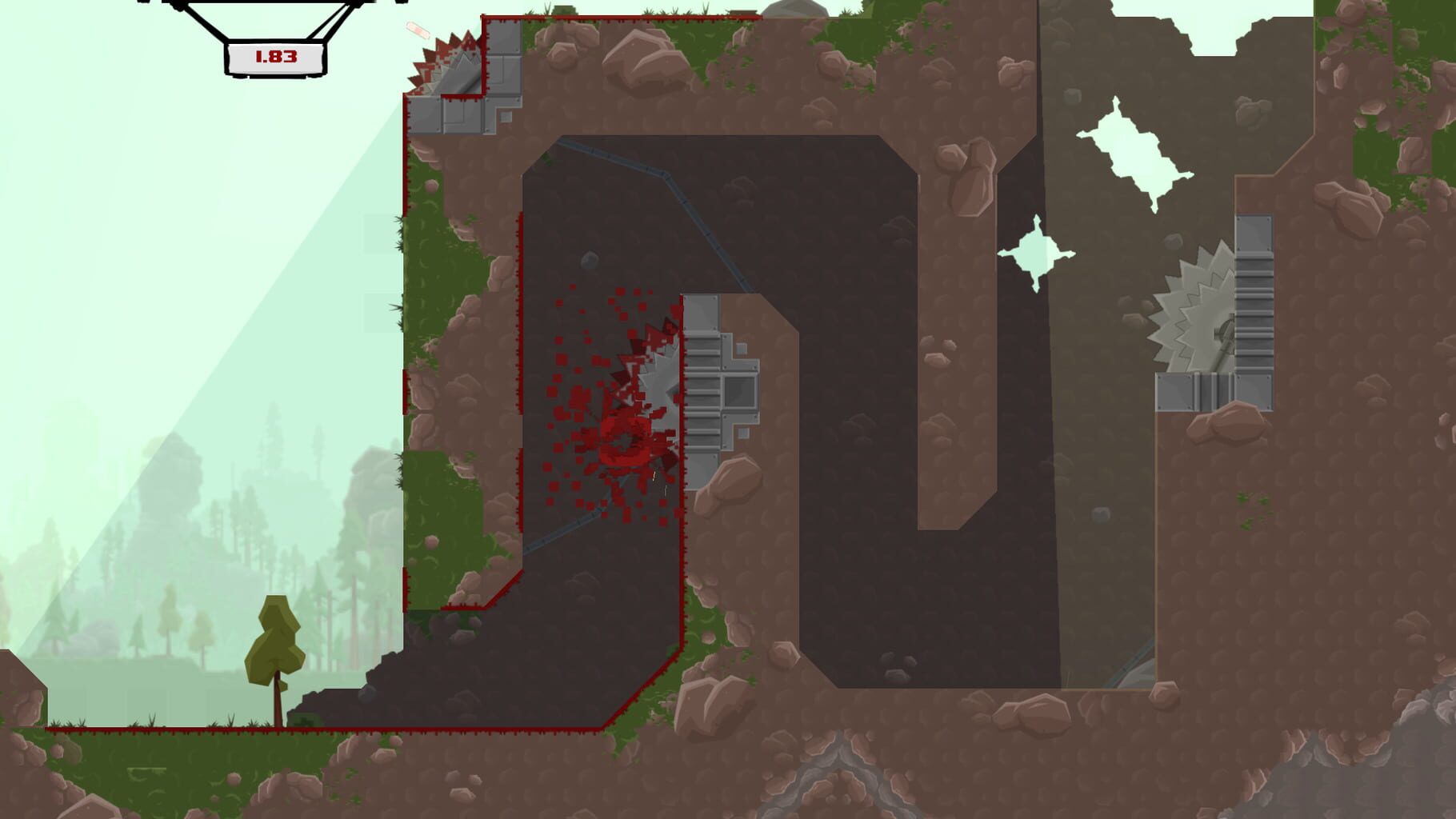
When Super Meat Boy launched in 2010, it redefined how games handle failure. In older platformers, dying meant losing a life, staring at a black screen, loading the level start, and losing five minutes of progress. Team Meat threw all of that out. When Meat Boy hits a saw, he explodes into a shower of red pixels and immediately reappears at the start line. The gap between dying and trying again is roughly two milliseconds.
That single design choice changes how the brain processes failure. Instead of sitting with the annoyance of losing, players immediately test their next idea. It transforms what could be a miserable slog into a flow state where kids refine spatial timing, muscle memory, and trajectory calculation through quick micro-adjustments.
Blood as a Gameplay Tool
The cartoon blood turns off some parents, but inside the game mechanics, it serves an actual purpose. Every surface Meat Boy touches leaves a red smear. If you jump too early on a wall slide and hit a saw, your previous blood trail stays on the wall when you respawn. That red streak acts as a physical marker showing you where your foot landed last time, letting you visually adjust your jump point by three inches on the next attempt.
Resilience vs. Controller Throwing
The line between grit and rage-quitting depends entirely on your kid's temperament. Because the levels are tiny—often taking only 10 to 15 seconds to run cleanly—the game dangling success right in front of the player is constant. That accessibility can lead to 'just one more try' loops that stretch past bedtime if you don't set clear time boundaries.
If you have a kid who enjoys dark-souls-style precision and takes pride in mastering hard mechanics, this is a clean, highly creative challenge without loot boxes or battle passes. If your kid struggles with frustration tolerance, sit this one out until they're older.