

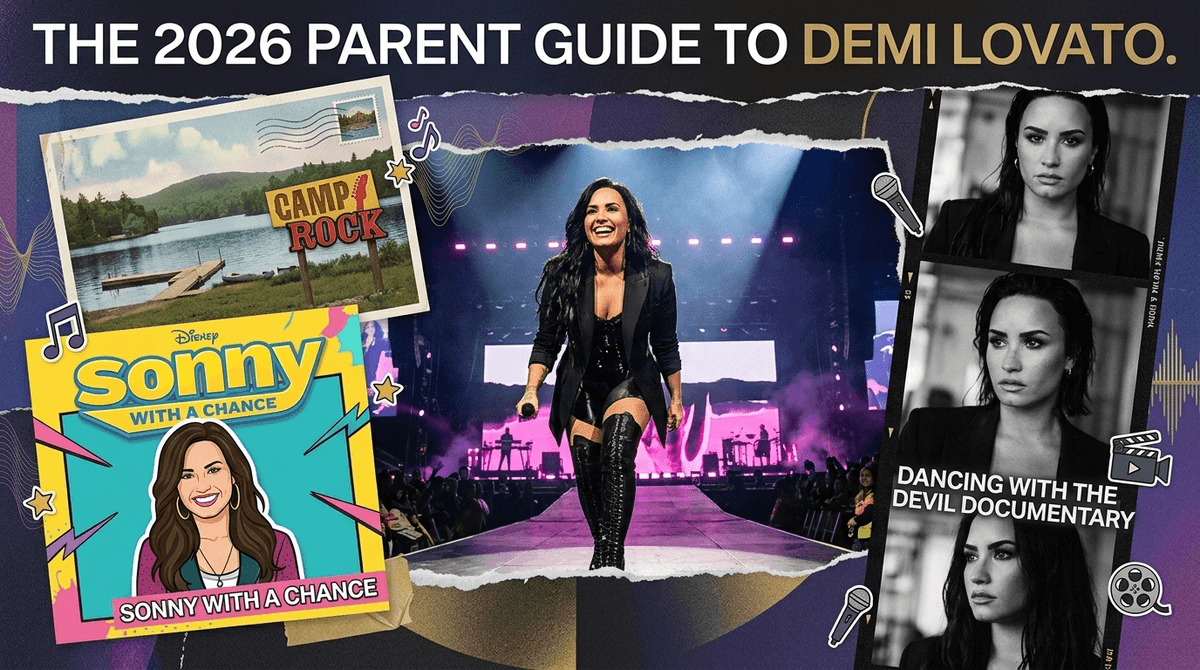
TL;DR: Demi Lovato is back in her dance-pop bag with the 2026 "It’s Not That Deep" tour, and honestly, it’s a breath of fresh air. After years of heavy (but important) rock and raw documentaries about her trauma, she’s leaning into joy. For parents, she remains the ultimate case study in "child star resilience." If your teen is heading to her show or blasting her new tracks, it’s a perfect opening to talk about mental health, recovery, and why the internet isn't always a kind place.
Quick Links for the Demi Era:
- For the Nostalgia: Camp Rock (Ages 7+)
- For the Real Talk: Demi Lovato: Dancing with the Devil (Ages 15+)
- For the 2026 Vibe: Demi’s Official YouTube
If you feel like you’ve lived through several lifetimes with Demi Lovato, it’s because you have. We’ve seen her as the Disney Channel darling, the pop princess, the "California Sober" advocate, the hard-rocker, and now, in 2026, the queen of the "It’s Not That Deep" era.
This current phase is all about high-energy dance-pop and reclaiming her space as a powerhouse vocalist without the weight of having to explain her trauma in every single lyric. It’s catchy, it’s fun, and it’s currently dominating TikTok and Spotify charts. But for us parents, Demi isn't just another artist on a playlist; she’s a bridge to some of the most important conversations we’ll ever have with our kids.
Demi has a "no-BS" energy that resonates deeply with Gen Z and Gen Alpha. They don’t just like her music; they respect her transparency. In a world of filtered Instagram lives, Demi has been messy, honest, and incredibly vulnerable about her struggles with eating disorders, bipolar disorder, and substance abuse.
In 2026, she’s managed to do something rare: she’s stayed relevant to the older crowd who grew up with her on Sonny with a Chance, while capturing the 13-year-olds who just think her new dance tracks are "slay" (or whatever the 2026 equivalent of slay is—probably something like "pure kinetic" by now).

If your kid is just discovering Demi, or you want to revisit her journey together, here is how to navigate her massive catalog without accidentally dropping a 10-year-old into a documentary about a near-fatal overdose.
The "Early Years" (Ages 7-11)
This is the safe zone. It’s pure Disney magic and zero "darkness."
- Camp Rock: The classic. It’s basically High School Musical but with a lake. Great for family movie night.
- Sonny with a Chance: A meta-comedy about a girl on a sketch show. It’s funny, clean, and shows Demi’s actual comedic timing.
- Princess Protection Program: Demi and Selena Gomez at the height of their "BFF" era. Peak wholesome content.
The "Vocal Powerhouse" Era (Ages 12+)
This is where the music gets a bit more "grown," focusing on self-empowerment and heartbreak.
- Confident (Album): The title track is the ultimate "get hyped" song for sports or school presentations.
- Skyscraper (Song): If you want to talk about resilience, play this. It was her "I’m back" song after her first stint in treatment.
The "Deep Dive" (Ages 15+)
Warning: This is the heavy stuff. Do not let your middle schooler watch these unsupervised.
- Dancing with the Devil: This documentary is brutal. It covers her 2018 overdose, her strokes, and her brain damage. It is an incredible piece of filmmaking, but it’s a lot. If you have a teen struggling with mental health or substance pressure, watching this with them can be a life-changing conversation starter.
Demi has been a lightning rod for controversy, mostly because she refuses to be "perfect." Here’s the context you need when your kid asks why people on X/Twitter are arguing about her.
1. The Recovery Journey
Demi has changed her stance on sobriety over the years—moving from total sobriety to "California Sober" (moderating weed and alcohol) and then back to "sober sober." Some people find this confusing or "inconsistent." As parents, we can frame this as the reality of recovery: it’s not a straight line. It’s a messy, lifelong process of figuring out what works.
2. Identity and Pronouns
In the early 2020s, Demi came out as non-binary and used they/them pronouns, later adding she/her back into the mix, saying she was "feeling more feminine" again. In 2026, she’s very much in a "fluid" space. This is a great way to talk to kids about how identity can evolve and that it’s okay to change your mind or your labels as you grow.
3. The "Disney Trap"
Demi is one of the most vocal critics of the child-star pipeline. She’s talked openly about the pressure to be perfect and the lack of protection for kids in the industry. If your kid is obsessed with becoming a YouTube star or an influencer, Demi’s story is a necessary cautionary tale about the cost of early fame.
Don’t wait for a "crisis" to talk about the themes in Demi’s life. Use the 2026 tour hype as a "side-door" into these topics:
- On Mental Health: "I love that Demi’s new songs are so fun, but she’s also been so open about being bipolar. Do you think being that honest helps people or is it too much information?"
- On Body Image: Demi has struggled with eating disorders since her Disney days. "She’s talked a lot about how hard it was to be on camera at 15. Do you ever feel that pressure when you’re posting on TikTok?"
- On Digital Resilience: "People were really mean to Demi when she was going through her hardest times. How do you handle it when you see people being toxic online?"
If you’re taking your kid to the concert or just listening in the car, lean into the joy. The 2026 tour is designed to be a celebration. After years of being the "poster child for struggle," Demi is clearly trying to show that there is a "happily ever after" (or at least a "happily right now").
- Make a "History of Demi" Playlist: Start with "This is Me" from Camp Rock and end with her 2026 dance hits. It’s a literal sonic map of growing up.
- Check the Lyrics: Most of her new stuff is PG-13, but like any pop star, there might be some references to partying or "adult" relationships. Give it a quick listen on Spotify before the school run.
Demi Lovato in 2026 is a vibe. She’s talented, she’s resilient, and she’s finally having fun again. For us, she’s a reminder that our kids’ mistakes—even the big ones—don’t have to define their entire lives. She’s proof that you can hit rock bottom in front of the whole world and still come back to headline a world tour.
If your kid is a fan, embrace it. She’s one of the "real ones" in an increasingly AI-generated world. Just keep the dialogue open, keep the YouTube settings appropriate, and maybe don't be afraid to dance a little bit when "It's Not That Deep" comes on the radio.
Next Steps:
- Listen to the new album together—ask which track is their favorite and why.
- If they are 15+, consider watching a few clips of her documentaries to discuss the reality of addiction.
- Set up a [Google Alert](https://screenwiseapp.com/media/google-search-website for tour dates if you’re feeling like the "cool parent" this year.