

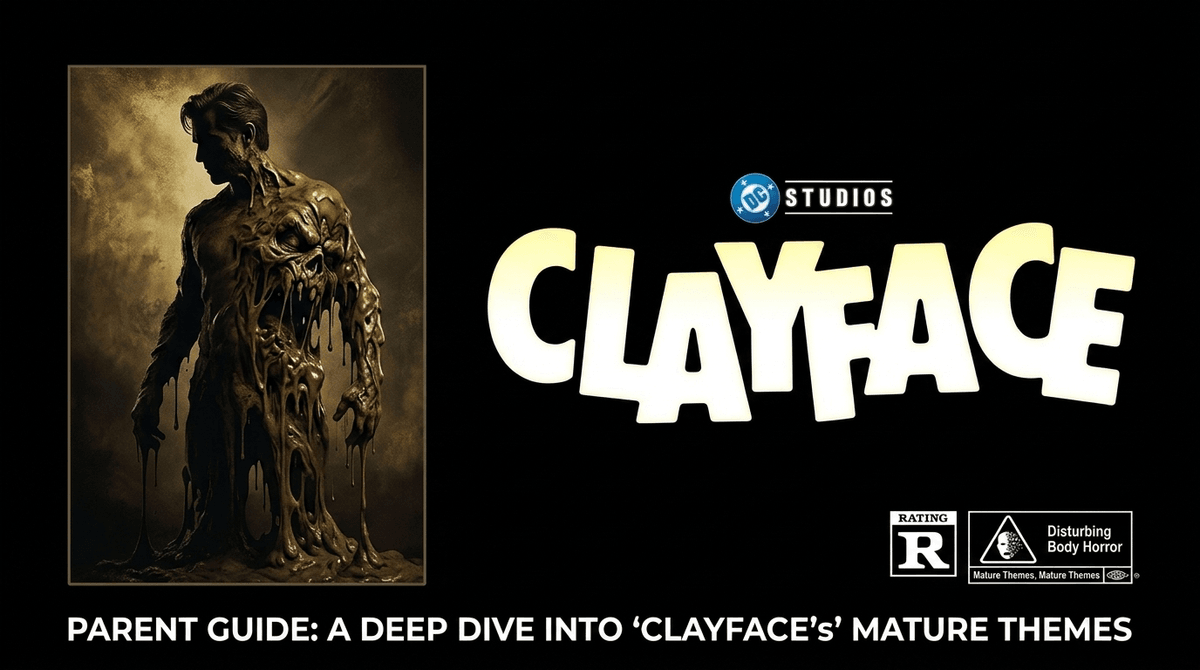
The 2026 Clayface movie is going to be a hard R, and for once, that rating isn't about a few stray f-bombs or a gritty tone. It’s about visceral, stomach-churning body horror. If you’re expecting the shape-shifting mud-monster from the 90s cartoons or the campy villain from the 60s, pivot now. Everything we’ve seen from the production and the first teaser suggests this is DC’s version of The Fly—a tragic, gruesome transformation story that earns every bit of its restricted rating.
TL;DR: Clayface is set to be the first true horror entry in the new DCU, carrying a definitive R rating for "graphic violence and disturbing imagery." Directed by Mike Flanagan, the film will focus on the agonizing physical and mental breakdown of Basil Karlo rather than traditional superhero action. It’s a great pick for older teens who have already graduated from Stranger Things to more intense horror, but it’s likely too much for the middle-school crowd that usually flocks to Batman movies.
Most superhero movies flirt with a PG-13 rating to keep the toy-buying demographic in the seats. Clayface is taking the opposite path. The R rating is primarily being driven by "body horror"—a subgenre that focuses on the gross-out factor of the human body being manipulated, melted, or reconstructed.
In the comics, Basil Karlo is an actor who loses his mind and his physical form. In the 2026 film, the trailers suggest we’re going to see that process in excruciating detail. We’re talking about skin sloughing off, bones shifting under melting clay, and transformations that look more like a medical emergency than a superpower. If your kid is sensitive to "medical" or physical gore, this is going to be a tough watch, even if they’ve seen every other DC movie on the shelf.
We need to be clear about what "body horror" means in this context. Usually, when a character shifts shapes in a movie—think Mystique in X-Men—it’s a clean, digital effect. It’s "cool."
Based on Mike Flanagan’s previous work and the early looks at the Clayface practical effects, this transformation is portrayed as a horrific affliction. The "clay" isn't just mud; it's necrotic tissue and shifting mass. The rating reflects a level of physical intensity that matches films like The Thing. It’s designed to make the audience uncomfortable.
For a kid who loves the lore of Batman villains, the draw will be huge. But the execution here is aimed squarely at the horror crowd. If they loved the psychological tension of Joker, they might be ready for the tone, but they need to be prepared for a much higher level of "wet" gore.
If you aren't familiar with the director, Mike Flanagan is the mind behind The Haunting of Hill House and Midnight Mass. He doesn’t do jump-scares for the sake of it; he does deep, emotional trauma wrapped in terrifying visuals.
His involvement tells us two things about the 2026 Clayface:
- The story will be heavy. This isn't a popcorn flick. It’s going to deal with identity, obsession, and the loss of self.
- The horror will be linger. Flanagan is a master of the "background scare"—things you don't notice at first that haunt you after the credits roll.
This makes the movie a much more sophisticated watch than your standard The Batman. It’s a film about a man's life falling apart while his body literally melts. That’s a heavy lift for younger viewers who just want to see a cool monster fight.
The sweet spot for Clayface is likely 16 and up. That isn't a hard rule—some 14-year-olds are horror veterans who can handle practical effects and dark themes—but the R rating is a genuine signal here.
If your kid is asking to see this because they like "superhero movies," you’ll want to have a conversation about what they’re actually getting. Show them a trailer for a Flanagan project or a classic body-horror film. If they find the concept of a man losing his physical humanity disturbing rather than interesting, they should probably sit this one out until it hits streaming and you can vet it.
For families who do engage with horror, this is a fantastic opportunity to talk about practical vs. digital effects and how a director uses a monster to tell a story about mental health or ego. But don't let the "DC" logo on the poster trick you into thinking this is a family-friendly afternoon at the theater.
If your teen is dead-set on seeing Clayface, use it to talk about the genre:
- The "Why" of the Horror: Why do you think the director chose to make the transformation look painful instead of magical? How does that change how we feel about the villain?
- The Actor's Ego: Basil Karlo is an actor obsessed with his looks and his fame. How does his transformation into a "clay" monster reflect that obsession?
- Practical Effects: If the movie uses practical makeup (which is rumored), talk about the artistry involved. It’s a great bridge into learning about film production.
Q: Is the 2026 Clayface movie okay for a 12-year-old who likes Batman? Probably not. While every kid is different, this film is being marketed as a hard-R body horror movie. If they haven't handled intense horror like A Quiet Place or Stranger Things with ease, the graphic physical transformations in Clayface will likely be too much.
Q: Why is Clayface rated R? The rating is for "graphic violence, disturbing imagery, and some language." In this case, "disturbing imagery" refers to the body horror elements—skin and muscle melting and shifting in a way that is intended to be gruesome.
Q: Is this movie part of the main Justice League / Superman universe? It’s expected to be a "DC Elseworlds" project or a standalone horror entry within James Gunn's new DCU. This means it doesn't have to follow the "all-ages" rules of a big team-up movie, allowing it to go much darker and more violent.
Q: If my kid liked the Joker movie, will they like Clayface? There’s a good chance. Both movies take a "villain origin" approach and lean into psychological darkness. However, Clayface will be significantly more "gory" in a physical sense than Joker was.
Clayface is a horror movie first and a comic book movie second. The R rating is a "reality check" for parents who might assume that a Batman villain movie is safe for the middle-school set. It’s set to be a masterclass in practical horror effects, but it’s going to be a "one for them, not for the kids" situation for most families.
- If your kid wants horror but isn't ready for an R rating, check out our best horror movies for teens list.
- Curious about the director? Read our guide to the work of Mike Flanagan.
- Want to see how this fits into the bigger picture? See our guide to the new DCU lineup.