

Books for Kids with Learning Differences: Building Confidence Through Reading
Learning differences—dyslexia, ADHD, dysgraphia, processing disorders, and others—affect how kids take in, process, and express information. And when it comes to reading, these differences can turn what should be a joy into a daily reminder that something feels "hard" in a way it doesn't seem to be for other kids.
Here's the thing: these kids aren't less capable, their brains just work differently. And the right books—combined with the right support—can absolutely help them discover that reading can be their thing too.
The goal isn't to force-feed chapter books or hit arbitrary grade-level benchmarks. It's to find entry points that meet kids where they are, build confidence, and help them experience the actual pleasure of getting lost in a story or learning something cool.
Reading struggles can do a number on a kid's self-esteem. When every classmate is breezing through Harry Potter and your child is still decoding simple sentences, it's isolating. They start to internalize that they're "bad at reading" or "not smart," which is absolutely not true but feels very real to them.
The right books can flip that script. They can show kids that:
- Reading isn't one-size-fits-all - audiobooks count, graphic novels count, high-interest/low-reading-level books count
- Their interests matter more than reading level - a kid obsessed with space doesn't need to read "baby books" just because they're behind grade level
- Accommodations aren't cheating - larger fonts, dyslexia-friendly typefaces, and audiobooks are tools, not crutches
Format Matters
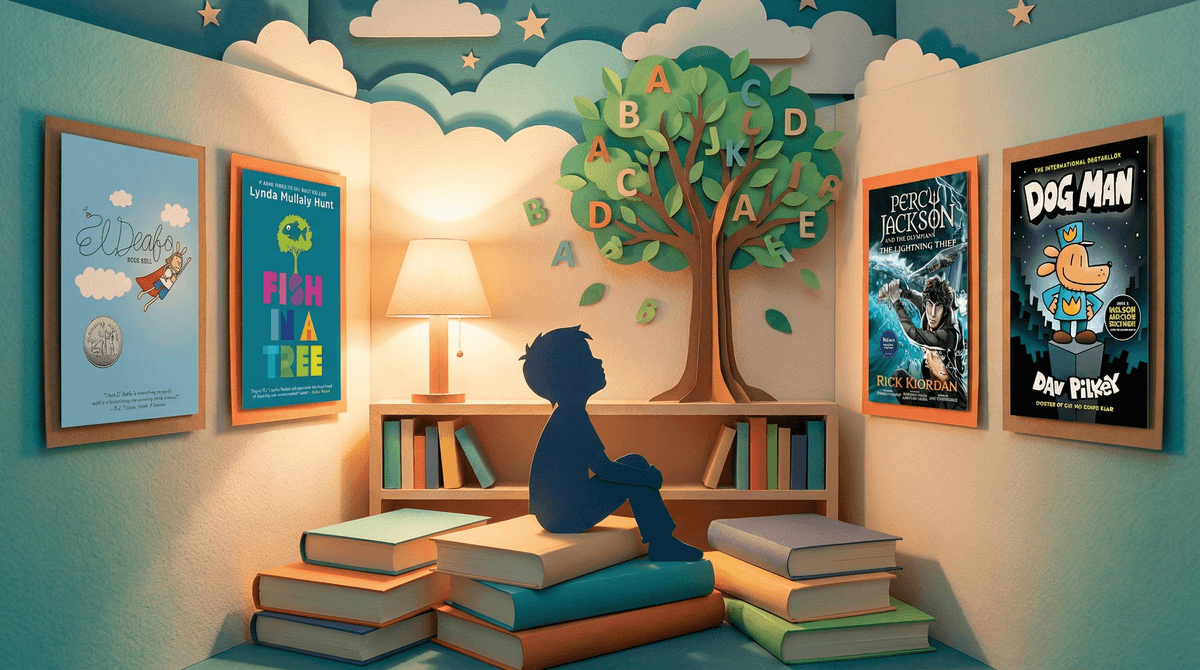
Graphic novels and comics are absolute game-changers for many kids with learning differences. The visual support helps with comprehension, the text is broken into manageable chunks, and they're often genuinely engaging. Dog Man by Dav Pilkey is silly and beloved. Amulet by Kazu Kibuishi is more adventure-fantasy. El Deafo by Cece Bell is a beautiful memoir about a girl navigating life with hearing loss.
High-interest/low-reading-level books are specifically designed for older kids reading below grade level. They tackle age-appropriate topics (middle school drama, sports, mystery) without complex sentence structures or advanced vocabulary. Publishers like High Noon Books, Saddleback Educational, and Orca Book Publishers have entire series dedicated to this.
Audiobooks paired with physical books let kids follow along while listening, which can help with decoding, fluency, and comprehension. Services like Learning Ally specialize in audiobooks for kids with learning differences and include features like adjustable speed and highlighted text.
Design Features
Look for books with:
- Dyslexia-friendly fonts (OpenDyslexic, Comic Sans, or fonts with clear letter differentiation)
- Larger text and generous spacing - less overwhelming visually
- Cream or off-white paper instead of bright white (reduces glare and eye strain)
- Short chapters - easier to tackle in chunks without feeling defeated
Some publishers like Barrington Stoke specifically design books with dyslexic readers in mind, using all these features plus high-quality stories from well-known authors.
Content That Hooks Them
Interest beats reading level every time. A kid who's obsessed with Minecraft will push through a harder book about Minecraft before they'll read an "appropriate level" book about something they don't care about.
Some high-engagement topics:
- Gaming - Trapped in a Video Game series by Dustin Brady
- Sports - anything by Mike Lupica for middle-grade sports fans
- Funny - Wimpy Kid format (part comic, part novel) works for a lot of kids
- Representation - books where characters have learning differences themselves, like Fish in a Tree by Lynda Mullaly Hunt (about a girl with dyslexia)
Elementary (Ages 5-10)
Start with books that remove barriers:
- Repetitive text helps with fluency and confidence
- Predictable patterns make decoding easier
- Lots of pictures provide context clues
- Decodable readers specifically designed for phonics instruction
Series like Elephant and Piggie by Mo Willems (simple, hilarious, dialogue-based) or Fly Guy by Tedd Arnold (super short chapters, big illustrations) work well.
For kids who need more visual support, graphic novels like Narwhal and Jelly by Ben Clanton are sweet and accessible.
Middle Grade (Ages 8-12)
This is where reading level gaps can feel most painful socially. Focus on:
- High-interest topics in accessible formats
- Graphic novel versions of popular books (Percy Jackson has a graphic novel adaptation)
- Series books - once they're hooked, the familiarity makes continuing easier
- Books about kids like them - representation matters
Wonder by R.J. Palacio is popular for a reason (though check if it's the right emotional fit). Restart by Gordon Korman is engaging and accessible. The Wings of Fire series has a graphic novel version that's easier to tackle than the full novels.
Teen (Ages 13+)
Teens with learning differences need books that:
- Respect their age and interests while being accessible
- Don't feel like "kid books"
- Offer audiobook versions without judgment
Young adult literature is actually great here because it tends to be fast-paced and dialogue-heavy. Authors like Jason Reynolds write incredibly engaging, accessible books for teens. Long Way Down is written in verse (short lines, white space, powerful story).
Ditch the Shame
Audiobooks are reading. Full stop. If your kid can comprehend and engage with a story via audio, that's reading. The goal is to build a love of stories and information, not to perform traditional reading for its own sake.
Make It Low-Pressure
- No forced reading time that feels like punishment
- Let them abandon books that aren't working - life's too short
- Count everything - manga, magazines, graphic novels, even video game dialogue
- Read aloud together even with older kids - it's bonding time and removes the struggle
Use Technology Wisely
Get Professional Support
If you haven't already, get an evaluation if you suspect a learning difference. Knowing specifically what's going on (dyslexia, ADHD, processing issues) helps you target support and access accommodations at school.
Work with reading specialists who understand learning differences—Orton-Gillingham trained tutors for dyslexia, for example. And connect with your school about IEPs or 504 plans that can include accommodations like audiobooks, extended time, or alternative assignments.
The right book for a kid with learning differences isn't necessarily the one at their "reading level" or the one winning awards. It's the one that meets them where they are, hooks their interest, and makes them want to turn the page (or press play on the next chapter).
Reading success looks different for different kids. For some, it's finally finishing a chapter book independently. For others, it's devouring graphic novels or listening to audiobooks at 1.5x speed. All of it counts. All of it builds literacy and confidence.
Your job isn't to force your child to read like other kids. It's to help them find their way into stories and information in whatever format works for their brain. The goal is to raise a kid who sees themselves as someone who can engage with books—not despite their learning difference, but in a way that works with it.
- Talk to your child about what makes reading hard and what might help
- Visit your library and ask for recommendations - many librarians are trained in readers' advisory for kids with learning differences
- Try different formats - graphic novels, audiobooks, e-readers, print books with different fonts
- Connect with other parents navigating similar challenges - you're not alone in this
- Learn more about audiobooks and whether they "count" as reading
