

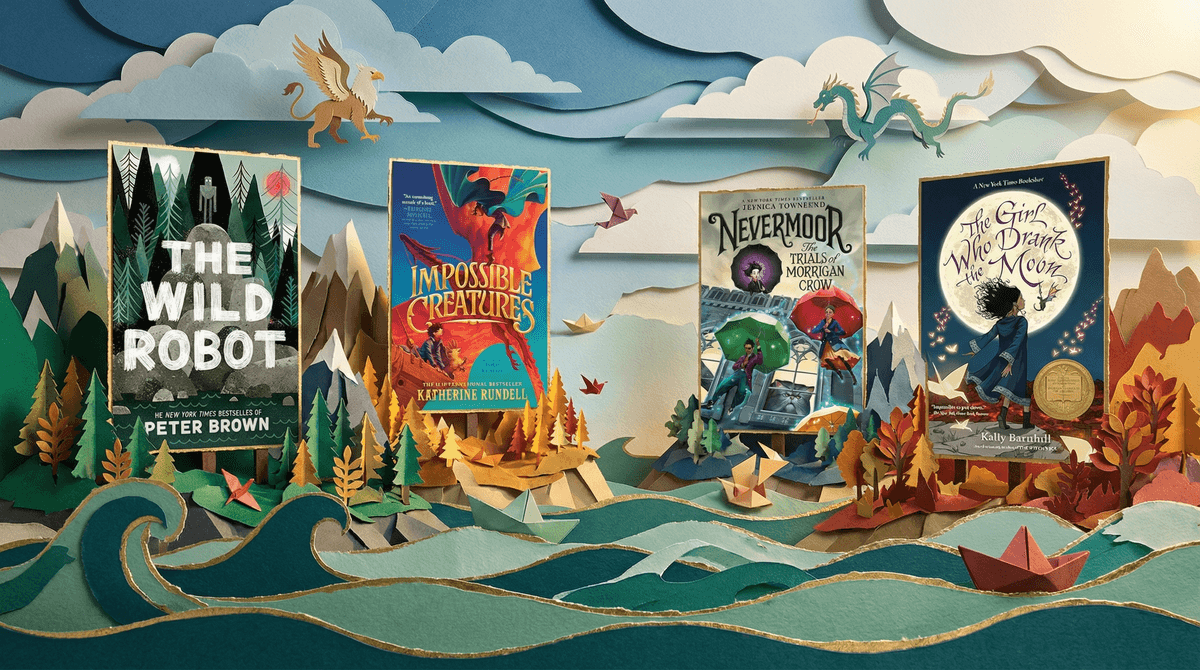
If your kid recently devoured Impossible Creatures by Katherine Rundell, you know the magic: a fantasy adventure where two kids discover a hidden archipelago filled with hybrid animals (think griffin-meets-phoenix-meets-your-wildest-imagination). It's got that perfect middle-grade sweet spot of wonder, danger, friendship, and creatures that make you wish they were real.
The book hit shelves in 2023 and quickly became that rare thing—a book kids actually want to talk about at recess. It's got the kind of world-building that makes kids draw maps in their notebooks and the kind of adventure that keeps them reading under the covers with a flashlight (or, let's be real, their tablet on low brightness).
The creatures are genuinely cool. Not cutesy, not overly scary—just inventive and described in a way that fires up the imagination. Kids love categorizing them, imagining new combinations, and debating which hybrid would be the best pet.
The stakes feel real. The friendship between Christopher and Mal isn't forced or saccharine. They're complicated kids dealing with loss, and the adventure gives them something bigger than their grief to focus on.
It respects their intelligence. Rundell doesn't talk down to readers. The vocabulary is rich, the moral questions are nuanced, and the ending doesn't tie everything up in a perfect bow.
If your kid is asking "what should I read next?" here are some solid options that hit similar notes:
For the Creature-Obsessed (Ages 8-12)
The Girl Who Drank the Moon by Kelly Barnhill - A tiny dragon, a swamp monster, and a witch who isn't what she seems. The world-building is lush and strange, and the magic system feels both ancient and original.
Nevermoor series by Jessica Townsend - If your kid loved the "secret magical place" aspect, this series delivers in spades. The Hotel Deucalion has talking cats, smoke monsters, and a girl who can control chaos itself. Fair warning: it's a commitment (four books so far), but kids tear through them.
The Wild Robot by Peter Brown - Technically not fantasy, but the island ecosystem and the way Roz learns to communicate with animals hits that same "discovering a new world" feeling. Bonus: there's a movie adaptation that just came out, so you can do a book-to-screen comparison.
For the Adventure Seekers (Ages 9-13)
Tristan Strong series by Kwame Mbalia - West African and African-American folklore meets modern adventure. The creatures here are rooted in actual mythology, which makes for great dinner table conversations about storytelling across cultures.
Keeper of the Lost Cities by Shannon Messenger - This one's got a dedicated fandom for a reason. The world of elves includes telepathy, alchemy, and creatures like sabertooth tigers that glow. It's a longer series (nine books), so perfect for kids who want to really sink into a world.
Fablehaven by Brandon Mull - A preserve for magical creatures where siblings have to navigate dangerous politics and even more dangerous monsters. The stakes escalate book by book, and the creature catalog is extensive.
For the Lyrical Language Lovers (Ages 10-14)
The House With Chicken Legs by Sophie Anderson - Based on Slavic folklore, this one's got a house that walks, a girl who guides the dead, and prose that's just beautiful. It's quieter than Impossible Creatures but equally magical.
A Wizard's Guide to Defensive Baking by T. Kingfisher - Hear me out: a girl whose magic only works on bread has to save a city. It's whimsical but deals with real themes of responsibility and injustice. The sourdough starter named Bob is a legitimate character.
Reading levels vary. Impossible Creatures sits around a 5th-6th grade reading level, but the books above range from 3rd grade to 8th grade complexity. Find out if a book is the right reading level if you're unsure—they can usually tell you if something will be frustrating or too easy.
Themes get heavier. Several of these books deal with death, loss, and moral complexity. That's not a bad thing—it's actually why kids this age love them—but worth knowing if your family prefers to discuss heavy topics together. The Keeper of the Lost Cities series, for instance, gets into genetic manipulation and class systems by book three.
Series are a commitment. If your kid gets hooked on a seven-book series, that's potentially months of "I can't do anything until I finish this chapter." Some families love this; others prefer standalone books. Know your kid and your household rhythm.
Audiobooks are legitimate. If your kid loved Impossible Creatures but struggles with sustained reading, the audiobook (narrated by Simon Russell Beale) is excellent. Same goes for most of these recommendations—Nevermoor's audiobook in particular is fantastic.
The best part about a kid loving a book like Impossible Creatures is that it opens up a whole world of reading possibilities. They've proven they can handle complex plots, care about characters, and stick with a story.
Don't stress about finding the "perfect" next book. Let them browse, read first chapters, abandon books that don't click. The goal isn't to recreate the exact experience of Impossible Creatures—it's to help them discover what kinds of stories make them feel that same sense of wonder.
Ask your kid what they loved most. Was it the creatures? The friendship? The mystery? Their answer will help you narrow down recommendations.
Hit up your library. Most of these books are available in multiple formats, and librarians are genuinely thrilled when kids come in asking for recommendations based on what they've already loved.
Consider a book club. If multiple kids in your circle read Impossible Creatures, a casual book club (even just two families) can keep the reading momentum going. Learn more about starting a kid-led book club.
And hey—if they end up re-reading Impossible Creatures three more times instead of trying something new? That's fine too. Re-reading is how kids process stories more deeply and notice things they missed the first time.