

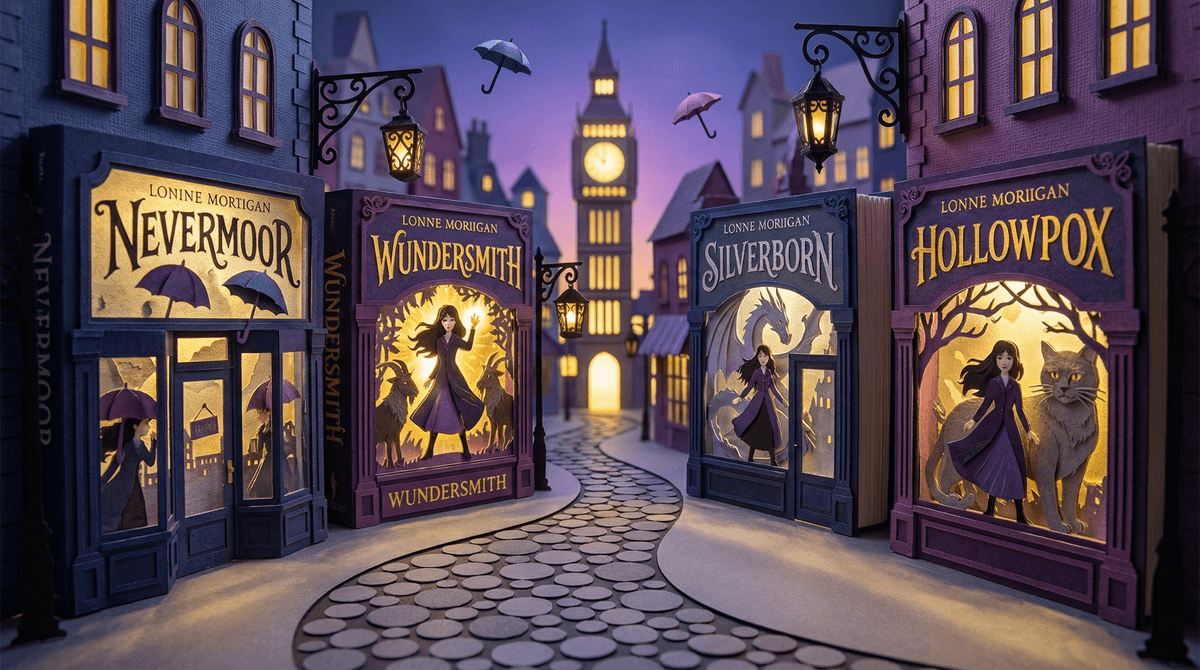
Nevermoor: The Trials of Morrigan Crow is the first book in a fantasy series by Australian author Jessica Townsend that's been quietly building a devoted following since 2017. Think Harry Potter meets The Wizard of Oz, with a healthy dose of Tim Burton's whimsy.
The story follows Morrigan Crow, a cursed child blamed for everything that goes wrong in her town. On the night she's supposed to die (yes, it starts dark), she's whisked away by a mysterious man named Jupiter North to the magical city of Nevermoor, where she must compete in four dangerous trials to earn a place in the prestigious Wundrous Society.
The series currently has four books published, with more planned. Each book is substantial—around 400-500 pages—making this a commitment for readers, but one that tends to hook kids completely.
Here's what makes Nevermoor resonate so deeply with the 8-13 age group:
The underdog story hits different. Morrigan isn't chosen because she's special—she's literally cursed and unwanted. Every kid who's ever felt like they don't quite fit in (so, basically every kid) sees themselves in her journey from outcast to valued friend and team member.
The world-building is genuinely creative. Nevermoor as a city is endlessly imaginative—hotels with impossible architecture, smoke-filled markets, a devilish cat, and a magic system based on "knacks" (unique talents) rather than wand-waving. Kids love cataloging all the different knacks and imagining what theirs would be.
It tackles real emotional complexity. The books deal with themes of belonging, prejudice, found family, and self-worth in ways that feel authentic without being preachy. Morrigan struggles with imposter syndrome, loyalty conflicts, and learning to trust—issues that resonate with middle-grade readers navigating their own social worlds.
The friendship dynamics feel true. Morrigan's relationships with her fellow competitors-turned-friends, especially Hawthorne Swift, develop naturally with all the messiness of real friendship—jealousy, misunderstandings, fierce loyalty, and inside jokes.
Ages 8-10: Great for strong readers in this range. The books are long but accessible, with enough action and humor to keep pages turning. Some younger readers might need reassurance about the darker opening chapters—Morrigan's family truly doesn't want her, which can be heavy. Consider reading it together if your child is sensitive to themes of rejection.
Ages 11-13: The sweet spot. These readers can fully appreciate the nuanced character development and more complex themes that emerge in later books, including systematic discrimination (the "Wundersmith" prejudice is a clear allegory for racism and othering).
Ages 14+: Some teens still enjoy the series, especially if they started it younger, but it may feel too middle-grade for new readers at this age. If they loved Percy Jackson or The School for Good and Evil, they might give it a shot.
Content notes: There's peril and some scary moments (particularly involving the villainous Wundersmith Ezra Squall), but no graphic violence. The emotional abandonment themes are probably the heaviest content. No romance to speak of in the first books, which is refreshing for this age group.
This is a slow burn series. Unlike some middle-grade series that feel complete after each book, Nevermoor is building toward something bigger. Kids will want to read all available books and will be frustrated waiting for the next one (book 5 is expected in 2026). Learn more about managing series addiction.
The reading level is accessible but sophisticated. Townsend doesn't talk down to readers. The vocabulary is rich, the sentences complex, and the plot requires attention to detail. This is great for building reading stamina and comprehension skills.
It's spawning creative play. Kids are creating their own "knacks," drawing maps of Nevermoor, and writing fan fiction about the Wundrous Society. This is exactly the kind of imaginative engagement you want to see from media consumption.
There's a small but active online fandom. Mostly on platforms like TikTok (#BookTok has a Nevermoor corner) and fan fiction sites. The community is generally positive and age-appropriate, but as always, monitor what your child is accessing online.
Discussion opportunities abound. The books raise questions about prejudice, how society treats people who are different, what makes someone "good" or "evil," and whether we can change our destiny. These are fantastic conversation starters for family discussions.
Nevermoor is that rare thing: a book series that's genuinely well-written, emotionally intelligent, and completely engaging for its target audience. If your child is looking for their next big reading obsession after Harry Potter, Wings of Fire, or Percy Jackson, this is an excellent choice.
The themes of belonging and self-acceptance are handled with nuance, the magic system is creative, and the characters feel real. Plus, any book that gets kids reading 500 pages willingly is worth celebrating.
- Try the first book together if your child is on the younger end or hesitant about long books
- Check if your library has the audiobook—narrator Gemma Whelan does an excellent job bringing the characters to life
- Ask what knack they'd want to have—it's a fun conversation that reveals what your child values about themselves
- Connect with other Nevermoor fans through your school or local library's book club
- Set expectations about the wait for future books if they get hooked—this is a good opportunity to talk about delayed gratification and finding other series to love in the meantime
Looking for more magical series that aren't Harry Potter for the hundredth time? Explore age-appropriate fantasy books that match your child's interests.