

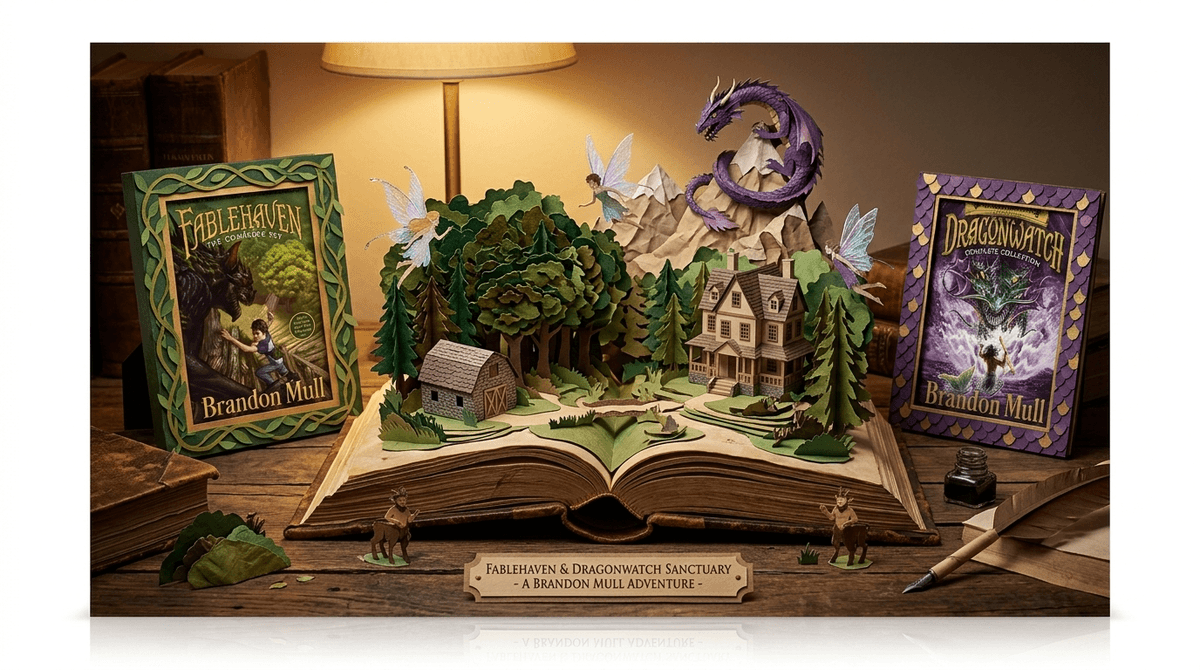
TL;DR: Fablehaven is the ultimate "curiosity killed the cat" series for middle-grade readers. It’s a high-stakes fantasy where rules actually matter, and breaking them has terrifying consequences. If your kid has outgrown The Spiderwick Chronicles but isn't quite ready for the heavy emotional trauma of later Harry Potter books, this is your sweet spot.
Quick Links:
- The Series: Fablehaven (Book 1)
- The Sequel Series: Dragonwatch
- Similar Vibe: Percy Jackson
- For Younger Siblings: The Wild Robot
Imagine your kids are sent to stay with their eccentric grandparents for a few weeks. They’re told the property is a "wildlife refuge," but there are some very specific, very weird rules.
- Don't go into the woods.
- Don't go into the barn.
- Drink the weird, fresh milk every morning.
Of course, Seth (the younger brother and professional chaos agent) breaks the rules immediately. Kendra (the older, more cautious sister) eventually gets sucked into the mystery too. Once they drink the milk, the "normal" farm disappears, and they realize they are standing in the middle of a secret sanctuary for magical creatures—fairies, satyrs, trolls, and things much, much darker.
It’s written by Brandon Mull, who is basically the king of "clean" but high-adrenaline middle-grade fantasy. If your kid is into world-building and lore, they’re going to lose their mind over this.
Most kids' media rewards the "plucky rebel." Think about it: how many Disney movies or Roblox simulators involve a kid ignoring an adult, doing something reckless, and being hailed as a hero because it all worked out?
Fablehaven doesn't do that.
When Seth breaks a rule because he’s bored or curious, things go sideways. People get hurt. Magical barriers fall. The stakes are real. It’s one of the few series that actually explores the responsibility of independence. It teaches kids that "because I said so" rules usually exist to keep the literal demons from eating the family.
The dynamic between the two leads is something you’ll recognize if you have more than one kid.
The Seth Archetype
Seth is the kid who sees a "Do Not Touch" sign as a personal challenge. In the digital world, he’s the one trying to find a workaround for the Bark filters or "jailbreaking" an old iPad. In the books, his impulsivity is his biggest weakness, but eventually, it becomes his greatest strength. It’s a great way to talk to your "high-energy" kids about how bravery without wisdom is just recklessness.
The Kendra Archetype
Kendra is the "good kid." She follows the rules, stays in the yard, and reads her books. But the series pushes her to realize that sometimes following the rules isn't enough—you have to take ownership and lead.
Check out our guide on sibling dynamics and tech usage
The vibe of the first book starts out very "hidden garden with fairies," but it shifts into "dark forest with monsters" pretty quickly.
- Ages 8-9: Great for a family read-aloud. There are some intense moments (a witch named Muriel who is genuinely creepy), but if you’re there to navigate it with them, it’s fine.
- Ages 10-12: The "Golden Zone." This is the prime age for solo reading. They’ll identify with the sibling bickering and the desire for more freedom.
- Ages 13+: Still a fun read, though they might find the first book a little "young." However, the series scales up in complexity. By the time you get to Keys to the Demon Prison, the stakes are very high.
Content Warning: There is fantasy violence. Characters are transformed, imprisoned, and occasionally "off-screen" deaths occur in the later books. It’s much less "brain rot" than a lot of the YouTube content currently trending for this age group (looking at you, Skibidi Toilet), but it does have teeth.
If your kid catches the Fablehaven bug, you’re in luck—there’s a lot of content here to keep them off screens for a while.
There are five books in the main arc. They should be read in order. No skipping! The world-building is cumulative.
This is the sequel series. It picks up right where the original left off but focuses more on—you guessed it—dragons. It’s slightly more "epic" in scale. If they finish the first five and want more, this is a 5-book home run.
Also by Brandon Mull. It’s a bit more of a "portal fantasy" (kids falling into another world). It's slightly more complex than Fablehaven and great for the 11-14 crowd.
Another Mull classic. This one feels a bit more like a video game in book form—very creative, very fast-paced.
1. The "Fairies" Aren't What You Think
In Fablehaven, fairies are vain, slightly selfish, and can be dangerous if offended. It’s a more traditional folklore take on magic rather than the sanitized version. It’s a great jumping-off point to talk about how things (or people, or apps) aren't always what they seem on the surface.
2. Seth’s Behavior Can Be Stressful
If you have a kid who struggles with boundaries, watching Seth ignore his grandfather’s life-saving advice might give you a facial twitch. Use it as a talking point. "Why do you think Grandpa told him not to go in there? What happened because he did?"
3. It’s a Great "Bridge" Series
If your kid is stuck on Wings of Fire or Warrior Cats, Fablehaven is the perfect bridge to more sophisticated fantasy literature.
When your kid finishes the first book, try these conversation starters:
- The Milk: "If you were Kendra or Seth, would you have drunk the milk even though you weren't supposed to know what it was?"
- The Witch: "Was it right for Seth to trade with Muriel the Jinn? Why do you think he thought he could outsmart her?"
- The Rules: "Grandpa says the rules are there to protect the creatures and the humans. Do you think some of our house rules are like that?" (Be prepared for them to say "No," but it’s a good start!)
Learn more about how to have meaningful conversations about media with your kids
Fablehaven is a "Yes" for almost every family. It’s imaginative, it’s clean, and it actually has something to say about growing up. It’s the kind of series that makes kids want to put down the Nintendo Switch and go outside to see if the butterflies in the backyard are actually fairies in disguise.
And honestly, in 2026, any book that makes the "real world" feel a little more magical is a win in my book.
- Grab the first book: Fablehaven by Brandon Mull.
- Set a "Milk" Challenge: Tell your kids they can only read the next chapter once they've finished a specific chore or "rule." (Just kidding... mostly).
- Compare Notes: If you read it with them, check out our guide on fantasy tropes to see how Brandon Mull flips the script on traditional magic.