

The Wild Robot is DreamWorks' 2024 animated film based on Peter Brown's beloved book series. It tells the story of Roz (voiced by Lupita Nyong'o), a robot who washes ashore on a remote island and must learn to survive in the wilderness—ultimately becoming an adoptive parent to an orphaned gosling named Brightbill.
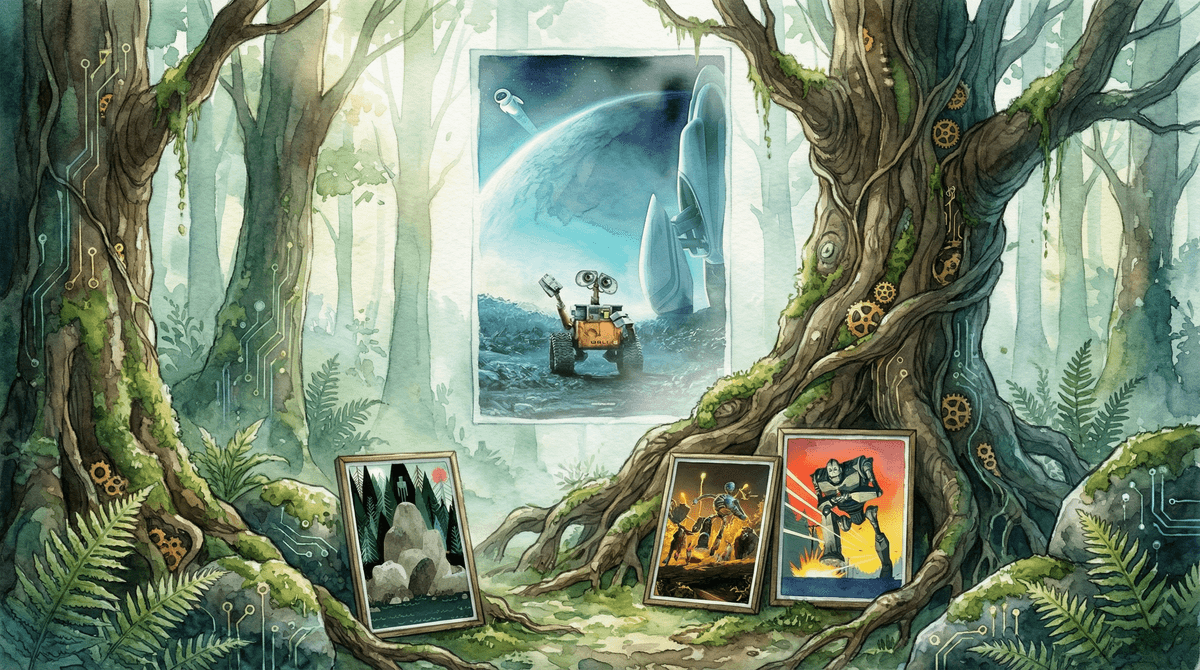
The movie hits that sweet spot of being genuinely entertaining for kids while having enough emotional depth to make adults reach for tissues. Think WALL-E meets The Iron Giant, but with more parenting anxiety and a surprisingly nuanced look at what it means to belong.
The basics: It's rated PG, runs about 102 minutes, and features a voice cast that includes Pedro Pascal, Catherine O'Hara, Mark Hamill, and Bill Nighy. The animation style is stunning—a painterly aesthetic that feels like watching a moving storybook.
Here's the thing about The Wild Robot—it works on multiple levels without being preachy about any of them.
For younger kids (ages 6-9): It's an adventure story with adorable animal characters, funny moments (a possum named Pinktail steals several scenes), and a robot learning to do things like climb trees and understand "animal language." The visual humor is excellent, and there's enough action to keep shorter attention spans engaged.
For tweens (ages 10-13): The themes get more interesting. Brightbill struggles with being different, deals with bullying from other geese, and has to figure out his identity when he doesn't quite fit in anywhere. If your kid has ever felt like the odd one out (so, basically every kid), this resonates.
For parents: Oh boy. The movie is fundamentally about learning to parent when you have absolutely no programming for it. Roz has to figure out how to care for this gosling with zero instructions, makes mistakes constantly, and eventually realizes that being a "good parent" means preparing your kid to leave you. If that doesn't hit you right in the feelings, I don't know what will.
The environmental themes are present but not heavy-handed—it's more about coexistence and adaptation than doom and gloom.
Ages 5-7: Probably fine for most kids in this range, but know your child. There are some genuinely tense moments—a fox hunting sequence early on, a forest fire, and scenes where animals are in danger. The PG rating is earned. Some kids this age might find certain scenes scary, while others will be totally fine. If they handled The Lion King or Finding Nemo, they can handle this.
Ages 8-12: The sweet spot. Old enough to appreciate the deeper themes, young enough to still be fully engaged by the adventure and animal characters. Great conversation starter about identity, belonging, and what makes a family.
Ages 13+: Don't write this off as "too young" for teens. The animation and storytelling are sophisticated enough that it works as a genuine film, not just a "kids movie." Plus, the themes about finding your place and preparing for independence hit different when you're actually approaching that stage.
Content notes: Mild peril, some emotional intensity (parent-child separation themes), and nature being nature (predator/prey dynamics). No language concerns, no romance subplot, no potty humor to speak of.
It's based on a book series: If your kid loves the movie, The Wild Robot book by Peter Brown and its sequels make excellent follow-ups. The books have slightly different plot points but maintain the same heart. Great bridge to chapter books for reluctant readers.
The tech themes are thoughtful: Unlike a lot of kids' media that treats technology as either purely good or purely evil, this movie explores it more nuancingly. Roz is a robot, but her journey is about developing emotional intelligence and connection. It's actually a nice counterpoint to the "technology bad, nature good" narrative while still celebrating the natural world.
It handles "differentness" beautifully: Whether your kid is neurodivergent, adopted, multiracial, or just feels like they don't quite fit the mold, there's something here. The movie never explicitly states "this is a metaphor for X," which means kids can find their own meaning in it.
The parenting themes might surprise you: Fair warning—if you're in a tender parenting phase (new parent, kid about to leave for college, processing your own childhood), this movie will get you. The scene where Roz realizes that successful parenting means teaching Brightbill to leave her? Bring tissues.
Discussion starters: This is one of those movies that naturally leads to good conversations. "What makes someone a 'real' parent?" "How do you know when you belong somewhere?" "What does it mean to be kind when it's not convenient?" You don't have to force it—kids will likely bring these up themselves.
The Wild Robot is that rare family film that respects both kids' intelligence and parents' emotional complexity. It's beautiful to look at, genuinely funny, and has enough heart to make it memorable beyond the credits.
This is a great choice if:
- You're looking for a movie that works for a wide age range (the 6-year-old and 12-year-old will both be engaged)
- You want something that can spark meaningful conversations without feeling like homework
- You're tired of sequels and want something original (even though it's based on a book)
- You want to cry in a good way
Maybe skip if:
- Your child is particularly sensitive to animals-in-peril scenes
- You're looking for pure escapism without emotional depth (this one will make you feel things)
In a media landscape where so much kids' content feels like it's just trying to sell toys or keep eyeballs glued to screens, The Wild Robot feels refreshingly intentional. It's the kind of movie that reminds you why family movie night can actually be special.
And if your kids love it, the book series is waiting for them—which might be the best screen-to-page transition you could ask for.