

Look, there's no single reading list that works for every teen. But there are books that tend to stick with young people—stories that help them make sense of who they are, how relationships work, and what kind of world they want to live in. These aren't necessarily the books that topped the bestseller lists or won all the awards (though some did). They're the ones that spark conversations at 11pm, that get passed between friends with "you HAVE to read this," that make teens feel less alone.
The best teen reading lists mix classics that have earned their place with contemporary books that reflect the world teens actually live in. They include diverse voices, challenging ideas, and yes, some books that might make you slightly uncomfortable as a parent—which is often exactly the point.
Before we dive into specific titles, let's acknowledge the elephant in the room: getting teens to read books in 2026 feels like asking them to use a rotary phone. Between TikTok, Discord, YouTube, and whatever new app launched this week, books are competing with literally everything.
But here's the thing—reading long-form fiction does something that scrolling can't. It builds sustained attention, develops empathy by letting you live inside someone else's head for hours, and creates space for complex thinking that doesn't fit in a 60-second video. The research on this is pretty clear: teens who read regularly show stronger critical thinking skills, better emotional regulation, and more nuanced understanding of social situations.
Plus, books are one of the few places where teens can explore heavy topics—mental health, sexuality, identity, injustice—at their own pace, without an algorithm deciding what they see next.
For Understanding Identity and Belonging
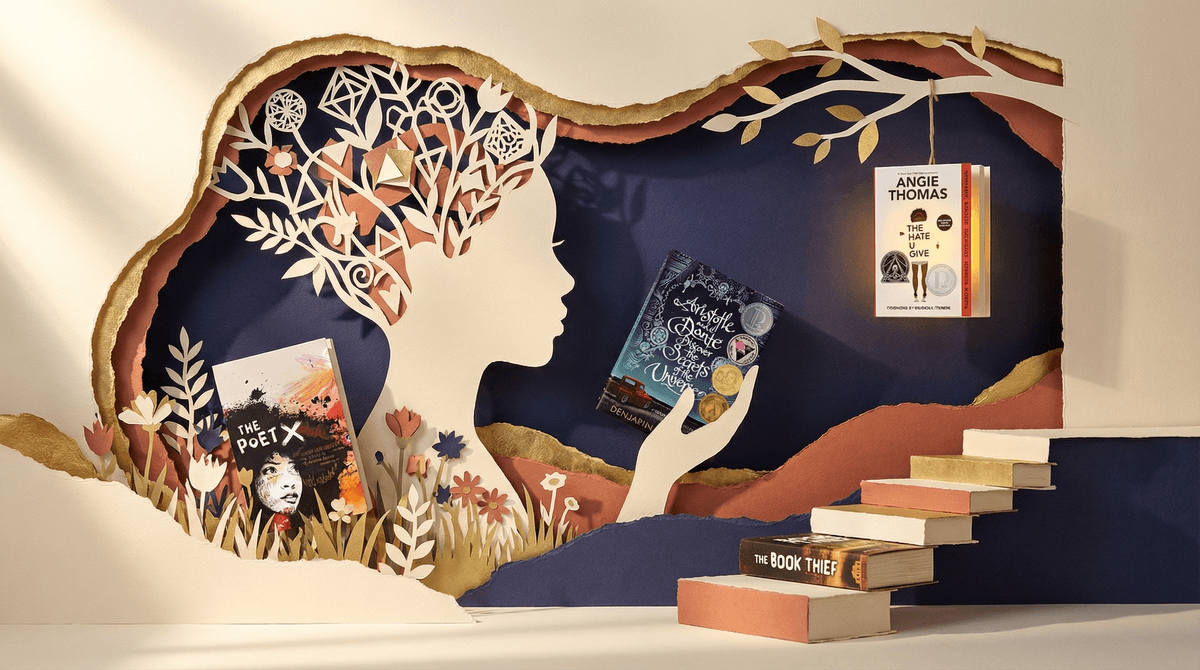
The Hate U Give by Angie Thomas (Ages 14+)
This one hits different. Starr witnesses her childhood friend's death at the hands of police, and the book follows her navigation between her Black neighborhood and her predominantly white prep school. It's about finding your voice, code-switching, activism, and the cost of speaking up. Teens consistently say this book changed how they think about race and privilege.
The Perks of Being a Wallflower by Stephen Chbosky (Ages 15+)
Charlie's letters to an anonymous friend capture the intensity of high school—first love, friendship, trauma, mental health, and that desperate need to feel less alone. Yes, it deals with heavy topics including sexual abuse and suicide, but it does so with tenderness. This is one where reading it together or being available to talk after is key.
Aristotle and Dante Discover the Secrets of the Universe by Benjamin Alire Sáenz (Ages 14+)
Two Mexican-American teens form an unlikely friendship that becomes something more. It's about family expectations, masculinity, identity, and love—written with the kind of quiet beauty that stays with you. Great for any teen, but especially meaningful for LGBTQ+ kids who need to see their experiences reflected.
For Building Empathy and Perspective
To Kill a Mockingbird by Harper Lee (Ages 13+)
Yes, it's assigned in every English class, but there's a reason. Scout's perspective on her father defending a Black man falsely accused of rape in 1930s Alabama remains devastatingly relevant. The book tackles racism, moral courage, and the loss of innocence. Some schools are moving away from it due to its white-savior narrative and use of racial slurs—worth discussing with your teen about both its value and its limitations.
The Book Thief by Markus Zusak (Ages 13+)
Narrated by Death during WWII Germany, this follows Liesel, a girl who steals books and shares them with others, including the Jewish man hiding in her basement. It's about the power of words, the complexity of ordinary people during extraordinary evil, and finding humanity in darkness. Beautifully written and genuinely moving.
Born a Crime by Trevor Noah (Ages 14+)
Trevor Noah's memoir about growing up mixed-race in apartheid South Africa is funny, heartbreaking, and eye-opening. Teens who think memoirs are boring are consistently surprised by this one. It's great for understanding systemic racism, resilience, and the power of a strong mother-son relationship.
For Critical Thinking and Questioning Authority
1984 by George Orwell (Ages 15+)
In an era of misinformation, deepfakes, and algorithmic manipulation, this dystopian classic about surveillance, propaganda, and the malleability of truth hits different. Yes, it's dense, but teens who push through find it eerily relevant to our current moment. Great for discussions about privacy, government power, and how social media platforms shape reality .
.
The Handmaid's Tale by Margaret Atwood (Ages 16+)
This dystopian novel about a totalitarian regime that strips women of all rights is intense and disturbing—which is the point. With ongoing debates about reproductive rights and bodily autonomy, teens are reading this and seeing uncomfortable parallels. Not for younger teens, but for older high schoolers, it's a powerful conversation starter about power, control, and resistance.
Fahrenheit 451 by Ray Bradbury (Ages 13+)
In a world where books are banned and "firemen" burn them, one man questions everything. It's about censorship, the dumbing-down of culture, and what we lose when we stop thinking critically. Shorter and more accessible than 1984, this is a solid entry point for dystopian literature.
Contemporary Voices That Reflect Today's Teens
The Poet X by Elizabeth Acevedo (Ages 14+)
Written entirely in verse, this follows Xiomara, a Dominican-American teen in Harlem finding her voice through slam poetry while navigating a strict religious household, first love, and her own identity. It's about family, faith, sexuality, and self-expression. The poetry format makes it accessible even for reluctant readers.
All American Boys by Jason Reynolds and Brendan Kiely (Ages 14+)
Told in alternating perspectives—one Black teen beaten by police, one white teen who witnessed it—this book explores police brutality, racism, and what it means to be an ally. It's direct, doesn't pull punches, and gives teens language for conversations they're already having.
They Both Die at the End by Adam Silvera (Ages 14+)
In a world where you get a call when you're going to die that day, two teens meet and spend their last day together. It's about living fully, found family, LGBTQ+ identity, and making every moment count. Yes, the title spoils the ending, but that's not the point—it's about the journey. Teens love this one.
Here's where it gets tricky. Books like The Catcher in the Rye, Lord of the Flies, and Of Mice and Men have been teen reading staples for decades. They're also full of outdated language, limited perspectives, and sometimes harmful stereotypes.
The solution isn't to ban them—it's to read them critically. These books can be valuable if you're having conversations about historical context, whose voices are missing, and what assumptions the author was making. They're artifacts of their time, which makes them useful for understanding how thinking has evolved (and how far we still have to go).
Ages 12-13: Start with Wonder by R.J. Palacio, The Giver by Lois Lowry, or Holes by Louis Sachar. These tackle meaningful themes without overwhelming content.
Ages 14-15: Most of the books on this list work here. Be aware of content warnings (sexual assault, suicide, violence) and be available to process together.
Ages 16-18: They can handle the heavy hitters. At this point, it's less about protecting them from difficult content and more about helping them think critically about it.
Let's be real: you can't force it. But you can:
- Let them choose. A book they picked (even if it's "trash" in your opinion) beats a classic they resent.
- Audiobooks count. Seriously. If they're absorbing the story while gaming or commuting, that's still reading.
- Read together. Pick a book and both read it, then talk about it. No quiz, no essay—just conversation.
- Follow their interests. Into true crime? Try I Am Not Your Perfect Mexican Daughter. Love fantasy? Children of Blood and Bone. Gaming? Ready Player One.
- Make it social. Books teens can discuss with friends stick better than solo reads.
There's no single reading list that will turn your teen into a critical thinker with perfect empathy and a fully formed worldview. But books—especially ones that reflect diverse experiences and challenge assumptions—give teens tools for understanding themselves and the world.
The goal isn't to force them through some canonical list of "important literature." It's to help them find stories that matter to them, that make them think differently, that stick with them after the last page.
Start with one book. See what resonates. Build from there. And remember: a teen who reads one book they love is better off than a teen who resentfully skims ten "important" ones.
Next Steps: Check out books for reluctant teen readers if your teen insists they "hate reading," or explore graphic novels and manga for teens for visual storytelling that still builds literacy skills.