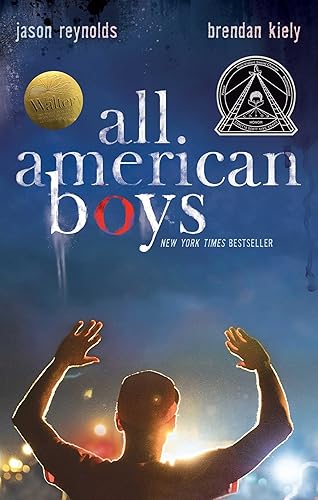
All American Boys

All American Boys

book

2017, Teen & Young Adult, Literature & Fiction

WISE
78%

WISE Score

4.6

Amazon

Two teens—one Black, one white—reckon with a violent police beating that splits their school and town wide open.

Amazon4.6
Common Sense Media

Where to Read

Our reviews and ratings are 100% unbiased, but as an Amazon Associate, Screenwise earns an affiliate fee if you buy a book or game by clicking one of our links. We don't get any credit if you just Google it instead :)

Screenwise Verdict

All American Boys is the kind of book that lands like a gut punch and then refuses to let go. It's intense, it's necessary, and it's one of the most important YA novels of the past decade.

Reynolds and Kiely don't pull punches: the opening scene is brutal, the racial tension is palpable, and the moral stakes are sky-high. But they also don't exploit trauma for shock value. Instead, they give readers two fully realized characters—Rashad, a Black teen who's beaten by a cop for no reason, and Quinn, a white teen who witnesses it and has to decide whether to speak up—and let the story unfold with nuance and care.

The dual narrative structure is brilliant. You see how privilege works, how silence becomes complicity, and how standing up for what's right can cost you everything. It's a masterclass in empathy-building.

That said, this is not a light read. It's emotionally heavy, and younger or more sensitive readers may struggle. But for teens 12+ who are ready to engage with hard truths about race, justice, and what it means to be an ally, this book is a must-read. Ideally, have an adult nearby to talk through the big feelings it will inevitably stir up.


Age Fit

Best for ages 12-17, especially middle and high schoolers ready to engage with police violence, systemic racism, and moral complexity. This isn't a book for younger kids—it's intense and requires emotional maturity—but for teens grappling with justice and identity, it's essential reading.

WISE Breakdown
Wholesome
72

Co-authored by Jason Reynolds and Brendan Kiely, this dual-perspective narrative models empathy, moral courage, and the complexity of confronting injustice. The emotional tone is serious and sometimes heavy—police brutality, racial tension, community division—but it's handled with care and authenticity. It doesn't shy away from the anger, confusion, and pain that both Rashad and Quinn experience, which is developmentally appropriate for teens grappling with real-world issues. The pacing is deliberate, not chaotic, and the book ultimately champions standing up for what's right even when it's uncomfortable.

Imaginative
68

This is a contemporary realism book rooted firmly in headline-level social issues, so it's not imaginative in the sense of fantasy or world-building. However, the dual-narrator structure invites readers to inhabit two very different perspectives—one Black, one white—and to see how a single violent moment reverberates differently through their lives. It asks readers to imagine themselves in both boys' shoes and to think critically about complicity, allyship, and moral responsibility. It's intellectually and emotionally imaginative, even if not creatively fantastical.

Safe
58

This book depicts a violent police assault in the opening pages—Rashad's face is beaten into pavement—and the aftermath includes hospitalization, protests, and simmering community conflict. There's no gore or graphic sexual content, but the violence is visceral and the racial trauma is real. It's not a book a young child should stumble into unexpectedly. That said, for its intended teen audience (12-16 according to Amazon, grades 7-9 per Library of Congress), this content is purposeful and contextually appropriate. Common Sense Media and other sources recommend it for middle and high schoolers who are ready to engage with difficult, real-world topics. It's safe in the sense that it's not exploitative or gratuitous, but it's emotionally intense and requires readiness.

Enriching
91

This is a powerhouse of a book for building empathy, critical thinking, and civic awareness. It won the 2016 Walter Dean Myers Award and a Coretta Scott King Author Honor for good reason: it tackles police brutality, systemic racism, and the cost of silence with nuance and urgency. Teens get to see how privilege works, how bystanders become complicit, and how speaking up can fracture relationships but also forge integrity. The dual narrative structure is a teaching tool in itself—readers see the same events through radically different lenses. It's a book that sparks hard conversations about justice, race, and moral courage, and it does so without preaching. Hugely enriching for teens ready to engage.

Parent Info

Why It Might Be Great

  • Award-winning dual narrative (Coretta Scott King Honor, Walter Dean Myers Award) that puts readers inside two radically different perspectives on the same traumatic event
  • Tackles police brutality, systemic racism, and the cost of silence with nuance, urgency, and zero preachiness—feels ripped from today's headlines
  • Models what allyship actually looks like: messy, uncomfortable, and requiring real sacrifice and moral courage
  • Co-authored by Jason Reynolds (a YA legend) and Brendan Kiely, bringing both authenticity and craft to a story that's as gripping as it is important
  • Sparks the kind of hard, necessary conversations about race and justice that teens need to have—ideally with trusted adults nearby

What to Watch For

  • The opening scene is violent and visceral—Rashad's face is beaten into pavement by a cop—and the aftermath includes hospitalization, protests, and community division
  • This is emotionally heavy and requires readiness: racial trauma, systemic injustice, and the pain of being complicit are front and center
  • Best for teens 12+ who are ready to engage with real-world issues and who have adults available to process and discuss
  • Some teens may find the dual perspective challenging at first, but it's the book's greatest strength once they settle in

Conversation Starters

  • "Quinn sees Paul as a hero who saved his family, but Rashad sees him as the cop who beat him. How can two people see the same person so differently?"
  • "What would you do if someone you loved—a family member, a coach, a friend—did something you knew was wrong? Would you speak up?"
  • "The book shows how a single moment can ripple out and divide a whole community. Have you seen that happen in real life?"
  • "Rashad's friends and Quinn's teammates start taking sides. How do you decide when to stand with your friends versus stand up for what's right?"
  • "What does it mean to be an ally? What does Quinn risk by speaking up, and what does he risk by staying silent?"

Ask Anything

Get a personalized guide on any topic