The 100-page count is a trap. Because it’s a novella, parents often grab this off the shelf thinking it’s a quick weekend win for a kid who needs to check a literary box. In reality, Of Mice and Men is a dense, atmospheric slog that requires more emotional bandwidth than books three times its length. It’s the literary equivalent of a gray, rainy Tuesday in a town where the power just went out.
The "Old Yeller" of High School
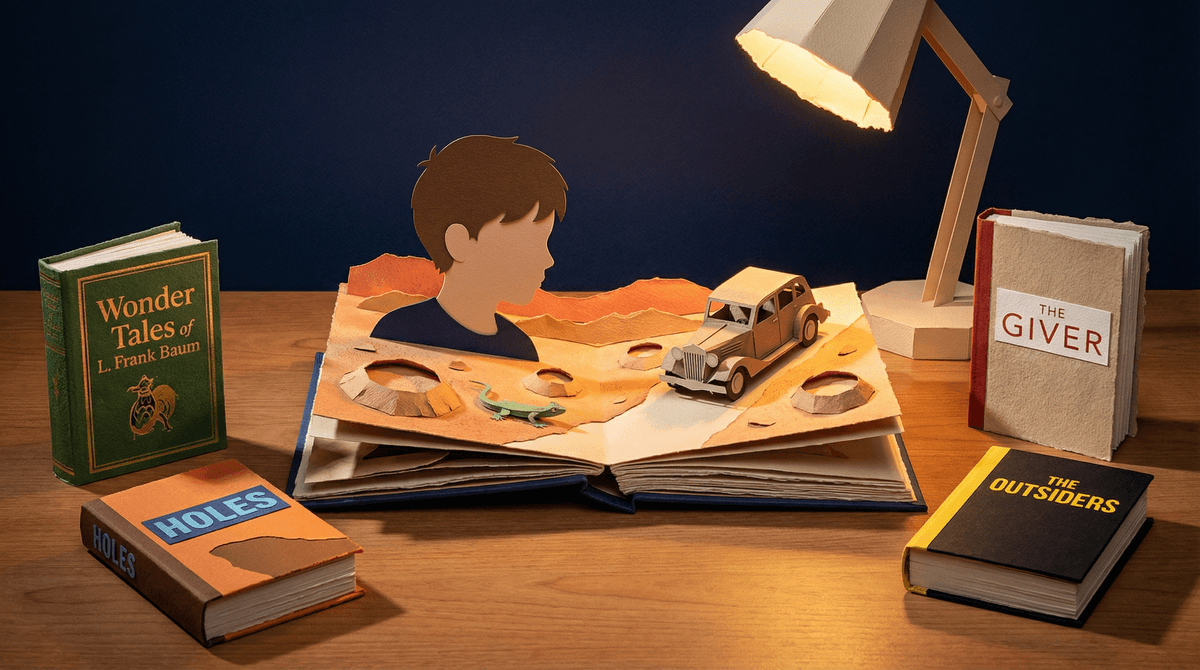
If your kid has already cycled through The Outsiders or Where the Red Fern Grows, they know the "beloved thing must die" trope. Steinbeck takes that trope and strips away the sentimentality. The parallel between Candy’s old dog and Lennie isn’t subtle—it’s a neon sign pointing toward the inevitable.
The friction for a modern reader usually comes from the pacing. Steinbeck spends a massive amount of time on the sensory details of the bunkhouse and the riverbank. For a generation used to the "inciting incident" happening on page five, the slow build of George and Lennie’s "dream" of the farm can feel like filler. But that’s the point. You have to feel the weight of their boredom and desperation to understand why the ending hits like a freight train.
Navigating the Classroom Context
This is rarely a book kids pick up for fun. It’s the ultimate book report book for middle schoolers and freshmen because it’s easy to analyze but hard to forget. If your teen is reading this for a grade, the conversation usually shifts to the "mercy killing" at the end.
It’s worth discussing why this book is a staple in the list of books all teens should read despite the controversy. It’s one of the first times many students encounter a story where the "hero" does something objectively horrific out of love. There is no version of this story where everyone goes home happy, and for a kid used to Marvel-style resolutions, that lack of a safety net can be genuinely jarring.
The "Curley’s Wife" Problem
Beyond the racial slurs and the treatment of Lennie’s disability, the biggest hurdle for a 2026 reader is often Curley’s wife. She doesn’t even get a name. She’s framed entirely through the eyes of the men on the ranch, who see her as a "jailbait" distraction or a "tart."
If you’re reading alongside your kid, this is the most productive place to push back. Steinbeck is showing a world where everyone is disposable—the old guy, the Black stable hand, the disabled man, and the only woman. The bleakness isn't just in the plot; it’s in the way these characters are denied basic humanity by everyone around them. It’s a brutal look at the "American Dream" when the dream is already dead.
If They Liked This...
If your teen actually engaged with the themes of friendship and sacrifice here, they might be ready for more complex "bummer" classics. But if they found the 1930s setting too dry, look for modern titles that handle "unlikely duos against the world" without the dusty agrarian vibes. Steinbeck is a master of the gut-punch, but he doesn't offer any sugar to help the medicine go down.