

Look, we spend a lot of time talking about screen limits and app safety around here, but let's be real: some of the best tools for helping kids navigate their social world come in the decidedly analog form of books about friendship.
These aren't just stories where characters happen to be friends—they're books that dig into the messy, complicated, beautiful reality of what it means to connect with other humans. The jealousy when your best friend makes a new friend. The confusion of being left out. The courage it takes to apologize. The joy of being truly seen by someone who gets you.
And here's the thing: kids are dealing with friendship dynamics that are increasingly complex thanks to group chats, gaming squads, and the weird social hierarchies that form on platforms like Roblox and Discord. They need tools to process all of it, and books provide a safe space to explore these feelings without the stakes of their actual friendships.
We're raising kids in an era where they can have 200 "friends" online but struggle to navigate a simple conflict at recess. They can coordinate elaborate Minecraft builds but freeze up when someone's feelings get hurt IRL.
Books about friendship teach empathy through story, which is basically a cheat code for emotional development. When kids read about characters navigating social challenges, their brains light up similarly to when they experience those situations themselves. They're practicing emotional responses in a low-stakes environment.
Plus, these books give you and your kids a shared language for talking about tricky social stuff. Instead of "why are you being mean to your sister?" it becomes "remember how Frog felt when Toad didn't invite him over?" It's less accusatory, more collaborative.
Ages 3-6: The Foundation Years
Frog and Toad by Arnold Lobel - The gold standard. These two are different in every way but genuinely care about each other. The stories are simple but emotionally sophisticated. "The Letter" will make you cry, I'm not sorry.
Stick and Stone by Beth Ferry - About standing up for friends and the difference between being alone and being lonely. Great for kids just entering the friend-making years.
The Invisible Boy by Trudy Ludwig - Tackles exclusion and what it means to notice someone who's being left out. Essential reading for helping kids understand that being kind means more than just "not being mean."
Ages 6-9: Navigating Complexity
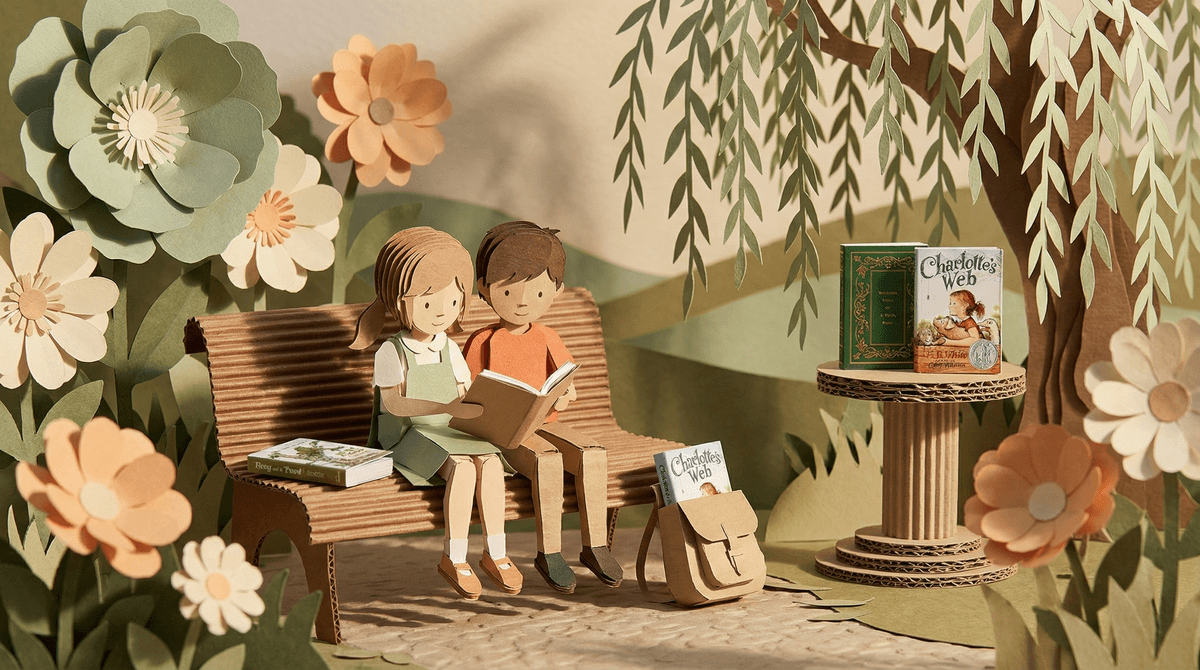
Charlotte's Web by E.B. White - Yes, it's a classic. Yes, your kids still need to read it. Friendship, sacrifice, loss, and what it means to truly see someone. Bring tissues.
Ivy and Bean series by Annie Barrows - Two girls who seem like opposites become best friends. Perfect for early chapter book readers and shows that you don't have to be identical to be close.
The Year of the Book by Andrea Cheng - About a girl navigating changing friendships while being a bookworm. Great for kids who feel caught between different friend groups or interests.
Ages 9-12: The Deep End
Wonder by R.J. Palacio - If you haven't read this with your kid, stop what you're doing. It's about a boy with facial differences starting school, but really it's about how we choose to be kind (or not) and how our choices ripple outward.
The Bridge to Terabithia by Katherine Paterson - Friendship, imagination, and dealing with loss. This one hits hard but gives kids language for grief and the permanence of meaningful connections.
El Deafo by Cece Bell - A graphic novel memoir about a girl who's deaf navigating friendships and what it means when people treat you differently. Funny, honest, and incredibly relatable even for kids without disabilities.
New Kid by Jerry Craft - About a Black kid attending a predominantly white private school and navigating code-switching, microaggressions, and finding real friends. Essential reading for understanding how race and class affect social dynamics.
Ages 12+: The Real Talk Years
The Hate U Give by Angie Thomas - Friendship across racial and economic lines, activism, and what it means to show up for people. Not just about friendship but about how our friendships exist in the context of larger systems.
Aristotle and Dante Discover the Secrets of the Universe by Benjamin Alire Sáenz - Two boys becoming best friends and navigating identity, family, and what happens when friendship becomes something more. Beautiful and tender.
Don't just hand your kid a book and call it done. The magic happens in the conversation.
Ask open-ended questions: "Why do you think they did that?" "How would you feel if that happened to you?" "What would you do differently?"
Connect to their life: "Does this remind you of anything happening with your friends?" Not in a prying way, but as an invitation to talk if they want to.
Revisit themes: When your kid is dealing with friend drama, you can reference books you've read together. "Remember how Anne felt when Diana's mom wouldn't let them be friends anymore? That must be how you're feeling right now."
Read together, even when they can read alone: Middle schoolers especially benefit from having a parent read the same book so they can process together. It doesn't have to be aloud—just reading the same book and talking about it.
Not every book will resonate with every kid. My friend's daughter loved The Babysitters Club graphic novels for friendship dynamics; another kid found them boring and connected more with Percy Jackson (yes, those books are also about friendship—loyalty is basically Percy's whole thing).
Some of these books deal with heavy topics: death, discrimination, family problems. That's not a bug, it's a feature. Kids are dealing with heavy stuff, and books give them a framework for processing it. But do read them yourself first if you want to know what you're getting into.
Representation matters: Kids need to see friendships that look like theirs and friendships that don't. Books are windows and mirrors, as Rudine Sims Bishop said. Make sure your kids are getting both.
In a world where kids are forming group chats before they can spell "friend," where social dynamics play out across Snapchat streaks and Fortnite squads, books about friendship are more essential than ever.
They're not going to solve every social problem your kid faces. They won't prevent hurt feelings or friendship breakups. But they will give your kids language, empathy, and examples of how to navigate the beautiful, messy reality of human connection.
And honestly? Reading these books with your kids might help you process some of your own friendship stuff too. Just saying.
Start with one book that feels right for your kid's age and current social situation. Read it together or separately, then talk about it. See what resonates. Build from there.
And if you want more specific recommendations based on what your kid is dealing with right now—whether it's exclusion, conflict resolution, or navigating friendships across differences—Find book recommendations with friendship themes.
Because raising emotionally intelligent humans who can maintain real friendships? That's the ultimate goal, screens or no screens.