

Asian-American read-alouds are picture books, chapter books, and stories that center Asian and Asian-American characters, cultures, and experiences — books you can read together with your kids that reflect the incredible diversity of Asian communities in America and beyond.
And here's the thing: these books aren't just for Asian-American families (though representation absolutely matters for kids seeing themselves in stories). They're for every family that wants their kids to grow up understanding that the world is bigger, more complex, and more beautiful than any single perspective can capture.
Whether you're looking for books that help your kid see their own family's story reflected back at them, or you want your children to build empathy and understanding for experiences different from their own, Asian-American read-alouds offer some of the most gorgeous, funny, heartbreaking, and joyful stories out there right now.
The research is pretty clear: kids who read diverse books develop stronger empathy, better critical thinking skills, and more nuanced understanding of the world. But beyond the studies, it's just... obvious, right? Stories shape how we see ourselves and others. They teach us what's "normal," who gets to be the hero, whose family looks like a family.
For Asian-American kids specifically, representation in children's literature has historically been sparse or stereotypical. And when kids don't see themselves in the stories they read, the message is clear: your story doesn't matter as much. Your family isn't the default. You're the sidekick, not the main character.
But here's the good news: the landscape has changed dramatically in the last decade. There's been an explosion of incredible Asian-American authors and illustrators creating nuanced, authentic, joyful stories. We're way past the era of "diversity books" that feel like homework. These are just really, really good books that happen to center Asian-American experiences.
And for non-Asian kids? These books are windows into experiences that might be different from their own — which is literally how empathy develops. Your kid doesn't need to be Korean to love Yoomi's Yummy Rice or to laugh at the chaos in Dumpling Dreams.
Picture Books (Ages 3-8)
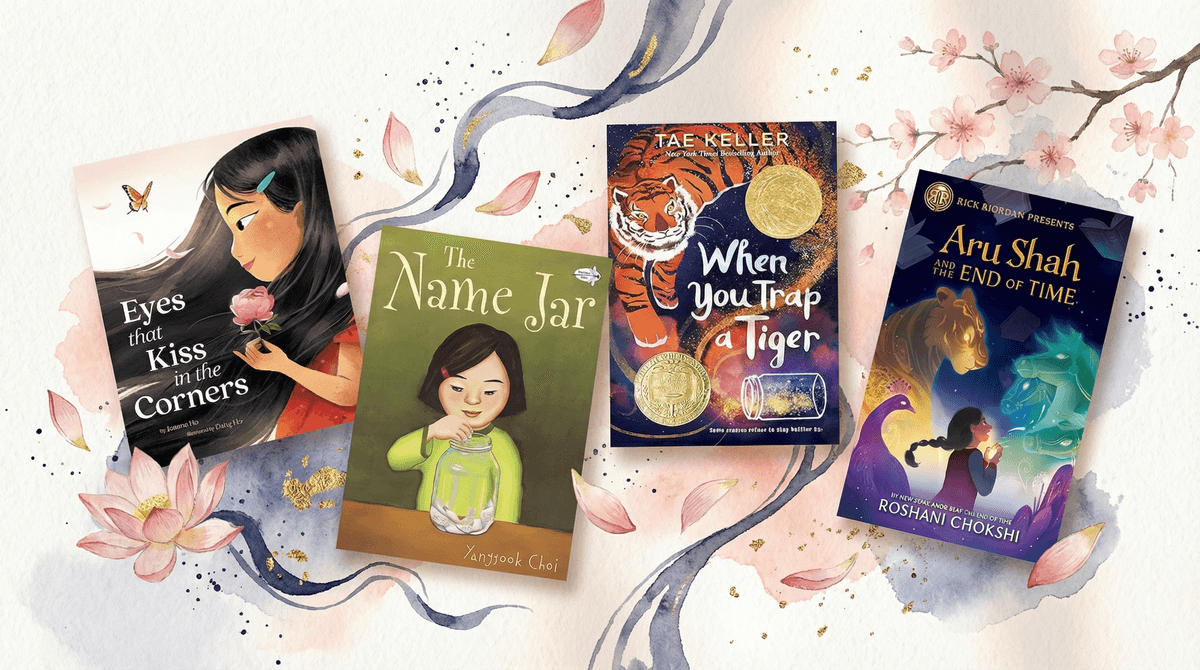
The Name Jar by Yangsook Choi is a beautiful starting point for talking about identity and belonging. Unhei, a Korean girl who just moved to America, is worried her new classmates will make fun of her name. It's gentle, relatable, and opens up great conversations about names, culture, and fitting in.
Eyes That Kiss in the Corners by Joanna Ho is stunning — both visually and emotionally. A young girl celebrates the almond shape of her eyes, passed down through generations. It's a love letter to Asian features that are too often criticized or exoticized.
Saturday Is Swimming Day by Hyewon Yum captures the specific experience of a Korean-American family's weekend routine with warmth and specificity. It's not "about" being Korean-American in a heavy-handed way — it just is, which is exactly what representation should feel like.
Alma and How She Got Her Name by Juana Martinez-Neal isn't specifically Asian-American, but it's perfect for pairing with Asian-American name stories because it shows how names carry family history and meaning across cultures.
For younger kids (ages 3-5), Yoomi's Yummy Rice by Mae Respicio is adorable and food-focused (always a win). Yoomi is nervous about bringing her lunch to school — a very specific anxiety that many Asian-American kids (and honestly, kids from any culture with "different" food) will recognize immediately.
Early Chapter Books (Ages 6-10)
Front Desk by Kelly Yang is based on the author's own childhood managing a motel with her Chinese immigrant parents. It's funny, heartbreaking, and doesn't shy away from showing the real challenges immigrant families face — including racism and economic instability. But it's also hopeful and empowering.
Amina's Voice by Hena Khan follows a Pakistani-American girl navigating middle school, friendship, and her relationship with her Muslim identity. It's nuanced and authentic without being didactic.
Aru Shah and the End of Time by Roshani Chokshi is part of the Rick Riordan Presents imprint, and it's a blast — South Asian mythology meets Percy Jackson-style adventure. If your kid loved Percy Jackson, this is an obvious next step.
Starfish by Lisa Fipps isn't Asian-American, but The House of Months and Years by Emma Trevayne offers a beautiful, magical realist story about a biracial girl (Chinese and white) dealing with grief and family secrets.
Middle Grade and Up (Ages 9-13)
The Astonishing Color of After by Emily X.R. Pan is gorgeous and heartbreaking — a girl travels to Taiwan after her mother's death and discovers family secrets. It deals with mental health, grief, and identity in a way that feels both specific and universal.
When You Trap a Tiger by Tae Keller won the Newbery Medal and deserves all the praise. It weaves Korean folklore into a contemporary story about a girl, her grandmother, and family secrets. It's magical realism done right.
Turtle Under Ice by Juleah del Rosario is a powerful verse novel about a Filipina-American girl navigating family expectations, identity, and first love.
For kids ready for more complex themes, American Born Chinese by Gene Luen Yang is a graphic novel that brilliantly explores identity, assimilation, and self-acceptance through three interweaving storylines. It won the Printz Award and is genuinely funny while tackling serious themes.
Don't make it weird. The best way to incorporate these books into your reading routine is to just... incorporate them. You don't need to turn every Asian-American book into a Teaching Moment™ about diversity. Sometimes Dumpling Dreams is just a really fun story about a girl who loves making dumplings with her family.
That said, be ready for questions. Kids notice differences, and that's okay. If your kid asks why a character's family speaks a different language at home, or why they celebrate different holidays, answer honestly and matter-of-factly. Learn more about talking to kids about cultural differences .
.
Seek out #OwnVoices books. This term (though somewhat debated in publishing circles now) generally means books written by authors from the communities they're writing about. Asian-American stories written by Asian-American authors tend to have more authenticity, nuance, and specificity. You can feel the difference.
Go beyond the "issues" books. Yes, books about racism, immigration, and discrimination are important. But also seek out books where Asian-American characters just get to exist — having adventures, solving mysteries, falling in love, being funny. Not every book needs to be about trauma or "the immigrant experience."
Food is a gateway. So many beautiful Asian-American picture books center around food — and for good reason. Food is culture, memory, and family. Books like Yoomi's Yummy Rice or Dumpling Dreams are perfect for sparking conversations about different cuisines, family recipes, and why food matters beyond just eating.
Asian-American read-alouds aren't a separate category of "diverse books" you check off a list once a year during Asian American and Pacific Islander Heritage Month. They're just... books. Really good books that expand your kid's worldview, build empathy, and tell stories that deserve to be told.
Whether you're looking for books that reflect your own family's experience or windows into experiences different from your own, the current landscape of Asian-American children's literature is rich, joyful, and varied. There are funny books, sad books, magical books, realistic books — stories about food, family, identity, adventure, friendship, and everything in between.
Start with one. Read it together. Talk about it (or don't — sometimes a good story just gets to be a good story). Then pick up another.
Build your list. Browse Asian-American children's books on Screenwise to find recommendations sorted by age, theme, and reading level.
Visit your library. Librarians are your secret weapon here. Ask for Asian-American read-aloud recommendations for your kid's age and interests. Most libraries have curated lists, especially around heritage months.
Follow Asian-American authors and illustrators. Social media can actually be useful here — many children's book creators share their work, recommend other books, and provide context about their stories.
Make it a regular thing. Instead of treating diverse books as special occasions, just make them part of your regular rotation. Mix The Name Jar in with Dog Man and Percy Jackson. That's what "normal" should look like.