

TL;DR: The Quick List
If you’re looking to swap the Roblox tycoon noise for something with a bit more substance, here are the top picks for historical and war films that won't require a therapy fund:
- Ages 7-10: Hidden Figures (Space Race history) and Newsies (Labor history with catchy tunes).
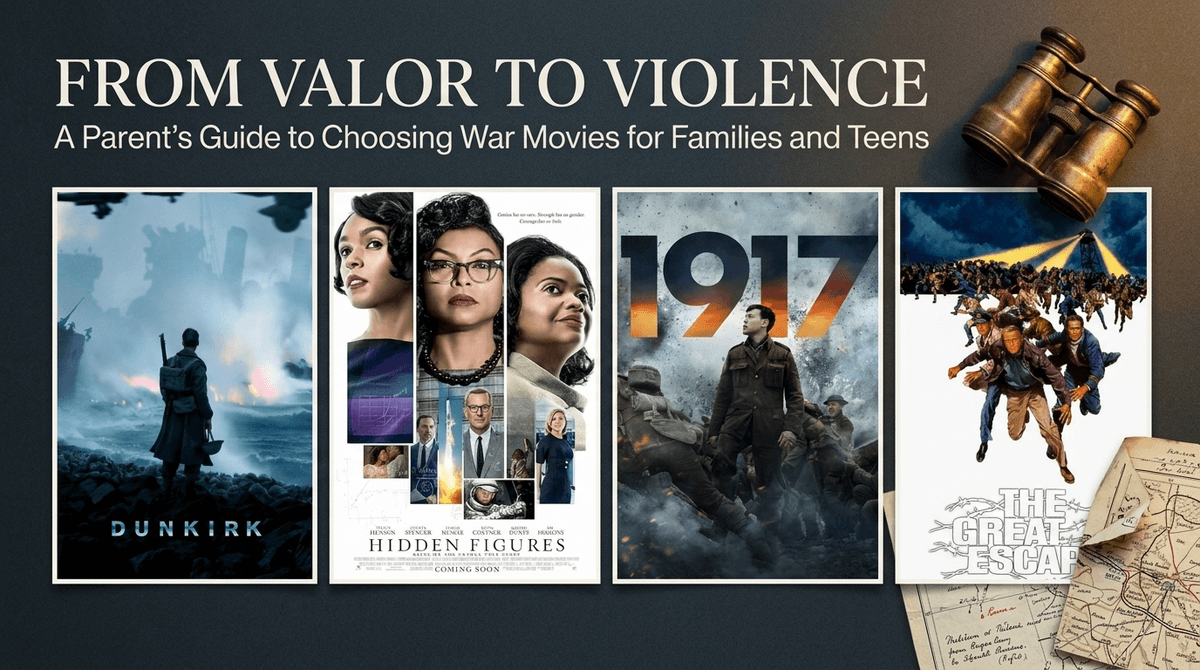
- Ages 11-13: Dunkirk (Intense WWII tension, very little gore) and The Great Escape (Classic POW adventure).
- Ages 14+: 1917 (WWI technical masterpiece) and Schindler's List (Essential, but heavy).
Get a movie list based on your kid's favorite history topic
We’ve all been there: your kid is obsessed with Call of Duty or spending hours on Hearts of Iron IV, and suddenly they’re asking questions about the Maginot Line or why everyone was so mad at Archduke Franz Ferdinand.
History movies are the ultimate "gateway drug" to actual learning. They take the abstract dates from a textbook and turn them into visceral, human stories. But there’s a massive gap between a Disney-fied version of the past and the "Ohio" levels of weirdness and brutality found in actual war.
The goal isn't to traumatize them with the opening scene of Saving Private Ryan before they're ready. It’s about finding that sweet spot where the stakes are high, the history is (mostly) accurate, and the "brain rot" is zero.
Ages 7-10: The "Inspirational History" Era
At this age, we’re looking for "history" more than "war." You want stories of bravery and systemic change without the visceral carnage of a battlefield.
Hidden Figures
This is a gold standard. It covers the Space Race, the Cold War, and the Civil Rights movement without a single shot being fired. It’s empowering, it’s fast-paced, and it proves that math is actually a superpower.
Sgt. Stubby: An American Hero
If you want a "war movie" for the younger set, this animated film about a stray dog in WWI is surprisingly good. It doesn't shy away from the fact that war is dangerous, but it handles the "peril" in a way that’s manageable for elementary kids.
Newsies
Is it a musical? Yes. Is it also a surprisingly decent look at the 1899 newsboys' strike and child labor laws? Also yes. If your kid thinks history is boring, Christian Bale singing about fair wages might change their mind.
Check out our guide to the best historical movies for elementary kids
Ages 11-13: The "Tension without Trauma" Era
This is the "middle school" sweet spot. They want stakes. They want to feel like they’re watching something "grown-up," but they might still have a "skibidi" reaction to excessive gore (i.e., they’ll act tough but then won't sleep for a week).
Dunkirk
Christopher Nolan is the king of the "PG-13 war movie." Dunkirk is a masterpiece of technical tension. It’s loud, it’s stressful, and it’s immersive, but there is almost zero blood. It focuses on the feeling of being trapped rather than the mechanics of injury.
The Great Escape
This is the ultimate "dad movie" for a reason. It’s a classic adventure story about Allied POWs escaping a German camp. It treats the enemy with a level of nuance often missing in modern films, and while the ending is bittersweet, it’s more about the ingenuity and spirit of the soldiers than the violence of the front lines.
Hamilton
If you haven't sat through this on Disney+ yet, now is the time. It’s the most culturally relevant piece of "history" media for this generation. Just be prepared for them to quote it for the next six months.
Learn more about why middle schoolers are obsessed with WWII history
Ages 14+: The "Heavy Hitters"
By high school, kids are usually ready for the "R-rated" reality of history, but it’s still worth vetting why a movie is rated R. Is it because of "war is hell" realism, or is it just gratuitous?
1917
This movie is essentially a 2-hour stress dream filmed to look like one continuous shot. It’s rated R for some gruesome imagery (corpses in the trenches), but it’s an incredible look at the futility and scale of WWI. It’s a "must-watch" for any kid interested in filmmaking or history.
Schindler's List
It’s a hard watch. It’s a long watch. But it’s arguably the most important film ever made about the Holocaust. If your teen is showing an interest in the era, this is the definitive conversation starter. It’s not "entertainment"—it’s an experience.
Apollo 13
For a break from the battlefield, this is the perfect "historical crisis" movie. It’s a masterclass in problem-solving, science, and cool-headedness under pressure. Plus, it’s one of the few movies where you’ll actually see people using slide rules (okay, maybe that’s just for the nerds).
When you’re picking a war movie, you have to distinguish between violence and gore.
- Violence is the presence of conflict, shooting, and explosions. Most kids who play Fortnite are desensitized to this.
- Gore is the anatomical reality of what happens when those things hit a human body.
A movie like Dunkirk has high violence but low gore. A movie like Hacksaw Ridge has high levels of both. Know your kid's "ick" factor before hitting play.
No movie is 100% accurate. Filmmakers love a "based on a true story" tag, but they also love drama.
- The "Hero" Narrative: Hollywood loves a lone hero. History is usually about groups of people working (and failing) together.
- The "Good vs. Evil" Simplification: While some conflicts have clear moral lines, movies often strip away the geopolitical nuance to make a 2-hour story work.
- The Tech: Kids who play War Thunder will be the first to tell you if a tank is "period-accurate" or "totally mid." Use their niche knowledge to start a conversation about what the movie got right.
Check out our guide on how to spot historical inaccuracies in movies
Don't turn movie night into a pop quiz, but do look for "the hook."
- "What would you have done?" This is the ultimate empathy builder. In a movie like The Great Escape, ask them if they would have joined the tunnel diggers or stayed put.
- "Why do you think they didn't show [X]?" If you're watching a sanitized version of history, ask why the filmmakers made that choice. Is it to make the "heroes" look better?
- "How does this relate to what's happening now?" History repeats itself. Seeing the propaganda of the 1940s can help a teen understand the "fake news" or "propaganda" they see on TikTok today.
War and history movies are a fantastic way to pull kids out of the "brain rot" cycle and into something that actually makes them think. You don't have to go straight to the most graphic films to have an impact. Start with the "tension-builders" and move up as they show more maturity and interest.
If they start asking for more, maybe suggest a historical podcast or a non-fiction book to keep the momentum going.
- Check the ratings: Use the Screenwise media pages to check for specific triggers.
- Set the stage: If you’re watching something heavy like 1917, maybe don't do it right before bed.
- Follow the interest: If they loved the planes in Dunkirk, look for a documentary or a museum trip next.
Find recommendations based on your family's specific interests