A teacher in recovery wrote the prevention book she wanted for her own sons
Jessica Lahey grew up in a family with a long history of alcoholism, tried hard not to repeat it, and became an alcoholic anyway. She got sober in 2013. The next year she went to work teaching at a drug and alcohol rehab for adolescents, where she spent five years with kids who, as she told Harvard's EdCast, "had so many things going on in their lives that if they just had some intervention early on, things could have been different for them." The Addiction Inoculation is part memoir and part research guide, written while she raised two sons with that family history.
 Jessica Lahey. Photo by Sharona Jacobs, from jessicalahey.com.
Delay is the strategy, and every year counts
The book's core argument is about timing. The adolescent brain is still building itself, and substances do the most damage while that is happening. In Lahey's telling of the research, a kid who starts drinking or using at 13 has roughly a one-in-two lifetime chance of a substance use disorder; wait until 18 and it drops to about one in ten, close to the rate in the general population. Every year a first drink is pushed back lowers the risk.
So the advice is practical rather than scary. Lahey is clear that scare tactics and "just say no" programs don't work, and some made kids more likely to try drugs. What helps:
- Facts kids can use. Most eighth graders have not tried alcohol or drugs, which takes the air out of "everybody's doing it."
- Ways to say no that save face, and a standing exit plan: call for a ride, no questions asked until later.
- Honesty about family history. A family secret about addiction is a risk factor in itself.
- Regular time together. Family dinner is protective, she writes, but the point is any scheduled time to check in, because the first sign of trouble is usually change.
She also goes through the risk factors that raise or lower a kid's odds, including genetics, early stress and adverse childhood experiences, and the protective ones parents can build, like self-efficacy and trusted adults.
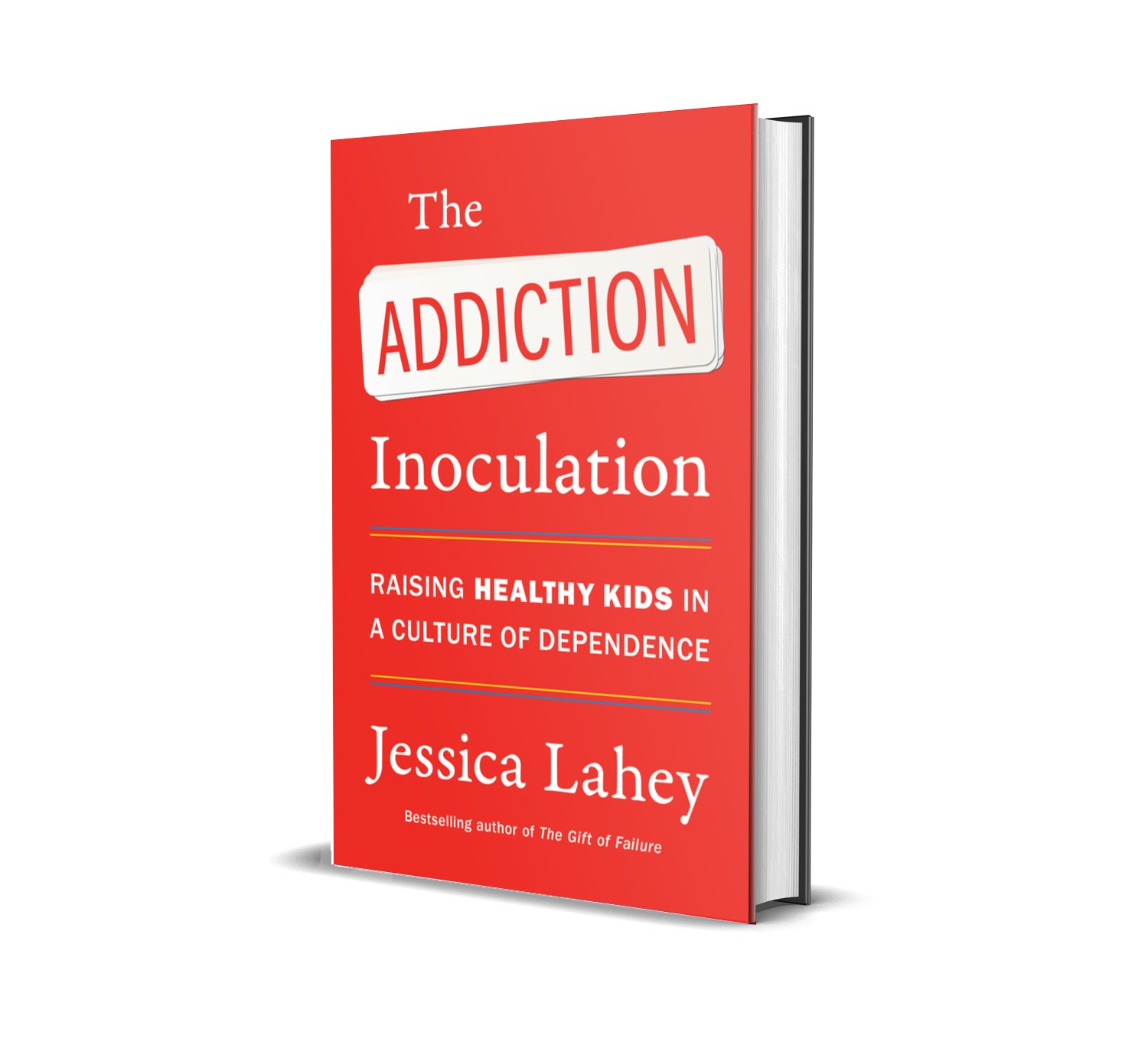 The hardcover, from Lahey's press kit.
Her line on supervised sips at home is firm
Lahey rejects the idea that letting teens drink at home teaches moderation, which she calls a myth. Some parents who grew up with wine at the table will disagree. The book's numbers on early first use come from studies that show a strong link, not a guaranteed outcome, so treat them as a reason to delay rather than a prediction for your kid. If addiction runs in your family, the chapters on genetics and honest conversation are the place to start.
Hear her walk through it
A full parent talk on the book for the GPS Parent Series:
Read it with
Lahey's first book, The Gift of Failure, on building the competence that this one calls self-efficacy. For screens and the wanting brain, Dopamine Kids. And for how TV makes teen drinking look normal, see underage drinking on TV.


