Dopamine is about wanting, which is why the tablet fight is so hard
Doucleff starts with a correction. Dopamine gets called the pleasure chemical, but neuroscientists have spent the decades since the 1990s showing that it drives wanting, while a separate system handles liking. Screens and ultraprocessed foods, her "dopamine magnets," keep the wanting going and deliver little of the satisfaction. That is how a kid can sob when the iPad goes away from a video they were barely enjoying.
Her own example is the nightly fight in her house. Rosy was 7, the family kept to the American Academy of Pediatrics' recommended limit, and turning the screen off still ended in tears and rage. "One of the big misconceptions is that kids are on screens because it makes them happy," she told NPR.
Taking the screen away is half the job. The other half is a better offer
Doucleff calls it "the boredom mistake": pull the screen and tell the kid to go be bored, and you get a miserable kid who wants the screen more. What works, she argues, is replacing it with something the child wants: an adventure, a skill, a bit of independence. In her house the swap was teaching Rosy to ride her bike alone around the neighborhood to the market. Rosy now bikes herself to piano and soccer.
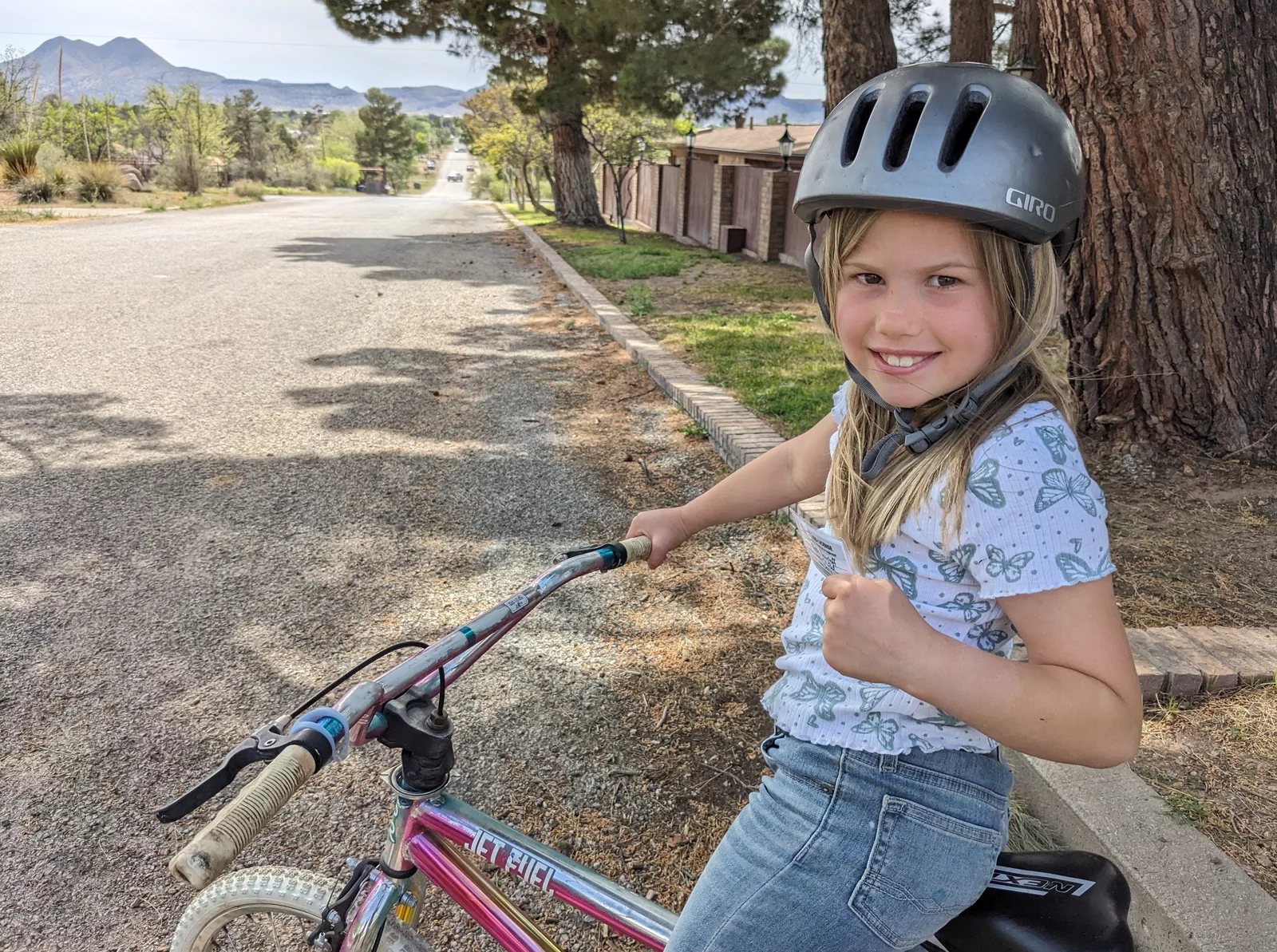 A bike ride was the first swap in Doucleff's house. Photo from michaeleendoucleff.com.
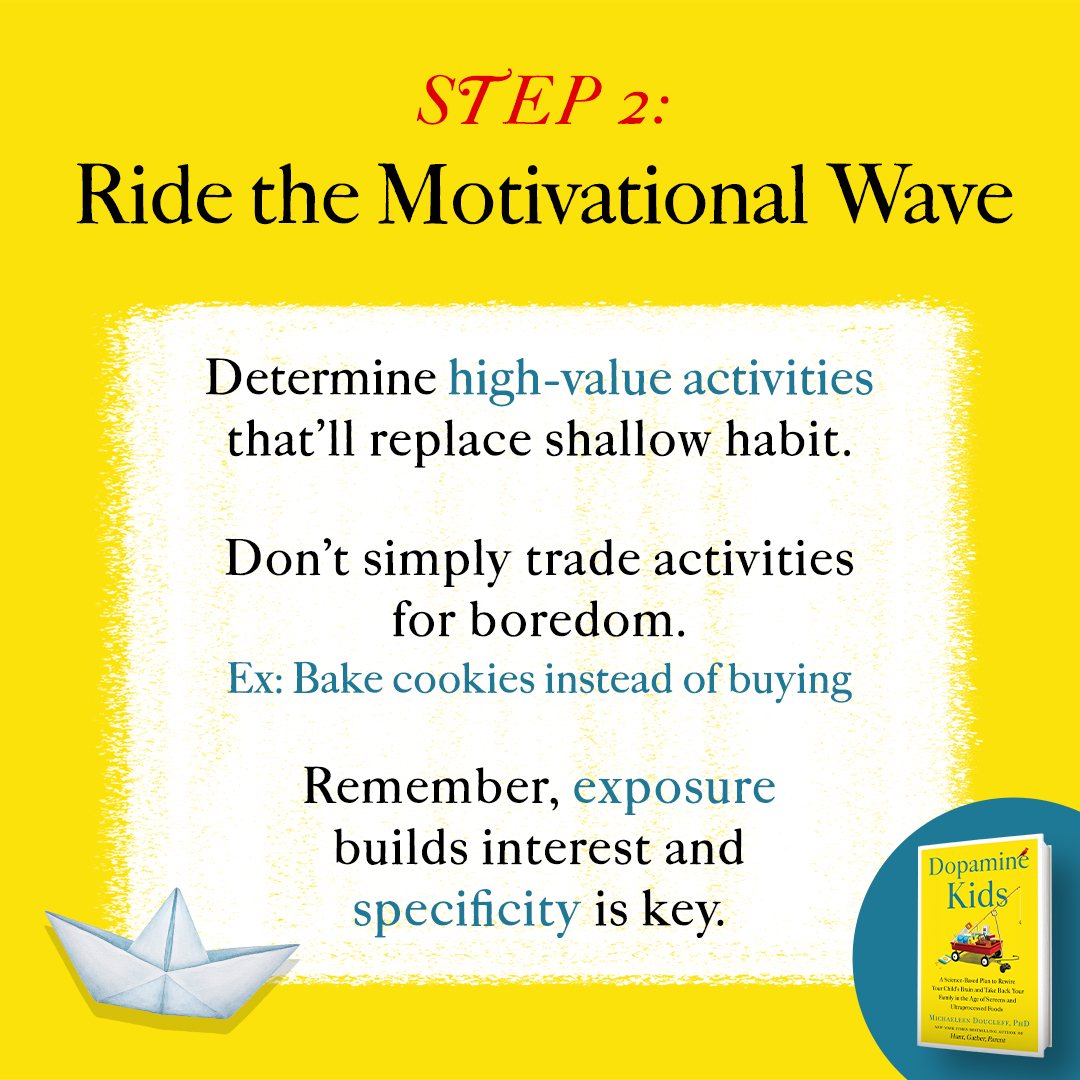 Step 2 of the plan, from the book's shareable cards. Image from michaeleendoucleff.com.
The plan has five steps and four weeks
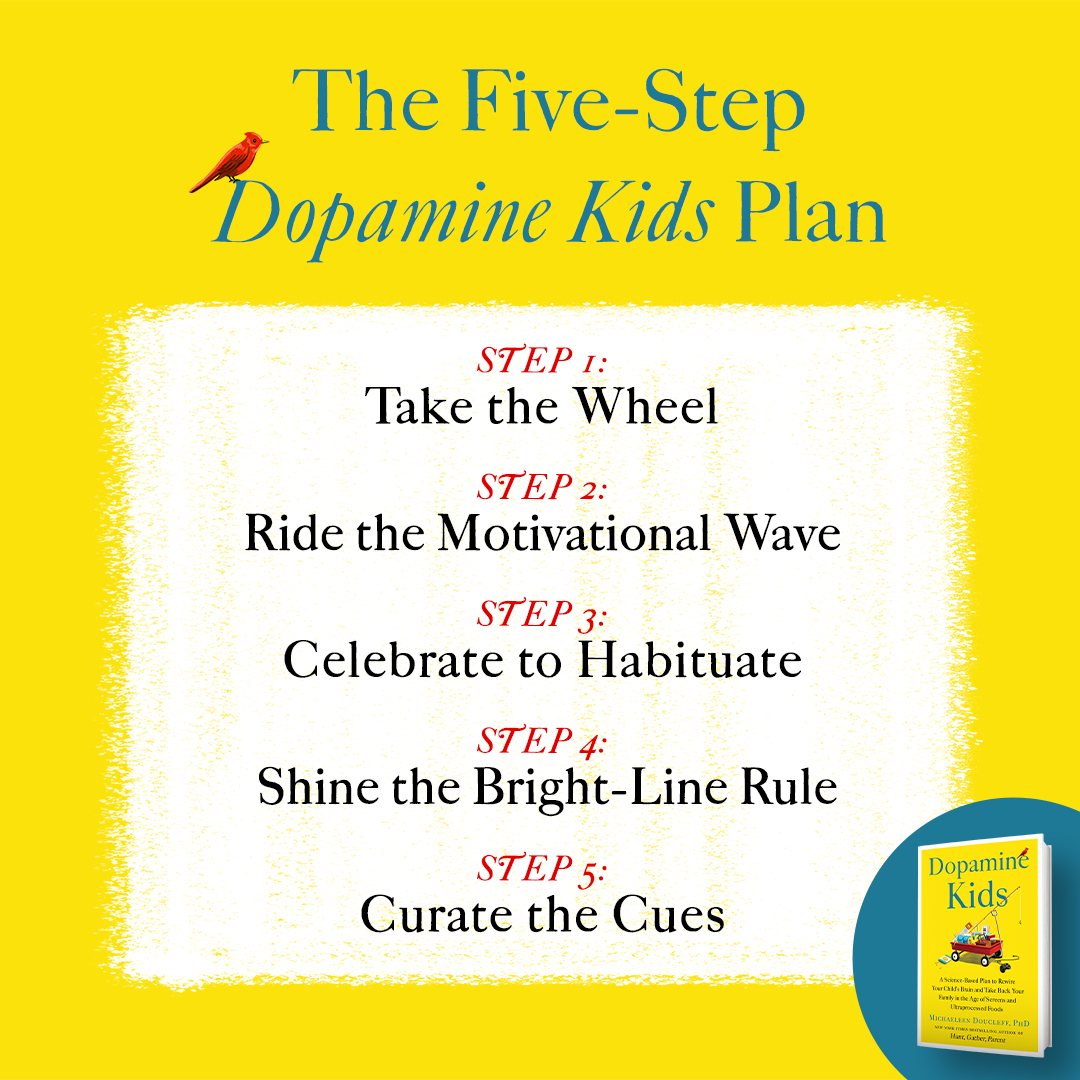 The five steps, from the book's shareable cards. Image from michaeleendoucleff.com.
- Take the Wheel. Decide what matters to your family and write a "dream list" of goals and values.
- Ride the Motivational Wave. Pick high-value activities to replace the screen habit, and make them specific.
- Celebrate to Habituate. Make the new activity feel good: fun supplies, attention to what it gives them, and kids showing off their progress.
- Shine the Bright-Line Rule. One clear rule that ends the daily negotiation, such as dessert only when guests are over.
- Curate the Cues. Take the magnets out of sight and put new cues in their place: devices disappear after dinner, the bike sits by the door.
The book ends with a four-week plan. Doucleff's site has free printable Kid's and Parent's Dream Charts, a guide to blocking content at your home router, and a talk for teenagers about how screens work on the brain, which she sends to parents who email her.
The program asks a lot of the parents, too
The plan works on the whole household, so parents give up their own evening TV and desserts along with the kids. Slate's reviewer, who mostly agreed with the book, found it heavy on frameworks and lists, and objected that movies and TV get lumped in with every other screen. The same review saw it as most useful for kids from kindergarten up to the early teens: old enough to bike to a friend's and help make family rules, young enough that parents still set the routine.
The food half deserves its own note. Bright-line rules about desserts and snacks work for many families. If your child has a history of picky eating, food anxiety or an eating disorder, run any new food rules past their pediatrician first.
Hear it from her
A 48-second excerpt, read by Doucleff:
Her full conversation about the book with the columnist Heidi Stevens, for the Family Action Network:
She also talked about the book on CBS Mornings.
Read it with
Doucleff's first book, Hunt, Gather, Parent, is the cooperation-first approach this plan is built on. The New York Times framed Dopamine Kids as a solution to the problems laid out in The Anxious Generation, which makes the case for why; this book is the how, at home, starting this week. For more ideas on the replacement half, see screen-free activities that hold up against Roblox.


