Two researchers asked whether screens could help kids learn to read
Lisa Guernsey is a journalist who leads early-education and learning-technology work at the think tank New America, and the author of an earlier book on young kids and screen time. Michael H. Levine is a child development expert and the founding director of the Joan Ganz Cooney Center at Sesame Workshop, the research arm of the people who make Sesame Street. Their starting point is a number that has barely moved in years: about two thirds of American fourth graders do not read well. Their question is whether the tablets and phones already in kids' hands can be part of the fix.
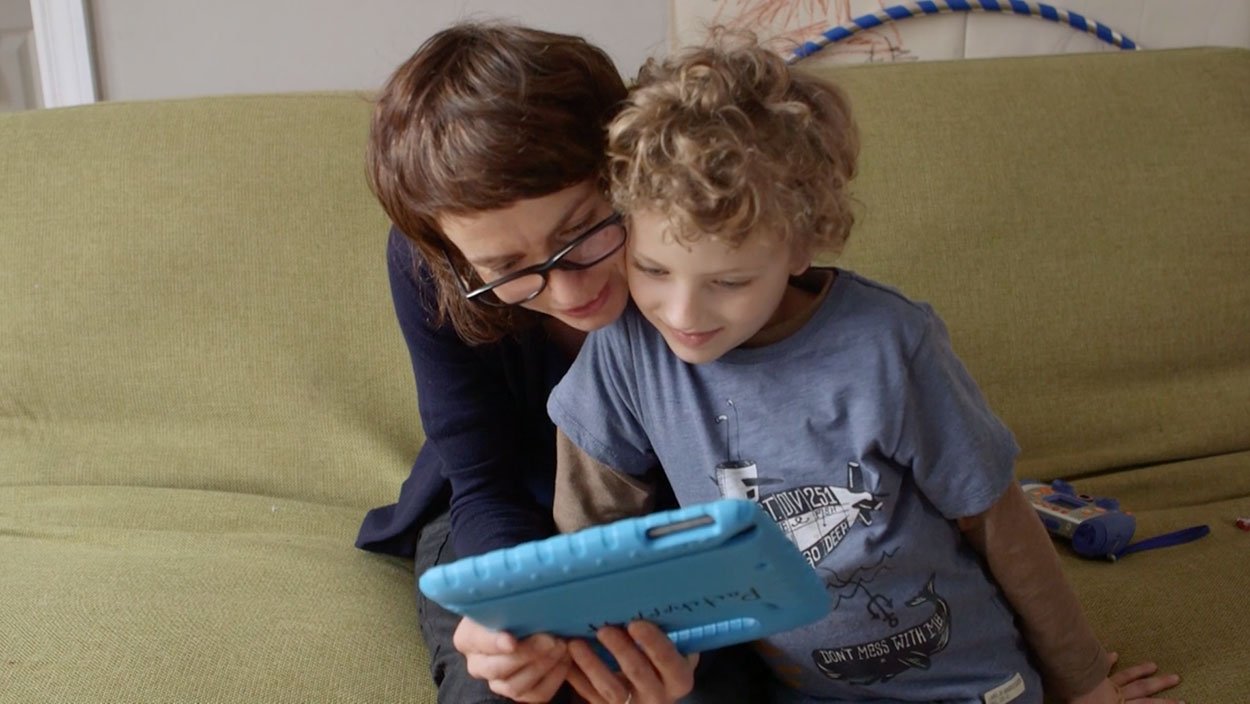 A parent and child sharing a story on a tablet. Photo from tapclickread.org, the book's companion site.
Their answer is yes, under one condition: a caring adult stays in the picture. They call it "human-powered first and tech-assisted second." An e-book read together, with a parent asking questions, can work like a print book read together. The same e-book handed to a kid alone often does not. In a 2016 follow-up article, the authors describe a preschool director who found her kindergartners never got through a story app until she sat down and guided them.
Most reading apps teach the ABCs and stop there
The most useful chapter for parents is the authors' scan of the app stores. Their teams looked at nearly 200 apps sold for early literacy and found a lopsided market. Among free apps, more than half taught letters and letter sounds, while fewer than one in ten worked on reading comprehension, and fluency and self-expression were rarer still. Apps were labeled vaguely for "young children," ignoring the gap between a 3-year-old and a 6-year-old. And the apps at the top of the store charts rarely matched the ones reviewers praised for storytelling and creativity.
The takeaway is practical. Look past the alphabet drills for apps and e-books that tell a story, invite your kid to talk or make something, and fit their age, and read reviews from sources that judge learning, not downloads.
 A family reading program featured on tapclickread.org.
The background TV matters more than the tablet
The authors are not starry-eyed about media. They cite research that a TV running in the background, especially adult shows, cuts into the back-and-forth talk between parents and toddlers that builds language, and interrupts play. Their advice is less about the number of minutes and more about what is on, how it is used and whether an adult is talking with the child about it.
The policy chapters and the buzzwords will lose some parents
The last part of the book turns to policy: libraries, home-visiting programs, schools and what the authors call "Readialand," a future where reading and media are joined and every family has access to good tools. One reviewer found the term "too saccharin and arch." A critic at Moving to Learn went further and argued that the book sells tech-assisted reading too hard, noting that both authors work at organizations with tech funding. Parents can skim the policy chapters; the app-store findings and the co-reading advice stand on their own. The specific apps are from 2015, so apply the questions, not the product names.
Hear the authors
The authors introduce the book:
Michael Levine on young kids and screen time, at the Children's Museum of Manhattan:
Read it with
For the opposite worry, what screen reading does to the deep-reading brain, read Reader, Come Home. Raising Kids Who Read covers how kids learn to read on paper. For current app picks, see educational apps that teach reading and the best reading and story book apps for kids.


