A psychiatrist who nearly flunked out over games wrote the plan for parents
Alok Kanojia, known to millions of young people online as Dr. K, knows the problem from the inside. After two years of college he had a GPA under 2.0 because he was gaming until he passed out. "I was stuck in this cycle of playing until absolute exhaustion, so that when my head hit the pillow, I passed out and I did not have to deal with the guilt, the shame," he told WBUR's Here and Now. His parents sent him to an ashram in India, where he learned meditation and, in his words, "how my mind works."
He went on to Tufts medical school and psychiatry training at Massachusetts General and McLean hospitals, taught at Harvard Medical School, and with his wife Kruti founded Healthy Gamer, a mental health platform and YouTube channel for gamers. He wrote this book because so many of the questions reaching Healthy Gamer came from parents.
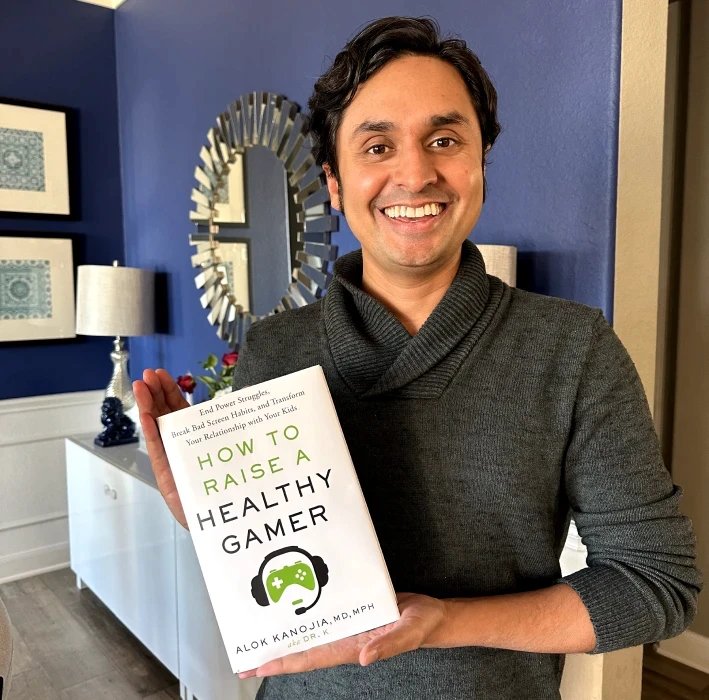 Alok Kanojia with the book. Photo from healthygamer.gg.
Games are designed to beat you, so the goal is restraint, not a ban
Kanojia does not want kids to quit gaming. His own daughters play. "Insulating them from something is not the same as preparing them," he told Motherly. His case is that games are built by a multibillion-dollar industry to keep players engaged, and that the brain wants more after every win: one game becomes a second, a third, a fourth. Taking the console away can work for a week and wreck the relationship for a year. He teaches restraint rather than restriction, because "you can't be sober for someone else."
He is also clear about when to act. If gaming is causing problems with sleep, grades, friends, mood or health, it is time to step in.
Understand, talk, then act
The book has three parts.
- Understand: why kids game, what it does to their brain chemistry, and what need it may be meeting. Often games are a retreat from something else, such as bullying, loneliness or anxiety.
- Talk: build an alliance with your kid before changing any rules. Kids who are struggling often deny it because "I'm giving my parents ammo," he says, so the first conversations are about listening.
- Act: an eight-week plan to set, enforce and troubleshoot boundaries, with weekly check-ins, small rewards and advice for when your kid gets irritable or rude.
One move he calls "dumping it in their lap": lay out the facts and goals (games give community and accomplishment; school, family, exercise and the future matter too) and ask your kid to propose the balance. A plan they wrote is one they are more likely to keep.
ADHD, anxiety and the other adults in the house
The later chapters cover what parents of a gamer often face along with it: ADHD, autism, depression and anxiety, and substance use. Kanojia explains why kids with ADHD are more drawn to the instant feedback of games. He also covers the adults: a co-parent who games, an ex with different rules, grandparents who hand over the tablet.
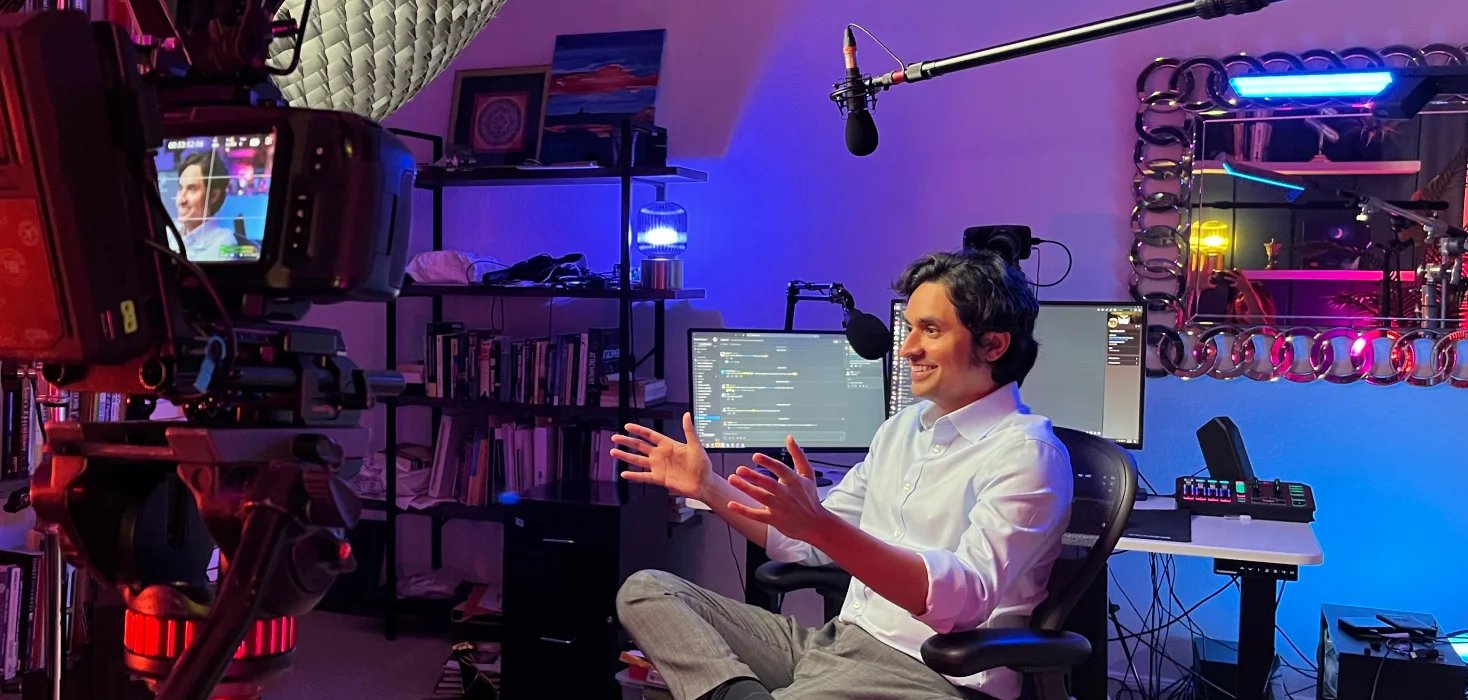 Kanojia recording in his studio for Healthy Gamer. Photo from healthygamer.gg.
It is long, and the author runs a coaching business
Readers praise the empathy and the plan, and many say it applies well beyond games. The most common complaint is length and repetition; the book runs 304 pages and returns to its main points often. Kanojia's company, Healthy Gamer, sells coaching and programs for gamers and parents, so expect mentions of that world. A parent of a 7-year-old who plays 30 minutes of Mario Kart a day does not need this book yet. A parent of a teen whose gaming is crowding out sleep, school and friends will find it the most useful thing on the shelf.
Watch Dr. K
Kanojia introduces the book on his Healthy Gamer channel:
The publisher's trailer:
Read it with
Power On is the calmer everyday guide for younger kids and families whose gaming is not a crisis. A Parent's Guide to Video Games summarizes what the research says about games and kids. For the games most often at the center of these fights, see the pages for Fortnite and Roblox, and for practical limits, setting boundaries for gaming screen time.


