A chemist with a 3-year-old who hit went looking for parents who never yell
Doucleff wrote this book as a parent who was losing. Her daughter Rosy was 3, and, as Doucleff told NPR, she "started actually, like, slapping me across the face, regularly." Doucleff is a trained scientist, and when she read the studies behind popular parenting advice she found much less there than the books claimed. A 2018 NPR reporting trip to a Maya village in the Yucatán changed her idea of what parenting could look like. So she went back with Rosy, then took her to the Arctic and to Tanzania, about seven or eight weeks in all.
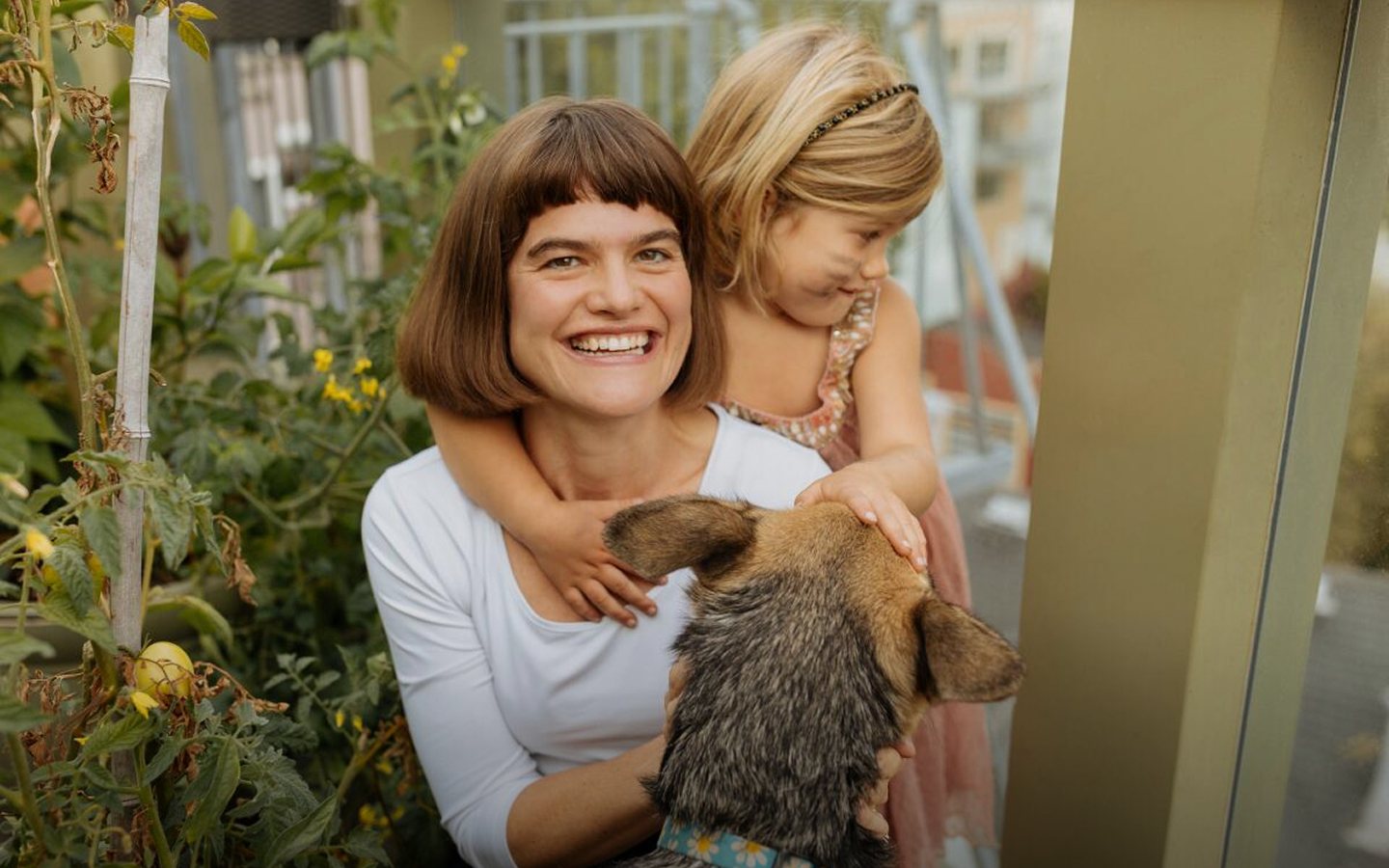 Michaeleen Doucleff with her daughter and the family dog. Photo from michaeleendoucleff.com.
Maya kids help without being asked, because nobody shooed them away at 2
On that first trip, Doucleff watched a 12-year-old wake up on her spring break and start the dishes without a word from anyone. Her mother, Maria de los Angeles Tun Burgos, was not surprised. The Maya chapters are the strongest in the book. Toddlers want to help, and Maya parents protect that urge by letting little kids pitch in on real work, even when they do it badly, instead of sending them off to play and then trying to buy their help years later with chore charts and rewards. The psychologist Barbara Rogoff of UC Santa Cruz, who has studied Maya communities for 30 years, is one of the researchers Doucleff draws on.
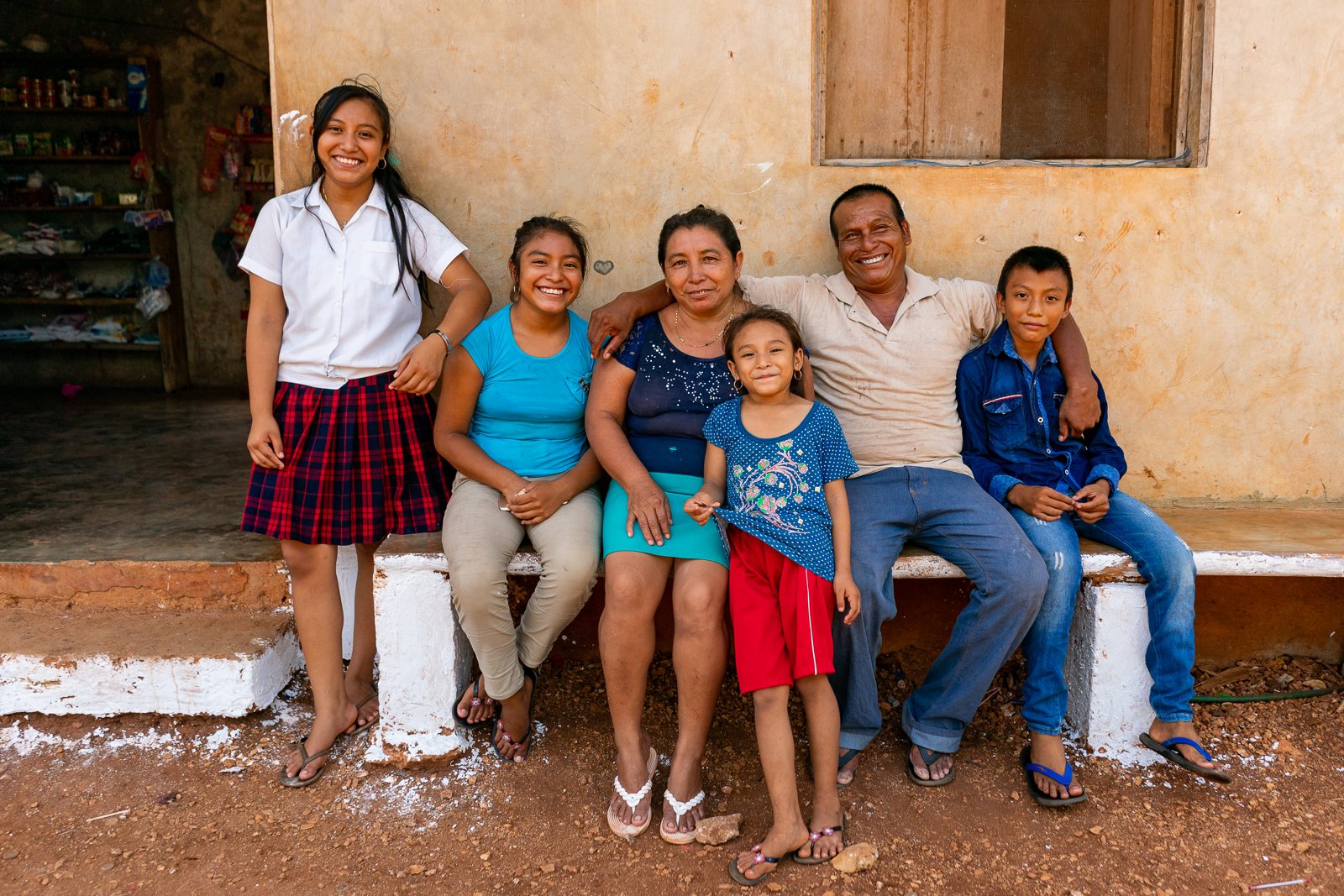 A Maya family outside their home. Photo by Citlalli Rico, from michaeleendoucleff.com.
The practical version for a Western kitchen is small: let the 3-year-old crack the eggs, carry the laundry, rinse the bowl. It will be slower and messier. The book argues that the mess is the price of a 10-year-old who notices what needs doing.
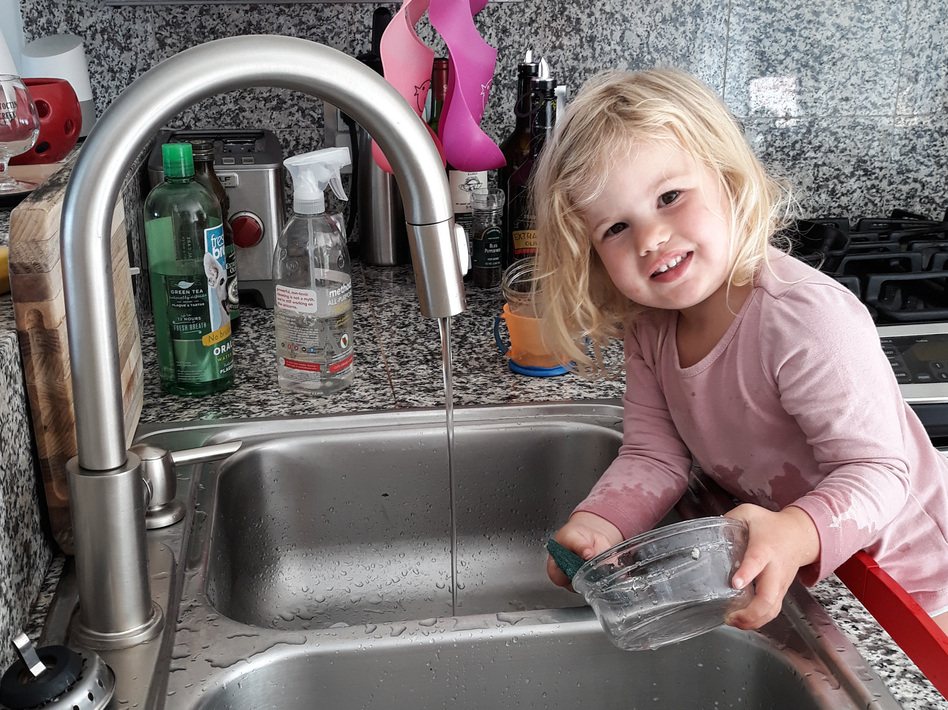 A toddler on dish duty. Photo from michaeleendoucleff.com.
Inuit parents meet a tantrum with a calm voice and a story
In the Arctic, the lesson is anger. Inuit parents in Doucleff's account do not raise their voice at a small child, however big the tantrum. They teach with stories instead of scolding: a sea monster with a pouch on its back for little kids who wander too close to the water, so nobody has to yell "get away from there." After a meltdown, in a calm moment, a parent may act out what happened so the child can think it through. Doucleff builds on the anthropologist Jean Briggs, whose book Never in Anger documented Inuit child-rearing in the 1960s and 70s.
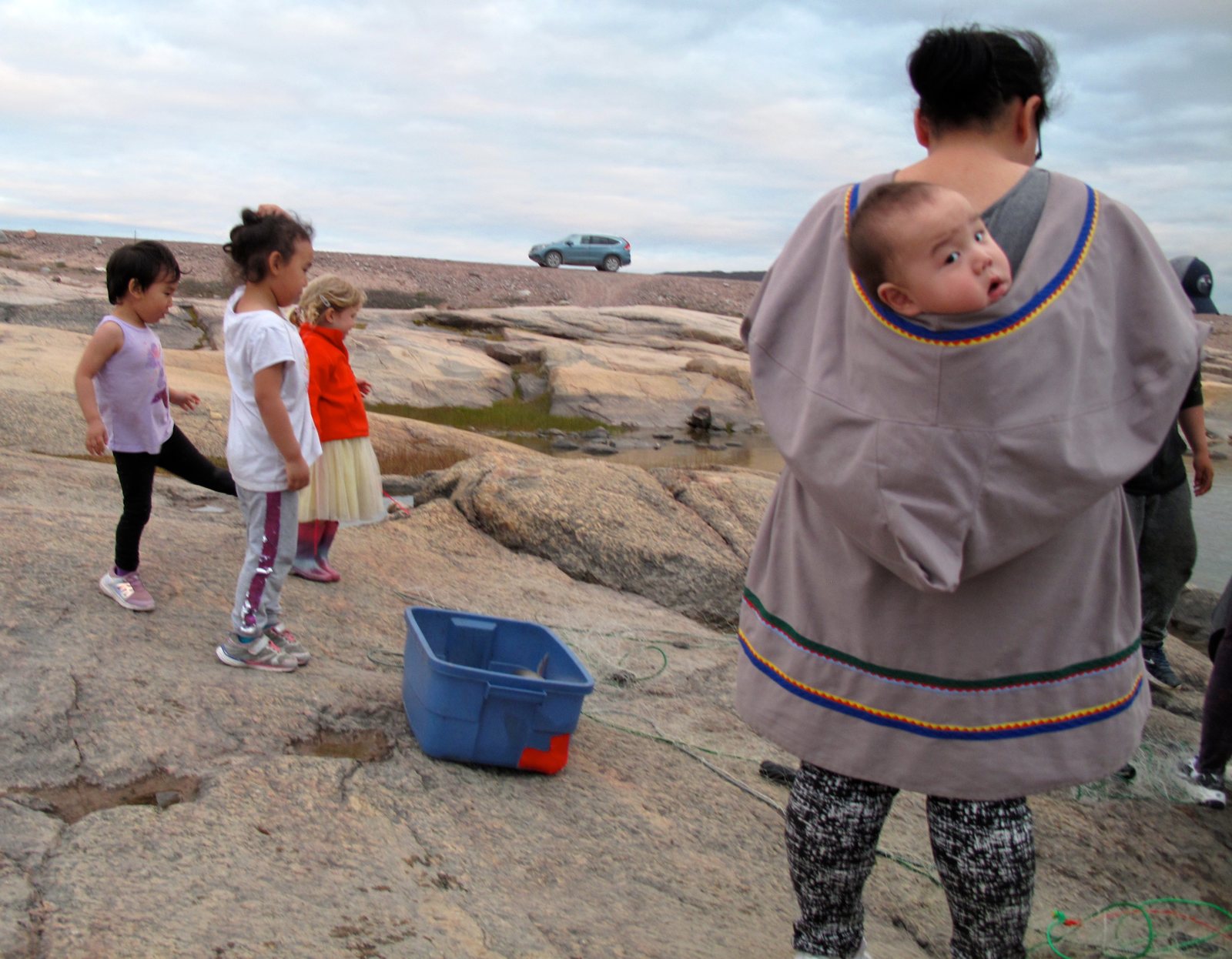 Kids on the rocks in the Arctic, and a baby riding in the hood of an amauti, the Inuit mother's parka. Photo from michaeleendoucleff.com.
Hadzabe parents stay close and stay out of the way
With Hadzabe families in northern Tanzania, the lesson is autonomy. Kids have wide freedom to move, explore and look after themselves. Doucleff turns this into the M in TEAM, minimal interference, and she separates it from free-range parenting: in her version an adult, an older sibling or a neighbor is always nearby, ready if the child wants help, and not directing the play.
The four letters to remember
- Togetherness: do chores and everyday work side by side, so kids learn by joining in.
- Encouragement: invite and inspire instead of forcing. Doucleff calls this the hardest one.
- Autonomy: kids make their own choices, while staying responsible to the family: helping, sharing and being respectful.
- Minimal interference: be there, but let them explore without a running commentary.
The criticism is about the framing, not the advice
Reviewers who liked the advice still pushed back on the packaging. Slate's reviewer found most of it familiar from respectful, Montessori and Waldorf-style parenting, and argued that calling living communities "ancient" freezes them in time. Fatherly's reviewer noted that dads barely appear. Doucleff addresses the romanticizing problem herself and calls the "paradise lost" view of other cultures "categorically wrong." Read the travel chapters as one reporter's weeks with a few families, and take the parts that fit your house.
Watch her explain it
Doucleff's 2021 talk for the GPS Parent Series walks through the Maya, Inuit and Hadzabe lessons:
She also talked it over with Ned Johnson, coauthor of The Self-Driven Child, for The Parent Venture:
Her second book takes on screens and snacks
Five years later Doucleff turned to the fight that comes after toddlerhood. Dopamine Kids is about why kids melt down when the tablet goes away, and how to make offline life the thing they want. It reads well as a sequel: the cooperation-first approach from this book, applied to screens and ultraprocessed food.
For the brain science of calming a melting-down kid, The Whole-Brain Child pairs well with the Inuit chapters. Julie Lythcott-Haims, who called Hunt, Gather, Parent "absolutely transformational for our family life," wrote How to Raise an Adult, the same argument about autonomy made for older kids.


