

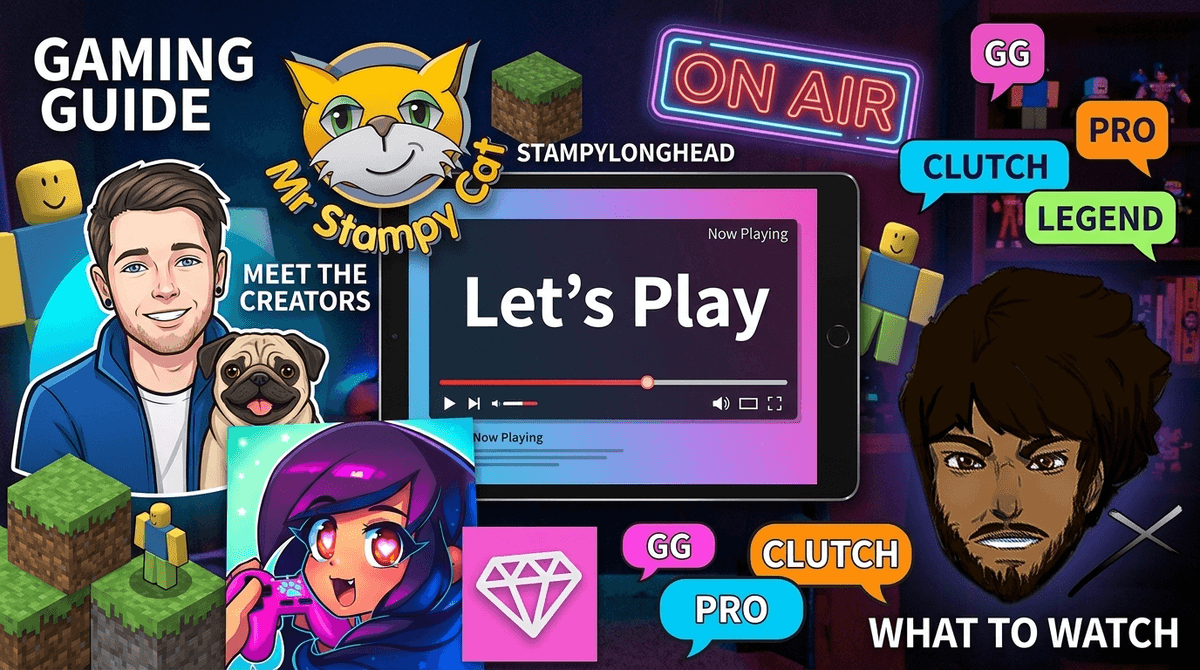
TL;DR: The Quick Download
If you’ve ever walked into the living room and wondered why your child is watching a 20-minute video of someone else playing Minecraft instead of just playing it themselves, you aren’t alone. This is the "Let’s Play" phenomenon. It’s part entertainment, part tutorial, and part "hanging out" with a digital friend.
- The Appeal: Kids watch for the personality, the high-energy storytelling, and to learn "pro" moves in games like Roblox or Fortnite.
- The Risk: Parasocial relationships (thinking the YouTuber is their actual best friend), exposure to "brain rot" content like Skibidi Toilet, and the aggressive YouTube algorithm that can lead from a harmless tutorial to something weird or inappropriate in three clicks.
- Top Recommendations: For younger kids, stick to Stampy or DanTDM. For tweens, Aphmau or Thinknoodles are generally safe bets.
Check out our full guide on YouTube vs. YouTube Kids
In the simplest terms, a "Let’s Play" (LP) is a video or livestream where a creator plays a video game while providing commentary. It’s like the modern version of sitting on the floor while your older brother plays Super Mario and explains what he’s doing—except the "older brother" has 30 million subscribers, a neon-lit studio, and an endless supply of energy.
There are two main flavors:
- The Tutorial/Walkthrough: These are functional. "How do I build a redstone door in Minecraft?" or "How do I find the secret badge in Roblox?"
- The Personality-Driven Series: This is where the "Let's Play" lives. The creator isn't just playing; they are telling a story, reacting with exaggerated shock, or doing "challenges" (e.g., "Can I survive 100 days in a zombie apocalypse?").
It’s easy to dismiss this as "brain rot," but for kids, these videos serve a few real purposes. First, gaming is the social currency of the playground. If everyone is talking about the latest MrBeast gaming challenge or a weird glitch in Garten of Banban, kids watch these videos to stay in the loop.
Second, it’s parasocial. Creators talk directly into the camera, using "we" and "us" language ("We did it, guys!"). To a 9-year-old, DanTDM isn't just a guy in the UK; he’s a friend who shares their interests.
Finally, it’s a way to experience games they don’t own or aren't allowed to play yet. Watching someone play a "scary" game like Five Nights at Freddy's can be a way for kids to test their bravery without actually being in the driver's seat.
See why kids watch people play video games
Not all gaming creators are created equal. Some are genuinely educational and wholesome; others are basically just shouting into a microphone for 15 minutes to trigger an adrenaline response in your child's brain.
Ages 5-8: The "Safe" Starters
Stampy is the gold standard for younger kids. His Minecraft videos are whimsical, storytelling-focused, and remarkably clean. He has a high-pitched, friendly voice that might drive you crazy, but he’s essentially the Mr. Rogers of gaming.
Dan (The Diamond Minecart) has been around forever. While his older content is very Minecraft heavy, he’s branched out. He’s professional, avoids heavy profanity, and generally feels like a "safe" older cousin.
Ages 9-12: The Tween Scene
If you have a daughter in elementary or middle school, she likely knows Aphmau. She creates roleplay stories within Minecraft. It’s basically a digital soap opera with high-pitched voices and lots of "shipping" (pairing characters together). It’s mostly harmless, though the drama can get a bit intense.
Justin (Thinknoodles) covers a wide variety of games, from Roblox to Among Us. He’s energetic but doesn’t lean into the "toxic gamer" tropes. He’s a solid choice for kids who want to see a variety of indie games.
While she started with toy unboxings, her Roblox and Sims 4 content is huge with the younger tween set. It’s very bright, very loud, and very "toy-etic."
Ages 13+: The High-Energy Zone
Cory is incredibly popular because he’s actually funny and high-energy without being fake. He plays a lot of horror games, so expect some scares and mild language, but he often includes positive messages about mental health and "being yourself."
Let’s be real: a lot of gaming YouTube is objectively terrible. If you see these things, it might be time to steer your kid toward a different channel.
- The "Reaction" Face: If every thumbnail features a guy with his mouth open in a silent scream and bright red arrows, you’re looking at clickbait. These videos are designed to hack the lizard brain of a child. They often contain very little substance and a lot of "filler" screaming.
- Gambling-Adjacent Content: Be very wary of creators who focus on "opening crates," "gacha pulls," or "spinning for skins." This is essentially teaching kids the mechanics of gambling under the guise of gaming.
- The "Screamer" Creators: Some creators, like IShowSpeed, rely on erratic, aggressive, and often misogynistic or offensive behavior for views. This is the "Ohio" energy that moves from "weird" to "toxic" very quickly.
- Brain Rot Overload: If your kid is watching endless loops of Skibidi Toilet or "Sigma" edits, they aren't really watching gaming content anymore—they’re watching algorithmically generated chaos designed to keep their eyes glued to the screen.
Learn more about the "Brain Rot" trend and what it means
YouTube is not a "set it and forget it" platform. Even YouTube Kids has had issues with weird, AI-generated content slipping through the cracks.
- Ages 5-9: Use YouTube Kids and set it to "Approved Content Only." This means you—the parent—hand-select the channels (like Stampy) that they are allowed to watch.
- Ages 10-12: You can move to a "Supervised Account" on regular YouTube. This allows you to filter out more mature content while giving them a bit more freedom to search.
- The Comment Section: This is the most toxic part of YouTube. On supervised accounts, comments are turned off by default. Keep it that way as long as possible.
Instead of asking "Why are you watching this trash?" (which, let's be honest, is what we're all thinking), try these:
- "What’s the coolest thing that creator has built in Minecraft lately?"
- "Do you think MrBeast actually spends that much money, or is it just for the video?"
- "Why do you think that YouTuber is so popular? Is it because they’re good at the game, or just funny?"
- "If you were making a video about Roblox, what would you show people?"
This shifts the conversation from judgment to media literacy. You’re helping them realize that these creators are making choices to get views, not just "hanging out."
Check out our guide on teaching media literacy to tweens
Gaming YouTube isn't going anywhere. For many kids, it’s their version of Saturday morning cartoons. While some of it is undeniably "brain rot," much of it is a creative outlet that inspires them to build, strategize, and engage with their friends.
The goal isn't necessarily to ban it, but to curate it. If they’re going to watch someone play Minecraft, make sure it’s someone who isn’t screaming slurs or trying to sell them a "free Robux" scam.
Next Steps:
- Open your kid's YouTube app and look at the "History" tab.
- Watch 5 minutes of their favorite creator with them (without scrolling on your own phone).
- If the creator is a "screamer," help your kid find a "cozy gamer" alternative like someone playing Stardew Valley or Animal Crossing.
Find YouTube channels for a kid who likes Minecraft and Roblox