

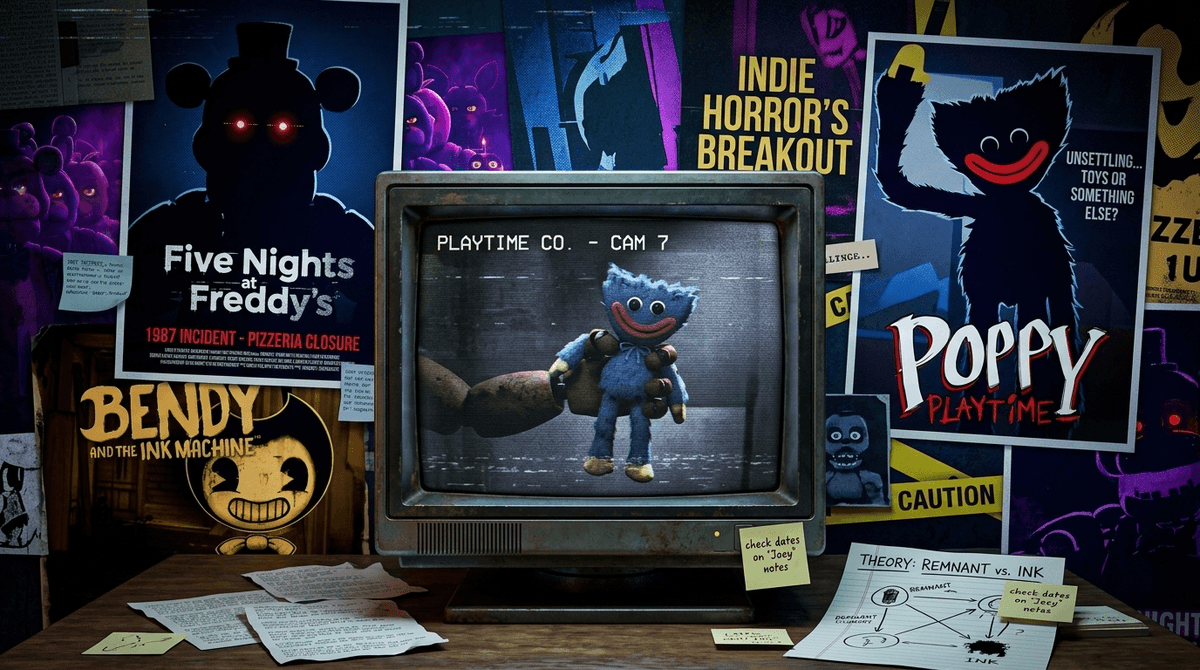
TL;DR: Mascot horror (think Five Nights at Freddy's or Poppy Playtime) uses childhood imagery to create jump-scare-heavy experiences. For most kids 10+, it’s a "safe" way to feel adrenaline. But when the "fantasy violence" turns into "I can’t walk down the hallway at night," it’s time to pivot to cozy games or milder spooks like Luigi's Mansion 3.
Get a "scare-scale" assessment for your child
If you’ve seen a blue fuzzy monster with rows of shark teeth (Huggy Wuggy) or a creepy animatronic bear (Freddy Fazbear), you’ve encountered "Mascot Horror."
This genre takes things that should be comforting—toys, theme parks, fast-food mascots—and turns them into nightmare fuel. It’s the digital equivalent of those "killer clown" sightings from a few years back, but it lives on YouTube and Roblox.
The gameplay is usually simple: hide from the monster, solve a puzzle, and try not to get hit with a "jump scare" (a loud noise and a sudden image of the monster "killing" you). The violence is rarely "real" in the sense of blood and guts; it’s more about the psychological tension and the shock of being caught.
You might hear your kid call a creepy character "so Ohio" or talk about "Skibidi" monsters. In kid-speak, "Ohio" has become shorthand for anything weird, cringey, or inexplicably supernatural. Mascot horror fits right into this surrealist internet culture.
Kids love these games for three main reasons:
- The Adrenaline Rush: It’s a roller coaster on a screen. The "scare" is the point.
- The Lore: Games like Five Nights at Freddy's have incredibly deep, hidden stories. Kids spend hours watching The Game Theorists on YouTube to figure out the "true story" of the characters.
- Social Currency: If everyone at the lunch table is talking about the new Garten of Banban release, your kid wants to be in the loop.
There is a "sweet spot" of healthy fear. It’s that feeling of being scared while knowing you’re safe in your living room. However, mascot horror is specifically designed to exploit childhood vulnerabilities.
The line is crossed when:
- The fear persists after the screen is off. If they can't sleep, won't go to the bathroom alone, or are constantly checking behind doors, the "fantasy" has become too real.
- The "Lore" is too dark. While Roblox clones of these games are often just silly, the source material (like Poppy Playtime) can involve themes of human experimentation and torture that are objectively heavy for an 8-year-old.
- The Jump Scares are constant. Constant "fight or flight" activation isn't great for a developing nervous system. It can lead to increased irritability and general anxiety.
Check out our guide on how horror games affect child brain development
Not all scary games are created equal. Here is how to navigate the genre based on your child's maturity level.
- Luigi's Mansion 3: This is the gold standard. It’s "Ghostbusters" vibes—funny, atmospheric, but never truly traumatizing.
- Goosebumps series: The classic books or the Goosebumps (Disney+ show) provide a narrative-driven way to experience scares without the interactive intensity of a game.
- Hello Neighbor: A stealth game where you sneak into a creepy neighbor's house. It’s tense, but the "violence" is just being caught and reset.
- Five Nights at Freddy's: The OG. It’s mostly about resource management (checking cameras). The FNAF movie is rated PG-13 for a reason, but the early games are relatively "clean" horror.
- Rainbow Friends (Roblox): This is the gateway drug for most elementary kids. It’s basically hide-and-seek with colorful monsters. It’s more about the "oops, I got caught" than actual terror.
- Bendy and the Ink Machine: Uses a 1930s cartoon style. It’s stylish and creepy, but focuses more on atmosphere than gore.
- Poppy Playtime: Despite the "toy" aesthetic, this game is significantly darker and more intense than its peers. The "death" animations are more graphic.
- Doki Doki Literature Club!: WARNING. This looks like a cute anime dating sim. It is actually a psychological horror game involving self-harm and suicide. It is NOT for kids, full stop.
- Garten of Banban: Honestly? This one is mostly just bad. It’s a low-effort cash grab designed to go viral on YouTube. It’s not necessarily "too scary," it’s just "brain rot" in game form.
If your kid is begging to play the latest horror trend, don't just say "no" (that makes it a forbidden fruit). Try these steps:
- Watch a "Let's Play" First: Sit with them and watch 10 minutes of a creator like DanTDM or Markiplier playing the game. You'll see exactly what the scares look like.
- The "Daylight Rule": Scary games are for daytime only. No playing FNAF at 8:00 PM right before the lights go out.
- Explain the "Shock" Factor: Teach your kids that jump scares are a "cheap trick." It’s like someone popping a balloon behind your head. It’s a physical reaction, not a sign that something is actually dangerous.
- Check the Roblox Clones: If they play Roblox, be aware that there are thousands of fan-made versions of these games. Some are harmless, but some bypass filters to show more graphic content.
Most kids don't actually play these games. They watch them. YouTube is the primary engine for mascot horror.
Creators use "clickbait" thumbnails with screaming faces and scary monsters to get kids to click. Even if you ban the game, the algorithm will likely serve them "The 10 Scariest Moments in Poppy Playtime."
If you want to limit exposure, you have to look at their YouTube history, not just their console usage.
Learn more about managing the YouTube algorithm for your family
Mascot horror is the modern-day equivalent of telling ghost stories around a campfire. For most kids, it’s a thrill they’ll outgrow. But because these games are designed to "hack" the feeling of safety (by using toys and mascots), they can occasionally cause real-world anxiety.
If your kid is handling it well—meaning they can turn the game off and go back to being a normal kid—it’s probably fine. But if you see the "nightmare" creeping into their real life, it’s time to trade the animatronics for some Minecraft or a round of Uno.
- Audit the Apps: Check if Poppy Playtime or FNAF is on their device.
- The "Vibe Check": Ask them, "Who is your favorite scary character right now?" If they say "Huggy Wuggy," ask them why they think he's scary. It's a great window into their digital world.
- Set a "Scare Ceiling": Decide as a family what's okay (fantasy monsters) vs. what's not (realistic violence or psychological trauma).