

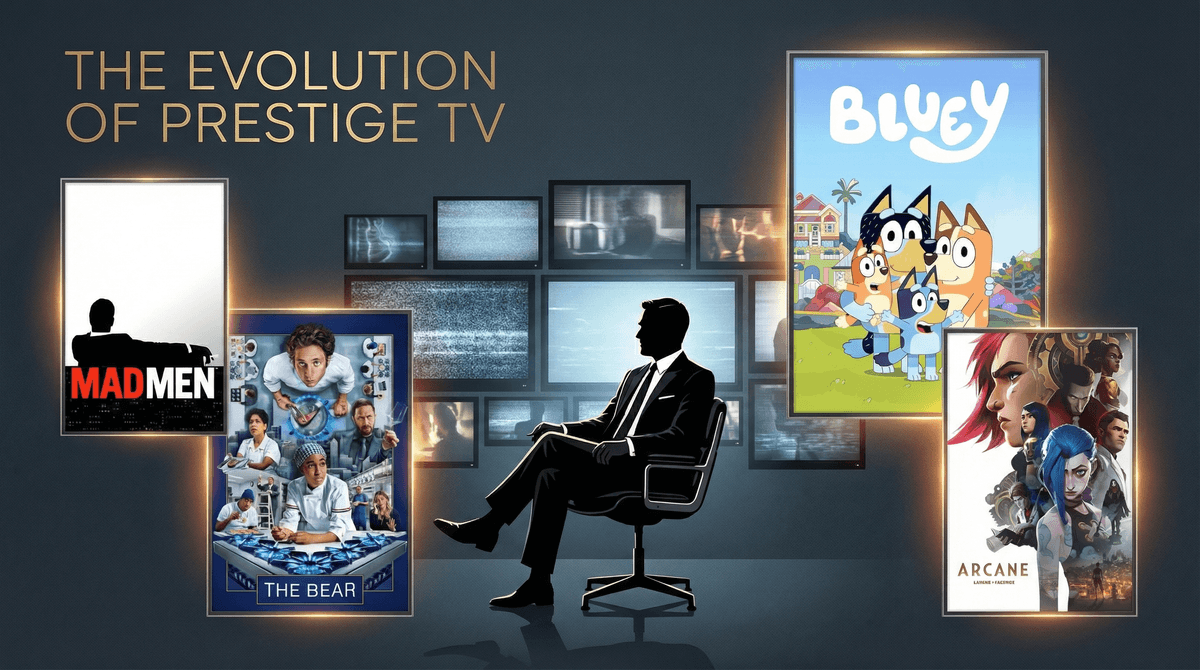
What Streaming TV Can Learn from Mad Men
TL;DR: Mad Men revolutionized prestige television by trusting audiences to be smart, patient, and emotionally sophisticated. Today's streaming shows—the ones your teens are binging and your tweens are sneaking on their tablets—owe everything to Don Draper's slow-burn character work and visual storytelling. But somewhere between 2015 and now, many shows forgot the lessons. Here's what made Mad Men special, and why it matters for the content your family consumes.
You might be wondering why a guide about a 2007 drama about chain-smoking ad executives belongs on a digital wellness platform. Fair question.
The answer: Mad Men fundamentally changed how TV gets made, which directly impacts what your kids watch today. The show proved that audiences would stick with complex, slow-moving narratives that didn't spoon-feed every plot point. It launched the "prestige TV" era that gave us Breaking Bad, The Crown, Stranger Things, and basically everything Netflix uses to justify its subscription price.
But here's the thing: not every show learned the right lessons from Mad Men. Some copied the surface-level stuff (moody lighting, antiheroes, cigarettes) without understanding the craft underneath. And that matters when you're trying to figure out whether Euphoria is "prestige TV" or just trauma porn, or whether Wednesday is actually well-written or just well-marketed.
It Trusted the Audience
Mad Men's creator Matthew Weiner famously fought with AMC executives who wanted to add voiceover narration explaining Don Draper's thoughts. Weiner refused. He trusted viewers to read facial expressions, understand subtext, and remember details from episodes that aired months ago.
This was radical in 2007. Most TV still operated on the "previously on..." model where every episode recapped the entire season. Mad Men expected you to pay attention—and millions of people did.
The streaming lesson: The best shows for older kids and teens today follow this model. Avatar: The Last Airbender doesn't explain every character motivation. Arcane trusts viewers to track complex political dynamics. The Bear lets silence do the heavy lifting.
The worst shows? They treat audiences like goldfish. Every emotional beat gets telegraphed. Every plot point gets explained twice. Characters literally say their feelings out loud. (cough most Netflix teen dramas cough)
Visual Storytelling Over Exposition
Mad Men was a masterclass in "show, don't tell." Don Draper's identity crisis wasn't explained through therapy sessions—it was communicated through his relationship with doorways, windows, and empty rooms. Peggy's rising power was tracked through her office location and clothing choices. Betty's depression lived in the way she held cigarettes.
This visual language made the show rewatchable. You'd catch new details on a second viewing—the background conversation that foreshadowed a divorce, the color palette that shifted when someone made a bad decision.
The streaming lesson: The shows your kids remember aren't the ones with the most dialogue—they're the ones with the most memorable images. The upside-down world in Stranger Things. The color-coded houses in Squid Game. The food animation in Delicious in Dungeon.
When you're evaluating whether a show is worth your family's time, pay attention to whether it uses its medium. Does it need to be a TV show, or could it be a podcast? If all the storytelling happens through dialogue, it's probably not very good TV.
Uncomfortable Truths Without Moralizing
Mad Men showed 1960s sexism, racism, and homophobia without turning characters into mouthpieces for modern values. It trusted viewers to feel uncomfortable, to recognize the injustice, without anyone turning to the camera to say "this is bad, by the way."
This restraint made the show more powerful, not less. When Joan gets assaulted, there's no musical cue telling you how to feel. When Sal gets fired for being gay, there's no inspirational speech about acceptance. The show presents human cruelty and lets it land.
The streaming lesson: The best shows for teens handle difficult topics with similar sophistication. Sex Education (appropriate for older teens) deals with assault, identity, and consent without being preachy. Heartstopper shows homophobia without centering it.
The shows that fail? They turn every episode into a Very Special Episode. Characters become walking PSAs. Problems get solved in 22 minutes with a heartfelt conversation.
Patience With Character Development
Don Draper didn't have a redemption arc. Peggy didn't become a girlboss. Joan didn't get a neat happy ending. Characters changed slowly, messily, with setbacks and contradictions. Someone could grow tremendously in Season 3 and regress completely in Season 5.
This long-game approach to character work was basically unheard of in 2007. Most TV characters were either good or bad, and they stayed that way.
The streaming lesson: The shows worth watching with your teens are the ones where characters feel real—which means they're inconsistent, contradictory, and frustrating. Abbott Elementary characters make the same mistakes repeatedly. Andor refuses to give its hero easy wins.
If a character learns a lesson and permanently changes their behavior by episode's end, you're watching shallow TV.
The Binge Model Killed Patience
Mad Men aired weekly. You had seven days to think about an episode, discuss it, rewatch it. The show was designed for that rhythm—cliffhangers mattered, but so did quiet character moments that paid off months later.
Binge-watching changed everything. Shows now front-load action to hook viewers in Episode 1, then rush through plot to keep them clicking "Next Episode." There's no time for a scene where Don Draper just... sits in a dark room thinking. That's a scene where viewers might stop watching.
This is why so many Netflix shows feel simultaneously overstuffed and hollow. They're optimized for binge-watching, not for storytelling.
For parents: This affects how kids process content. Binging doesn't give brains time to reflect, predict, or emotionally metabolize what happened. The shows blur together. Consider spacing out episodes of shows your family watches together, especially for emotionally heavy content.
Surface-Level "Prestige"
After Mad Men's success, every network wanted their own "prestige drama." But many copied the aesthetic (moody lighting, antiheroes, period settings, nudity) without the substance.
This gave us a decade of shows that looked prestigious but had nothing to say. Beautiful cinematography covering up thin characters. Shocking violence mistaken for depth. Sex scenes that exist purely because "prestige TV has sex scenes."
For parents: This is the trap with shows like The Last of Us (which is actually good) versus something like The Witcher (which looks prestigious but is pretty hollow). Both have gore, both have complex worlds, but one trusts its audience and one doesn't.
When evaluating whether a show is appropriate for your teen, don't just check the content warnings—ask whether the mature content serves the story or just makes it look "adult."
Algorithm-Driven Storytelling
Mad Men could take risks because it wasn't being A/B tested. Matthew Weiner could spend an entire episode on a character's fever dream because he thought it mattered artistically.
Modern streaming shows are increasingly shaped by data. Netflix knows exactly when viewers stop watching. Algorithms identify which plot twists retain attention. Shows get notes based on what "tested well" in similar content.
This creates homogenized storytelling. Everything feels a little bit the same because it's all optimized for the same engagement metrics.
For parents: This is why Bluey feels so refreshing—it's not algorithm-driven. The creators tell stories they want to tell, not stories optimized for watch time. Same with Hilda, Gravity Falls, and other creator-driven shows.
When possible, prioritize shows with a clear creative vision over shows that feel like they were made by committee.
Here are current shows (across age ranges) that actually absorbed what made Mad Men great:
For Teens (14+)
The Bear: Uses silence, visual metaphor, and uncomfortable tension exactly like Mad Men. Characters don't explain their trauma—they live it.
Succession: Nobody gets a redemption arc. Characters are consistently terrible in fascinating ways. Requires patience and attention.
Andor: Takes its time building political complexity. Trusts viewers to track multiple storylines without hand-holding. Proof that even Star Wars can be sophisticated.
For Tweens (10-13)
Avatar: The Last Airbender: Character development happens slowly across seasons. Visual storytelling is sophisticated. Handles war, genocide, and trauma without talking down to viewers.
Arcane: Absolutely gorgeous visual storytelling. Complex moral questions without easy answers. Characters make terrible decisions for understandable reasons.
Hilda: Quiet, patient, trusts kids to appreciate subtlety. Not every episode has a big lesson or dramatic climax.
For Younger Kids (6-10)
Bluey: The Mad Men of kids' TV. So much communicated through visual storytelling and subtext. Parents' marriage feels real—they're tired, they disagree, they're not perfect.
Gravity Falls: Rewards close watching with hidden details and long-game storytelling. Doesn't reset to status quo every episode.
Mad Men itself: Not for kids. It's TV-MA for good reason—constant smoking and drinking, frequent sexual content, period-appropriate racism and sexism that's disturbing even in context. Earliest I'd consider it is 16+, and even then, it depends on the teen.
But the lessons from Mad Men apply to content at every age level. You can evaluate whether Ninjago respects its audience the same way you'd evaluate whether The Crown does.
Mad Men proved that TV audiences are smart, patient, and hungry for complexity. The best shows your family watches today—whether it's Bluey for your 6-year-old or The Bear for your 16-year-old—follow that model.
The worst shows assume you're stupid. They explain everything, rush through plot, copy what's popular without understanding why it worked.
When you're choosing what your family watches, ask:
- Does this show trust me to understand subtext?
- Does it use visual storytelling, or is everything explained through dialogue?
- Do characters feel real, or are they just vehicles for plot?
- Does it need to be a TV show, or could it be a podcast?
These questions work whether you're evaluating Paw Patrol (fails most of these) or The Last of Us (passes most of these).
The streaming era gave us infinite content. Mad Men's legacy is the reminder that more isn't better—better is better. And teaching your kids to recognize the difference? That's digital literacy that'll serve them forever.