

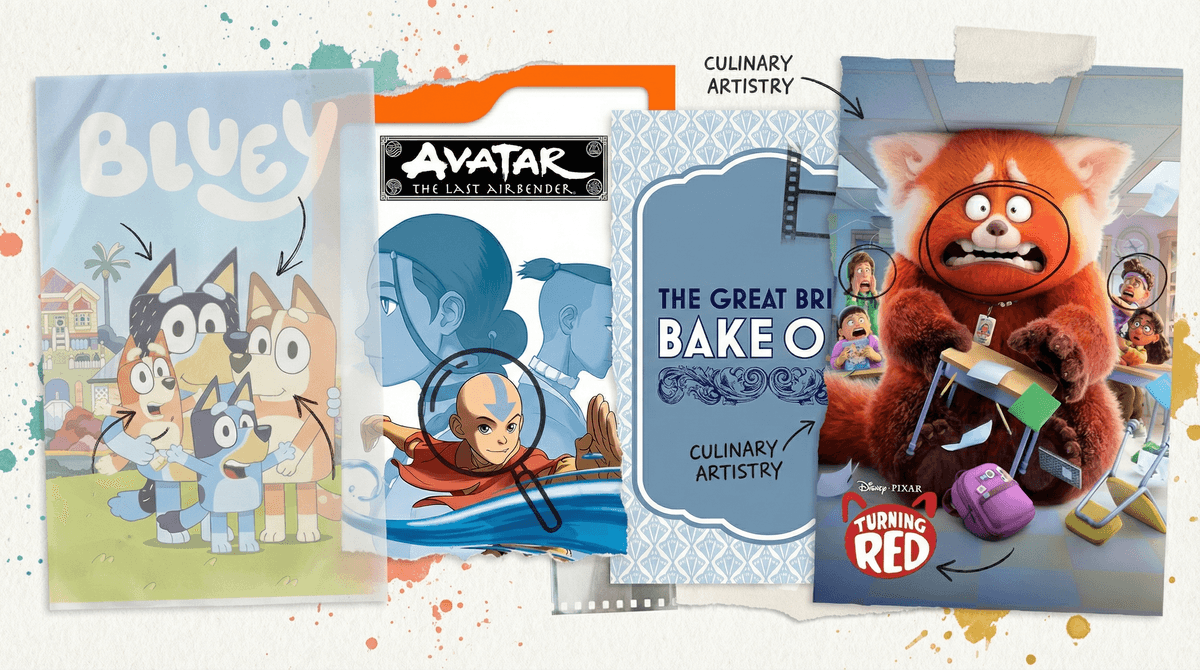
Media literacy is the ability to access, analyze, evaluate, and create media in all its forms. It's teaching kids to think critically about what they're watching instead of just passively consuming it. And here's the thing: you don't need to turn off the TV or cancel Netflix to start building these skills. You can use the shows and movies your family already watches.
Think of it this way: if we're going to live in a world where kids will encounter thousands of media messages every single day, we might as well teach them how to decode what they're seeing. Media literacy isn't about making kids cynical or ruining their fun—it's about giving them tools to understand how stories work, who's telling them, and why.
Your kids are going to watch TV. They're going to see movies. They're going to scroll through YouTube and TikTok. The question isn't whether they'll consume media—it's whether they'll have the skills to think about what they're consuming.
Media literacy helps kids:
- Recognize persuasion techniques in advertising and content
- Understand representation and whose stories get told (and whose don't)
- Identify stereotypes and question why certain groups are portrayed certain ways
- Think about authorship and point of view
- Separate fact from fiction (increasingly important in the age of AI-generated content)
The beautiful part? You can start teaching these skills at any age, and you can use whatever your family is already watching. Whether it's Bluey, Avatar: The Last Airbender, or even Squid Game (if your teen is watching it), every show is an opportunity.
Ages 4-7: Basic Questions
Start simple. You're building the foundation that "someone made this on purpose."
- "Who made this show?"
- "How do you think they made that character move?" (great for animation)
- "Why do you think that character did that?"
- "How do you think they're feeling?"
With younger kids watching shows like Paw Patrol or Daniel Tiger's Neighborhood, you can talk about feelings, problem-solving, and how stories have beginnings, middles, and ends. You're not analyzing the capitalist undertones of Adventure Bay—you're just helping them notice that stories are constructed by people making choices.
Ages 8-12: Digging Deeper
This is when it gets fun. Kids this age can start thinking about:
- Representation: "Have you noticed who the heroes usually are in these shows? Who are the sidekicks?"
- Stereotypes: "Why do you think the smart character always wears glasses?"
- Advertising: "What do you think the people who made this toy commercial want you to feel?"
- Point of view: "Whose story is this? What would it be like if we heard it from the other character?"
If your kid is watching The Bad Guys or Turning Red, you can talk about how the movie challenges assumptions about who gets to be the hero. With Roblox content on YouTube, you can discuss how creators make money from views and what that might mean for the content they produce.
Ages 13+: Critical Analysis
Teens can handle sophisticated media literacy conversations:
- Bias and framing: "How would this story be different on a different news channel?"
- Representation and power: "Who made this movie? Whose perspective is centered?"
- Media economics: "How does this platform make money? How does that affect what we see?"
- Manipulation techniques: "What editing choices make this person look good/bad?"
If your teen is watching Stranger Things, you can talk about nostalgia as a marketing tool. With The Bear, you can discuss how cinematography creates tension. Even with something like Love Is Blind, you can analyze reality TV editing and what producers choose to show or hide.
The Pause Button Is Your Friend
You don't need to have a full media literacy seminar every time you watch TV. Just hit pause occasionally and ask one question. That's it. One question during a show is more effective than a 20-minute lecture afterward that nobody wants to have.
Start With Commercials
Commercials are media literacy on easy mode. They're short, their intent is obvious, and kids can clearly see the persuasion techniques.
- "What are they trying to sell us?"
- "Who do they think will buy this? How do you know?"
- "What feeling are they trying to create?"
- "Is this showing us what the toy actually does, or just how fun it looks?"
Talk About Your Own Media Choices
Model media literacy by thinking out loud about your own viewing:
- "I'm reading reviews before we watch this because I want to know if it's going to be scary."
- "I'm choosing this documentary because I want to learn more about that topic."
- "I'm turning this off because it's making me feel anxious and I don't like that."
Use "I Notice" Statements
Instead of quizzing kids, share your own observations and see if they engage:
- "I noticed all the scientists in this show are men. That's weird because lots of scientists are women."
- "I noticed they played scary music when that character appeared. I think they want us not to trust them."
- "I noticed this video has a lot of ads. I wonder if that's why they made it so long."
You Don't Need to Be an Expert
You don't need a film degree to teach media literacy. You just need to be willing to ask questions and wonder out loud with your kids. In fact, not knowing everything is actually better—it models curiosity and critical thinking.
It's Okay If They Disagree With You
The goal isn't to get your kid to see media exactly the way you do. The goal is to get them thinking. If you point out something and they have a different interpretation, that's actually perfect. That means they're analyzing.
This Works With "Bad" Content Too
You don't have to only watch PBS documentaries to practice media literacy. In fact, analyzing YouTube videos, TikToks, or even shows you think are kind of terrible can be incredibly educational. "Why do you think this is so popular?" is a great media literacy question.
Start Where You Are
If your family watches The Great British Baking Show together, start there. If your kid is obsessed with Minecraft YouTube videos, start there. You don't need to change what you're watching to start building these skills.
Media literacy isn't about ruining the magic of stories or turning every viewing session into a lesson. It's about giving kids tools to understand the media-saturated world they're growing up in. And the best part? You can start right now, with whatever your family is already watching.
The next time you sit down for screen time together, try asking just one question. See what happens. You might be surprised by what your kid notices once you give them permission to think critically about what they're seeing.
Next Steps:
- Pick one show your family watches regularly and try one "I notice" statement this week
- Learn more about age-appropriate shows that encourage critical thinking

- Explore how to talk to kids about advertising and persuasion
- Check out our guide on YouTube vs. YouTube Kids to understand different content ecosystems