

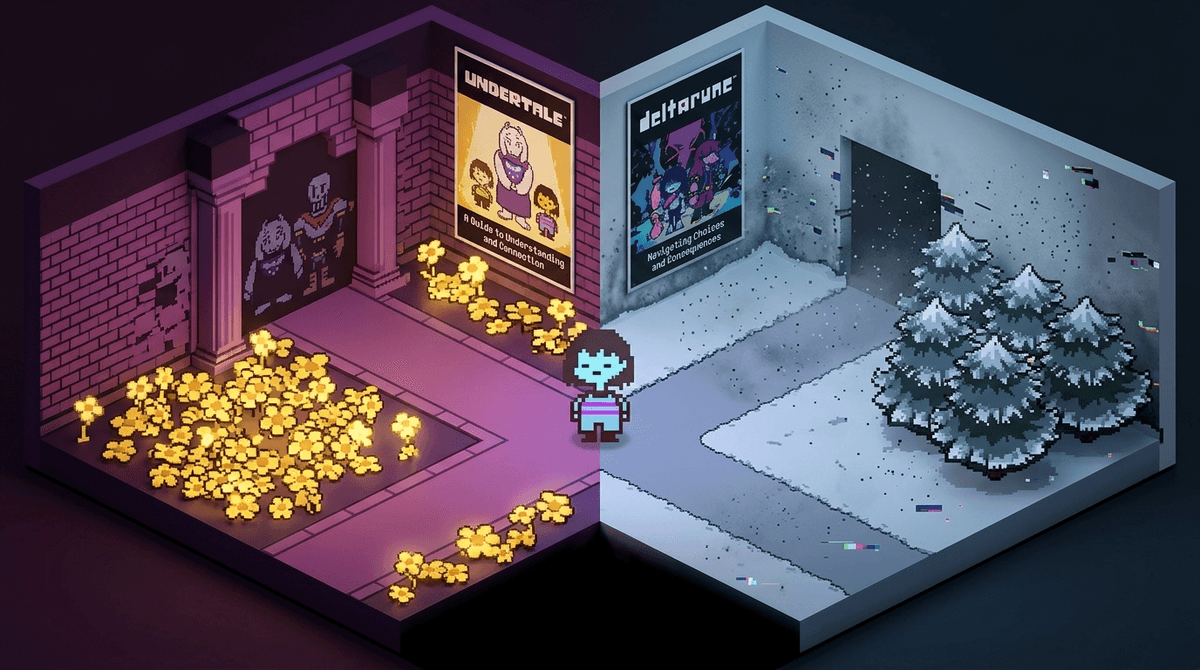
TL;DR: Undertale is a rare "brain rot" antidote. It’s a retro-style RPG where "nobody has to die," focusing on empathy, consequence, and incredible music. It’s safe for most kids 10+, though some boss fights get creepy. If your kid is obsessed with Sans, they aren't just looking at memes—they're engaging with one of the most significant pieces of digital storytelling in the last decade.
Quick Links to Related Media:
- The Follow-up: Deltarune
- The Inspiration: Earthbound
- The Vibe: Adventure Time
- Cozy Alternative: Stardew Valley
Released in 2015 by indie developer Toby Fox, Undertale looks like something that should have come out on the Super Nintendo in 1992. It uses "pixel art" (those blocky graphics) and a top-down perspective.
The story is simple: a human child falls into the "Underground," a world populated by monsters who were banished there by humans long ago. To get home, you have to traverse this world and reach the barrier.
But here’s the hook: unlike almost every other video game in history, you don’t have to kill anyone. In a typical game like Minecraft or Zelda, if a monster attacks you, you hit it until its health bar hits zero. In Undertale, you can "ACT"—you can compliment a monster, tell it a joke, or pet it until it doesn't want to fight anymore. Then, you "SPARE" them.
If your kid is calling things "Ohio" or watching Skibidi Toilet, they are participating in fast-paced, often nonsensical internet culture. Undertale is different. It’s "slow" culture. It has stayed popular for nearly ten years because its characters are genuinely well-written.
Kids love the humor. It’s weird, meta, and self-aware. They love the skeleton brothers, Sans and Papyrus. Sans, in particular, has become a global icon of "cool, lazy, but secretly powerful" energy.
Then there’s the music. Toby Fox is a composer first, and the soundtrack is phenomenal. You’ve probably heard "Megalovania" without realizing it—it’s been memed into oblivion, played for the Pope (seriously), and remains a staple of YouTube gaming culture.
Learn more about why Undertale's music is so popular with kids
This is where Undertale gets "Screenwise-approved" for intentional parents. The game tracks every single thing you do. It’s not just about a high score; it’s about your moral choices. There are three main ways to play:
- The Neutral Run: This is how most people play the first time. You kill some monsters, spare others. The ending reflects your mixed choices.
- The True Pacifist Run: You kill no one. You befriend everyone. This is the "true" ending and it is incredibly emotional. It teaches kids that empathy is a choice that requires effort and patience.
- The Genocide Run: This is the controversial one. You go out of your way to kill every single creature in the game.
Here is the brilliant part: the game hates you for doing a Genocide run. The music becomes distorted and creepy. Characters who were your friends now look at you with genuine horror. The game actively tries to make you feel bad for being a "completionist" who values "leveling up" over digital lives. It’s a profound commentary on how we consume media.
If your kid is doing a Genocide run, don't panic—they aren't a budding psychopath. Usually, they do it because it’s the only way to fight the hardest boss in the game (Sans). But it’s a great opening to talk about accountability. The game literally "remembers" your sins even if you reset the save file.
Parents often ask me if Undertale is another "money pit" like Roblox. The answer is a hard no.
Undertale is a one-time purchase (usually around $10-$15). There are no "skibidi-bucks," no "loot boxes," and no "limited edition" skins to buy. Once you own it, you own the whole thing. It’s a self-contained experience. In an era where every app is trying to drain your bank account through microtransactions, Undertale is refreshingly honest.
The ESRB rates Undertale as E10+ (Everyone 10 and up). This is pretty accurate, but there are a few things to keep in mind:
- Scary Imagery: The final boss of the Neutral route (Flowey) undergoes a transformation that is legitimately disturbing. It looks like a "photoshop nightmare" and can be jumpy. If your child is sensitive to "body horror" or glitchy, distorted visuals, they might need a hand-hold here.
- Existential Themes: The game deals with death, the soul, and the idea of "erasing the world." It’s deep stuff.
- Difficulty: While the "Pacifist" route is the goal, some of the bullet-hell segments (where you dodge projectiles) are actually quite hard. It requires dexterity and persistence.
Community Norm: Most kids start playing this around 3rd or 4th grade. By middle school, it’s considered a "classic."
Undertale is "meta." This means it knows it’s a game. Characters will talk directly to the player. They will comment on how many times you’ve died or if you "reset" the game because you made a mistake.
For a kid, this is mind-blowing. It makes the world feel alive. It’s also why they might spend hours on YouTube watching "lore videos" or "theory videos" about characters like W.D. Gaster. It’s not brain rot; it’s literary analysis for the digital age. They are trying to piece together a complex puzzle.
If you want to connect with your kid over Undertale, don't ask "Are you winning?" (You can't really "win" Undertale in the traditional sense).
Instead, try these:
- "Which path are you taking? Pacifist or Genocide?" (This shows you know the mechanics).
- "Who is your favorite character? Sans or Papyrus?"
- "I heard the music is amazing—can you play me your favorite track?"
If they tell you they are doing a "Genocide run," ask them how it makes them feel. You might be surprised by the depth of their answer. Many kids find it genuinely difficult to go through with it because they’ve "bonded" with the characters.
Undertale is a masterpiece of indie gaming. It’s one of the few games that actually makes players better people by the time the credits roll. It encourages mercy over violence, curiosity over mindless clicking, and empathy over power.
If your child wants to play it, let them. Better yet, sit with them during the final boss fight of the Pacifist run. It’s one of the most beautiful moments in modern media, and it’s a far cry from the mindless scrolling of TikTok.
Next Steps:
- If they finish Undertale, they will immediately want Deltarune. It’s Toby Fox's next project, currently being released in chapters. It’s equally high-quality.
- Check out the Earthbound series if you have a Nintendo Switch; it’s the primary inspiration for Undertale.
- Read our guide on 'Cozy Gaming' for more non-violent options